What to shut off during an outage to protect your HVAC system
When the lights go out, your HVAC system is one of the most vulnerable and expensive pieces of equipment in your home. Protecting it is less about panic and more about knowing exactly what to shut off, when to do it, and how to bring everything back online safely once power returns. With a few deliberate steps, you can avoid surge damage, compressor failures, and costly service calls after an outage.
The core idea is simple: you want your heating and cooling equipment disconnected and stable before electricity cuts out or surges back, then restarted in a controlled way. That means using your thermostat, breakers, and a few protective devices strategically so your system is not caught mid‑cycle or slammed by a voltage spike when the grid comes back.
Why outages are hard on HVAC systems
Power interruptions rarely behave like a clean on/off switch. Voltage can sag, flicker, and then spike as service is restored, which is exactly the kind of instability that stresses motors, control boards, and compressors. Reporting on Potential Risks During Power Restoration notes that when the power is restored, a sudden surge of electricity can overload electrical components, including the blower motor and other key parts. That kind of overload can leave you with strange noises, reduced airflow, or a system that will not start at all once the outage ends.
Outages also tend to happen during weather extremes, when your air conditioner, furnace, or heat pump is already working hard. Guidance on Immediate Emergency Protocols During a Power Outage explains that when the power goes out, immediate action can help protect your HVAC system and prevent additional strain once electricity returns. If your unit is running at full tilt when the grid drops and then tries to restart into a hot or frozen system the moment power flickers back, the mechanical and electrical stress multiplies, which is why shutting things down in a controlled way is so important.
What to shut off first when the power goes out
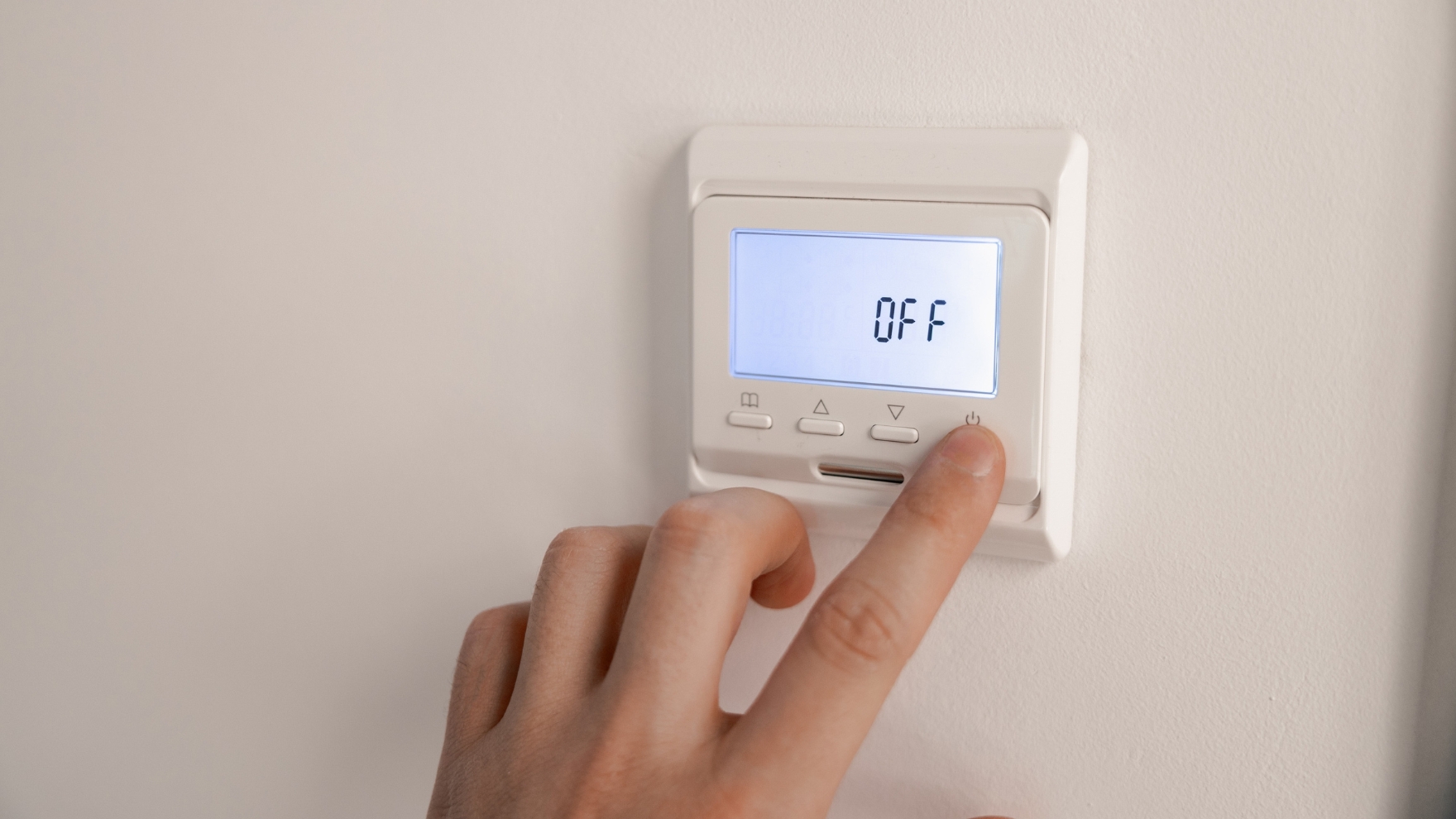
Your first protective move is at the thermostat. Turning your system to “off” keeps it from trying to cycle during unstable power and gives you control over when it restarts. Step‑by‑step advice on how to safely shut down an HVAC system during a Power outage starts with switching the thermostat off so the equipment is not calling for heating or cooling while the grid is in flux. Similar guidance on Should you Turn Off My Heat Pump During a Power Outage is unequivocal: Yes, absolutely, because shutting it down is described as the single most important step you can take to protect a heat pump.
For central air conditioning in particular, experts recommend going one step further and cutting power at the electrical panel. Advice tailored For Summer Power Outages stresses that you should Turn off your AC at the thermostat AND breaker, a combination that protects the system from damage when power is unstable. Flipping the dedicated HVAC breaker off ensures that even if the thermostat or control board misbehaves during a flicker, the condenser and air handler will not suddenly energize into a surge or brownout.
Extra protection: breakers, disconnects, and surge devices
Once the thermostat is off, the next layer of defense is the hardware that feeds electricity to your equipment. Guidance on HVAC and outages emphasizes that shutting off power at the breaker or outdoor disconnect can prevent damage from sudden shutdowns and restarts. If your outdoor unit has a pull‑out disconnect next to it, you can remove it after the system has stopped running, which physically separates the condenser from the electrical supply while the grid is unstable.
Surge protection is the other critical piece. Dedicated HVAC surge devices are designed to absorb and divert spikes that would otherwise hit your control boards and motors. Product information on Surge Protectors by MARS notes that The Mars spd is designed to protect your HVAC equipment from power surges, spikes and transients, giving your system a sacrificial buffer when the grid misbehaves. Another device described in the Install Manual For a RectorSeal Surge Protective Device states that it Protects up to 50,000-amp single surges and up to 10,000-amp repetitive surges, a reminder of how intense these spikes can be and why a dedicated protector is worth discussing with your contractor.
How to restart your HVAC safely after power returns
Once the neighborhood hums back to life, the instinct is to crank the thermostat and cool or heat the house as fast as possible. That is exactly what you should avoid. Guidance on Restarting Your HVAC After a Power Outage stresses a deliberate reset sequence that starts with keeping the thermostat off, then restoring power at the breaker, and only then turning the thermostat back on after a short wait. This pause lets internal pressures equalize in compressors and gives control boards a clean reboot instead of a rapid series of on/off commands.
Home protection checklists echo the same caution. One widely cited Once you have addressed immediate safety concerns, your next priority is to protect your home’s major systems and appliances from damage, including a careful HVAC system restart. If the unit fails to come back on, trips the breaker, or makes unusual noises, the guidance is to leave it off and contact a professional rather than repeatedly forcing restarts that could worsen internal damage.
When to call a pro and what long‑term upgrades help
Even with careful shutdowns and restarts, some outages leave behind subtle problems that only show up as weak airflow, odd sounds, or short cycling. A homeowner checklist on emergencies notes that Dead thermostat batteries can give the illusion of a serious malfunction, and it advises you to Inspect the Circuit Breaker and Power Switches and Change filters before assuming the worst. If those basics check out and the system still behaves oddly after an outage, that is the point to shut it off and schedule a technician, since internal components like blower motors and control boards may have been stressed by surges.
Longer term, you can make your system more resilient so every storm or grid hiccup is less of a gamble. Analysis asking Is Your HVAC System Protected From Power Surges underscores that HVAC systems are crucial in modern homes and offices and that dedicated surge protection is one of the most direct ways to shield them from voltage spikes. Guidance on Keeping Your AC Safe During Summer Power Surges notes that the most direct way to protect an air conditioner from surges is to install appropriate protective devices and manage when your AC runs during high‑risk periods. Some homeowners also add a Soft start module, such as the SoftStartHome SSH3T described as a Soft start designed for residential AC systems up to 3 tons, which ramps up power to reduce inrush current and can ease the strain of restarts after outages.
Putting it all together, your outage playbook is straightforward: shut the system off at the thermostat as soon as power becomes unstable, cut power at the breaker or disconnect for extra safety, let the grid stabilize before restoring power, then follow a careful restart sequence and watch for warning signs. Combined with properly sized surge protection and, where appropriate, soft start technology, those steps give your HVAC system a much better chance of riding out the next blackout without an expensive breakdown.
Like Fix It Homestead’s content? Be sure to follow us.
Here’s more from us:
- I made Joanna Gaines’s Friendsgiving casserole and here is what I would keep
- Pump Shotguns That Jam the Moment You Actually Need Them
- The First 5 Things Guests Notice About Your Living Room at Christmas
- What Caliber Works Best for Groundhogs, Armadillos, and Other Digging Pests?
- Rifles worth keeping by the back door on any rural property
*This article was developed with AI-powered tools and has been carefully reviewed by our editors.