Why inspectors keep warning about this crawlspace issue
Home inspectors tend to repeat themselves when something keeps costing homeowners money, and crawlspaces are near the top of that list. The recurring warning is simple: if you ignore what is happening under your floors, you invite structural damage, higher utility bills, and indoor air that quietly gets worse over time. The specific issue they flag most often is uncontrolled moisture in a poorly detailed crawlspace, which then drives a cascade of other problems.
When you treat that low, dark void as “out of sight, out of mind,” small leaks, gaps, and construction shortcuts can sit for years before anyone notices. By the time symptoms show up inside your living space, repairs are usually more invasive and more expensive than they needed to be. Understanding why inspectors are so insistent about this one area gives you a practical roadmap for protecting both your home and your health.
Why inspectors fixate on what is lurking beneath your home
From an inspector’s perspective, the crawlspace is where many of a house’s most vulnerable systems intersect: structure, plumbing, electrical, insulation, and air circulation. If moisture or pests gain a foothold there, they can quietly attack floor joists, subflooring, and mechanicals long before you see a crack or stain upstairs. That is why detailed guides on What is “Lurking Beneath Your Home” emphasize that a crawlspace is not just dead space, it is a critical part of the building envelope that shapes how dry, stable, and efficient your house can be.
Inspectors also know that many crawlspace failures trace back to basic construction details that were never quite right. Engineering analyses of Crawl space inspections point out that a large share of structural and moisture problems are related to improper construction, from undersized vents to missing drainage paths. When those flaws sit in a damp, enclosed environment, they accelerate rot and corrosion. That combination of hidden systems, chronic dampness, and frequent construction shortcuts is why inspectors keep circling back to the same warning: you cannot afford to ignore what is happening under your feet.
The moisture problem that drives everything else
The crawlspace issue inspectors harp on most is not spiders or clutter, it is moisture that has no controlled way to leave. Water can seep in from soil, leak from plumbing, or condense on cold surfaces, then linger in still air. Over time, that dampness feeds mold, softens wood, rusts metal supports, and saturates insulation so it stops doing its job. Home performance specialists stress that when Water and Electric are “Adding Up” without a clear explanation, hidden crawlspace moisture is often part of the story because it forces HVAC systems and water heaters to work harder.
Moisture is also the gateway problem that invites others. A damp or unsealed crawlspace becomes a magnet for pests, from termites that target softened wood to rodents that nest in wet insulation. Repair specialists note that Identifying and addressing the water source quickly is essential because a damaged or unsealed crawl area is an open invitation to “Critters and Pests” that bring droppings, gnawed wiring, and chewed vapor barriers. Once moisture has turned the crawlspace into a hospitable environment, every other risk multiplies.
Why winter exposes crawlspace weaknesses
Inspectors often time their strongest warnings around seasonal shifts, and winter is when crawlspace flaws show up most clearly. Cold air moving through vents can chill exposed pipes and ducts, while warm indoor air leaking down from above condenses on cold surfaces. That temperature clash can leave joists and insulation damp for weeks. Specialists who track crawlspace problems in winter stress that the season does not create issues from scratch, it simply reveals how interconnected systems, not isolated issues, behave when the building is under stress.
Those winter stresses have financial consequences. If ducts run through a cold, leaky crawlspace, your furnace or heat pump must fight both outdoor temperatures and losses under the floor, which shows up in higher utility bills. Frozen or burst pipes in that same space can turn a slow moisture problem into a sudden flood that saturates subflooring and insulation. Inspectors know that once water has soaked those materials in freezing conditions, drying and remediation become more complex and more expensive, which is why they keep urging owners to address crawlspace weaknesses before the coldest months arrive.
Multiple crawlspaces, additions, and missed connections
Another reason inspectors keep sounding the alarm is that many homes do not have a single, simple crawlspace. Additions, enclosed porches, and partial basements can leave you with several disconnected under-floor areas, some of which are hard to reach or easy to forget. Inspectors who walk these spaces describe situations where What is “vastly obvious” from outside, such as additions built onto a baseline structure, is not matched by equally obvious access inside, so one or more crawlspaces go uninspected for years.
Those disconnected pockets can hide very different conditions. One crawlspace might be relatively dry and well detailed, while another, under a later addition, has no vapor barrier, poor grading, and standing water. If an inspector only reaches the easier space, you may get a clean report that does not reflect the worst area. That is why experienced inspectors push for clear access to every under-floor compartment and document when they cannot reach one. Without that thoroughness, you can end up with a false sense of security while serious problems quietly develop in the forgotten crawl.
What inspectors actually find when they get inside
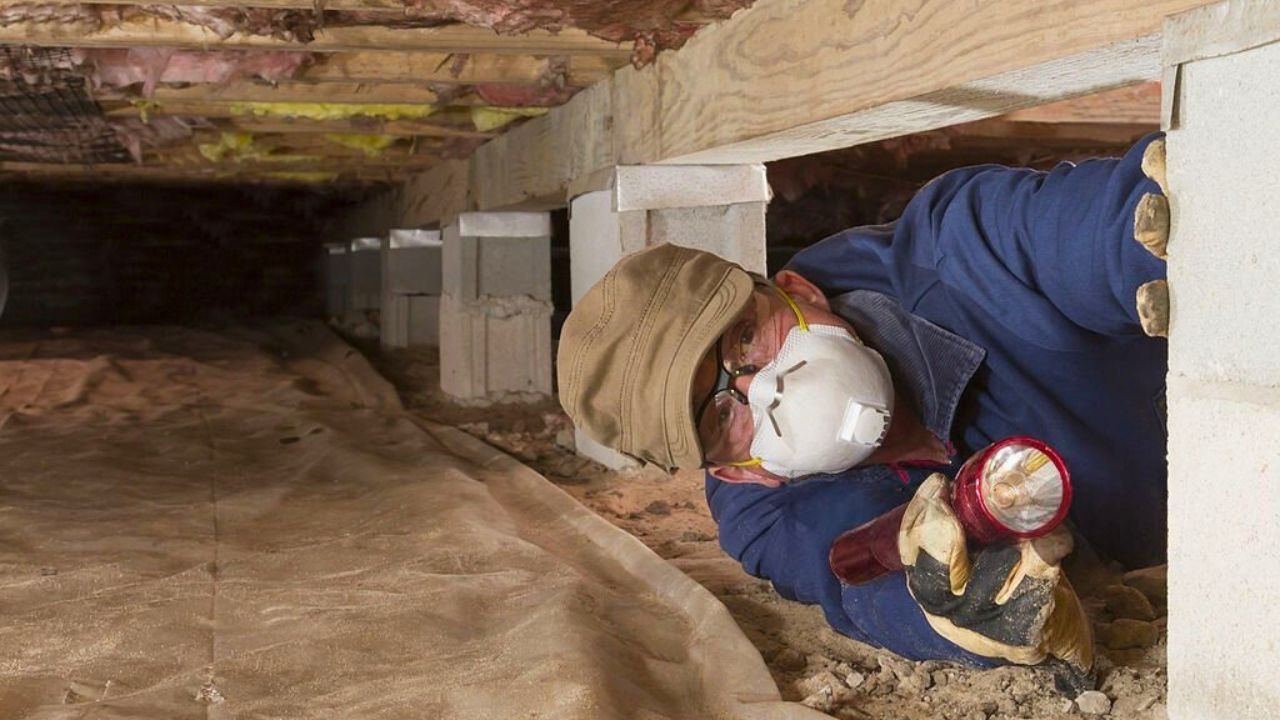
When inspectors do manage to enter the crawlspace, the same patterns show up again and again. They see sagging or pieced-together vapor barriers, open soil, and insulation hanging in tatters. Pest control professionals who routinely check these spaces warn that if rodent activity or plumbing leaks go unchecked, you can end up with a heavily contaminated crawlspace, and they list Problems with the vapor barrier as one of the most common findings, especially when it has been pieced together with duct tape instead of properly sealed.
Inspectors also encounter structural red flags that started as minor moisture issues. Joists may show early rot near foundation walls where water has been wicking in, or metal supports may be rusting where condensation repeatedly forms. In some cases, makeshift repairs, such as stacked wood shims or improvised posts, appear where previous owners tried to correct sagging floors without addressing the underlying moisture or soil movement. These are the kinds of discoveries that turn a routine inspection into a serious conversation about safety, cost, and the need for professional evaluation.
Health and safety risks you actually breathe
Beyond structural concerns, inspectors keep returning to crawlspaces because what happens there does not stay there. Air from under your floor can move upward into living areas, carrying mold spores, dust, and other contaminants. Safety guidance for inspectors notes that mold in crawlspaces can cause health issues and allergic reactions like coughing and wheezing, and that Asbestos fibers, if present in old insulation or pipe wrap, pose serious long term risks when disturbed. If professionals need respirators and protective suits to work there, it is a sign that you should not treat that air as harmless.
There are also immediate safety hazards. Exposed wiring, loose junction boxes, and makeshift splices are common in older crawlspaces, especially where previous owners have run new circuits without permits. Combined with damp conditions, those electrical flaws increase the risk of shocks or fire. Inspectors are trained to navigate these hazards carefully, but their findings are a reminder that you should not send untrained family members into a cramped, contaminated space. When they warn you about crawlspace conditions, they are not just protecting the house, they are also trying to protect the people who live in it.
When inspections fall short or skip the crawl entirely
Even with all these risks, some inspections still gloss over the crawlspace, especially when access is tight or obstructed. Homeowners sometimes discover later that a critical area was never actually viewed. One homeowner described how a foundation company eventually found that the damaged area was not accessible from the main crawlspace at all, and that the original inspector did not mention anything about it, raising questions about whether they had a case for a failing to mention inaccessible areas in the report.
Professional standards try to prevent that kind of oversight. Guidance for under-floor inspections explains that you should care about the building code and home inspection standards because they require inspectors to evaluate under-floor crawlspaces, including structural components, within specific scopes of practice. Training materials that ask Why Should We emphasize that “Most” homeowners do not know what is in these spaces, so they rely heavily on inspectors to flag problems and to clearly document when an area could not be safely entered. When that documentation is missing, you are left guessing about some of the most vulnerable parts of your home.
How often you should really be looking under there
Inspectors are not just warning you about conditions, they are also trying to reset expectations about how often crawlspaces need attention. For many homes, a single look during a pre purchase inspection is not enough. Insulation specialists recommend that if your crawlspace has no vapor barrier or if it is vented, you should inspect it at least twice a year, advice echoed in guidance that explains how often crawlspace insulation should be checked for moisture, sagging, or pest damage.
Waterproofing experts go further, suggesting that you time those checks around your local wet season. They recommend inspecting your crawlspace at least twice a year, ideally before and after the wet season, so you can spot leaks, seepage, or standing water early and implement effective solutions before damage spreads. That rhythm of regular checks, rather than crisis driven visits, is what inspectors hope to see, because it turns the crawlspace from a mystery into a manageable part of your maintenance routine.
Turning inspection warnings into a practical plan
When you put all of these warnings together, a clear pattern emerges. Inspectors are not fixated on crawlspaces out of habit, they are responding to a space that quietly shapes your home’s air quality, energy use, and structural stability. Guides that explain Why Crawl Space stress that crawl areas may be out of sight, but they should not be out of mind if you care about the air you breathe and the long term health of your foundation. The most effective response is to treat the crawlspace as a system, not a storage closet, and to plan for regular, documented inspections.
That system mindset also helps you prioritize fixes. National inspection resources point out that it is understandable that homeowners do not make it a habit of exploring these areas regularly, but they warn that a lack of attention allows moisture to collect and develop into mold, one of the biggest problems with crawl spaces. By sealing obvious gaps, improving drainage, installing or repairing a vapor barrier, and scheduling periodic professional checks, you turn the inspectors’ repeated crawlspace warnings into a concrete plan that protects your investment instead of a recurring source of bad news.
Like Fix It Homestead’s content? Be sure to follow us.
Here’s more from us:
- I made Joanna Gaines’s Friendsgiving casserole and here is what I would keep
- Pump Shotguns That Jam the Moment You Actually Need Them
- The First 5 Things Guests Notice About Your Living Room at Christmas
- What Caliber Works Best for Groundhogs, Armadillos, and Other Digging Pests?
- Rifles worth keeping by the back door on any rural property
*This article was developed with AI-powered tools and has been carefully reviewed by our editors.