You’re making your driveway crack faster with this de-icer habit
You work hard to keep your driveway safe in winter, but the very habit that helps you avoid slips can quietly tear that surface apart. When you scatter de-icer the way you would sprinkle sand on a beach, you speed up cracking, pitting, and spalling that later show up as expensive repairs. With a few targeted changes, you can still keep your footing without sacrificing the concrete or asphalt that supports your home’s curb appeal.
The real problem is not that you use de-icer, but how, when, and what you use. By understanding how salt interacts with water, temperature swings, and the materials in your driveway, you can break the cycle that turns each winter into another round of damage.
1. The hidden habit that is aging your driveway early
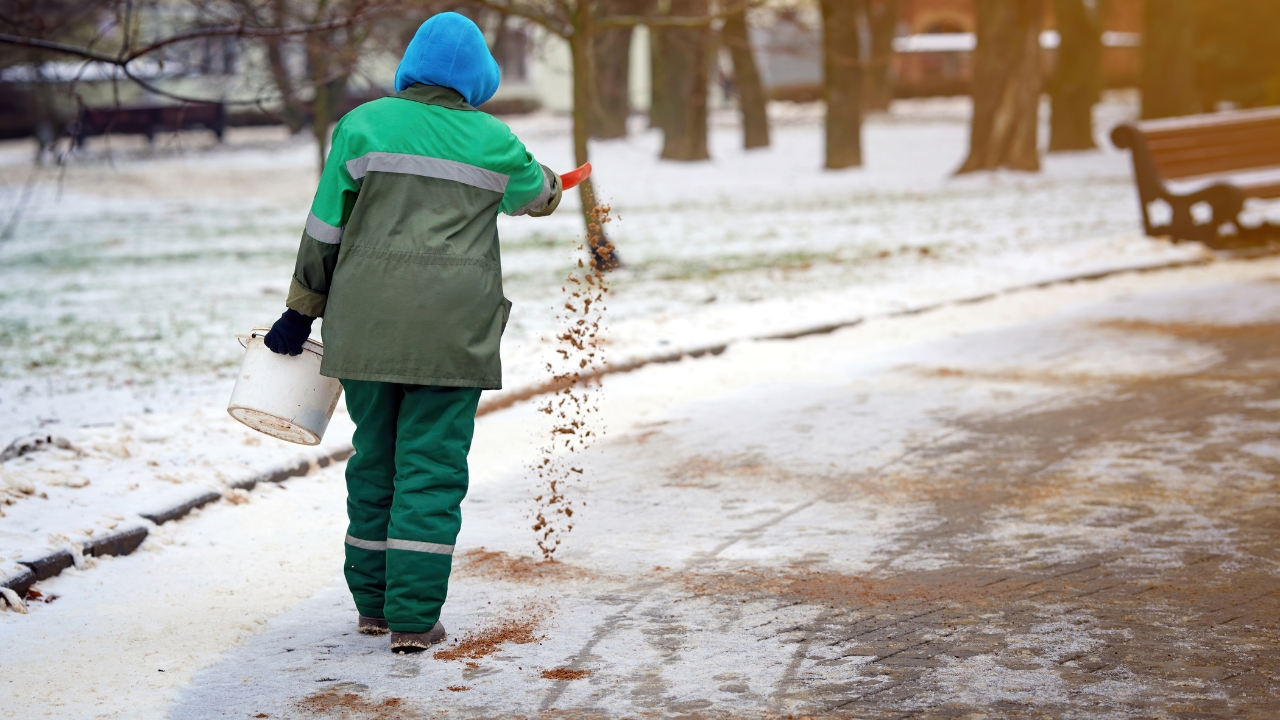
The single habit that does the most harm is simple overuse. If you dump salt or other de-icing chemicals in thick piles, or keep reapplying every time you see a dusting of snow, you are bathing your driveway in a brine that seeps into every pore and hairline crack. Guidance on overusing de-icing products explains that this habit not only damages concrete and asphalt, it also wastes material and forces you to clean up more residue later.
Treating your driveway like a snowbank that needs to be salted into submission also creates uneven patches of meltwater. Those wet spots refreeze overnight, then thaw again the next day, putting your surface through repeated stress. Instead of a thin, controlled layer of ice melt, you end up with concentrated pockets of chemicals that accelerate deterioration wherever they pool.
2. How rock salt attacks concrete and asphalt from the inside
To see why that habit is so destructive, you have to look at what happens inside the slab. Concrete is a porous material that naturally absorbs water, and guidance on why salt damages notes that when you add salt, you create saltwater that soaks deeper into those pores. As temperatures drop again, that trapped brine freezes, expands, and pushes against the surrounding paste and aggregate, which compromises structural integrity over time.
Rock salt, or sodium chloride, is especially aggressive on concrete. When you use rock salt on surfaces, the salt melts snow and ice into liquid that then refreezes once temperatures fall again. Each freeze expands the water in those tiny voids, widens existing microcracks, and can cause the top layer to peel or flake away. Asphalt is less vulnerable because it is more flexible, but even asphalt can suffer when repeated brine exposure strips away fine particles and weakens the binder.
3. The freeze thaw cycle that turns one storm into years of damage
Winter rarely gives you one clean freeze and one clean thaw. Instead, you get a cycle of daytime melting and nighttime refreezing that repeats for weeks. When you add salt into that pattern, you lower the freezing point of water so that ice melts at temperatures where it would normally stay solid. Analysis of freeze thaw cycles shows that saltwater melts ice, then refreezes later, which gradually makes concrete rough, flaky, and weak.
This cycle is exactly what you trigger when you over-salt. You melt snow quickly, water runs into joints and pores, then the temperature drops and everything freezes again inside the slab. Over time, that repeated expansion and contraction turns hairline cracks into visible fractures and can cause the surface to spall, leaving a patchy, worn look that no amount of spring cleaning will fix.
4. Why your “extra for safety” approach backfires
You probably reach for the bag of de-icer with good intentions. A thick layer feels safer, especially if you have kids, older relatives, or delivery drivers walking up your drive. Yet guidance on avoiding common mistakes makes clear that winter weather brings more than pretty snowflakes, and that overusing chemicals can actually make ice removal more difficult and less effective.
Applying far more product than the manufacturer recommends causes pellets to clump together instead of spreading evenly, which leaves untreated slick spots between piles. As those piles dissolve, they create deep puddles of brine that can refreeze into ridges and ruts. You end up with a surface that is still uneven and slippery, while your driveway absorbs far more salt than it needs.
5. The difference between concrete and asphalt under salt
Not every driveway reacts the same way to de-icer. Concrete and asphalt have different structures, and that changes how they respond to salt, water, and temperature swings. Concrete has a rigid, porous matrix that is especially vulnerable to the expansion of freezing brine, which is why guidance on effects of deicing warns that repeated exposure can shorten the life of a concrete driveway that represents a significant investment for homeowners.
Asphalt, on the other hand, is more flexible and less porous, which makes it somewhat more forgiving. However, it is not immune. Rock salt can still penetrate small voids, draw in moisture, and weaken the bond between aggregate and binder. Guidance on de-icing your asphalt notes that not all products labeled as safe really are when used frequently or in large quantities, which means your generous habit can still lead to raveling and potholes over time.
6. Why “safe for concrete” labels are not a free pass
Switching products can help, but it does not give you permission to go back to dumping de-icer in heaps. Sodium chloride, often sold as rock salt, is widely available and inexpensive, yet it is also one of the harshest options on concrete. Guidance on sodium chloride or explains that while alternatives such as magnesium chloride or calcium chloride can be gentler and work at lower temperatures, they still create brine that can infiltrate and stress your driveway if you overspread them.
Even when a bag claims to be safe for concrete, that safety is based on proper use. If you ignore the spread rate on the label, or mix multiple products in the hope of faster melting, you increase the concentration of chemicals at the surface and deepen penetration into the slab. The problem is not only the formula in the bag, it is the volume you pour out and how evenly you distribute it.
7. Smarter spreading: how to use less de-icer and get better results
To protect your driveway, treat de-icer as a precision tool instead of a blunt instrument. That starts with applying it sparingly and evenly so that pellets are just far enough apart to cover the surface once they dissolve. Guidance on apply sparingly and stresses that a light, uniform application reduces the amount of brine that can seep deeper into the structure and helps prevent concentrated damage.
You can also improve your technique by pairing de-icer with physical removal. Shovel or use a snow blower first so you are melting a thin layer of ice instead of a thick snowpack. Then use a handheld spreader or a simple scoop to control how much product you drop. By targeting only the high-traffic paths where you actually walk or drive, you keep most of your driveway free from unnecessary chemical exposure.
8. Preventive steps that keep cracks from getting worse
Your de-icing habit does not exist in a vacuum. The condition of the driveway before winter starts has a lot to do with how much damage salt can do. Guidance on prevent water damage recommends that you seal your surfaces before winter by applying a high quality sealant to concrete, asphalt, and brickwork. That sealant helps block water from soaking in and gives your driveway a protective skin against the harsher effects of weathering.
Managing existing cracks before the first snow is just as important. Advice on how to avoid explains that the best way to prevent concrete from cracking, peeling, flaking, or chipping is to address underlying issues and protect the surface ahead of time. If you seal joints, patch damaged spots, and keep water from pooling, your driveway is far less likely to suffer when you do need to use a modest amount of de-icer.
9. Safer alternatives and habits that still keep you on your feet
You do not have to choose between a safe walkway and a healthy driveway. You can shift your routine toward methods that reduce chemical stress while still cutting your risk of slips. Guidance on salt and your notes that all chemical de-icers carry some risk and encourages you to keep a few points in mind if you want your sidewalks and driveway to stay safe and winter proof. Those points include using sand for traction where possible, clearing snow promptly, and choosing products designed for your specific surface.
It also helps to rethink where and how you need ice control. Instead of salting the entire driveway from the street to the garage, you might only treat a narrow path for foot traffic and a few key tire tracks. Advice on how salt and points out that whether it is a cracking driveway, pitting sidewalks, or a crumbling stoop, overuse of these materials can eventually force you to replace or resurface your driveway. By being selective and measured, you keep your footing today while preserving the surface that supports you for years to come.
Like Fix It Homestead’s content? Be sure to follow us.
Here’s more from us:
- I made Joanna Gaines’s Friendsgiving casserole and here is what I would keep
- Pump Shotguns That Jam the Moment You Actually Need Them
- The First 5 Things Guests Notice About Your Living Room at Christmas
- What Caliber Works Best for Groundhogs, Armadillos, and Other Digging Pests?
- Rifles worth keeping by the back door on any rural property
*This article was developed with AI-powered tools and has been carefully reviewed by our editors.