10 Breakfast-Nook Layouts That Actually Fit Small Spaces
A breakfast nook doesn’t have to look like a magazine photo to work. It just needs to fit your bodies, your walkway, and the way you actually eat in the morning. Small spaces can pull it off—you just have to stop fighting the room and lean into what the layout wants to do.
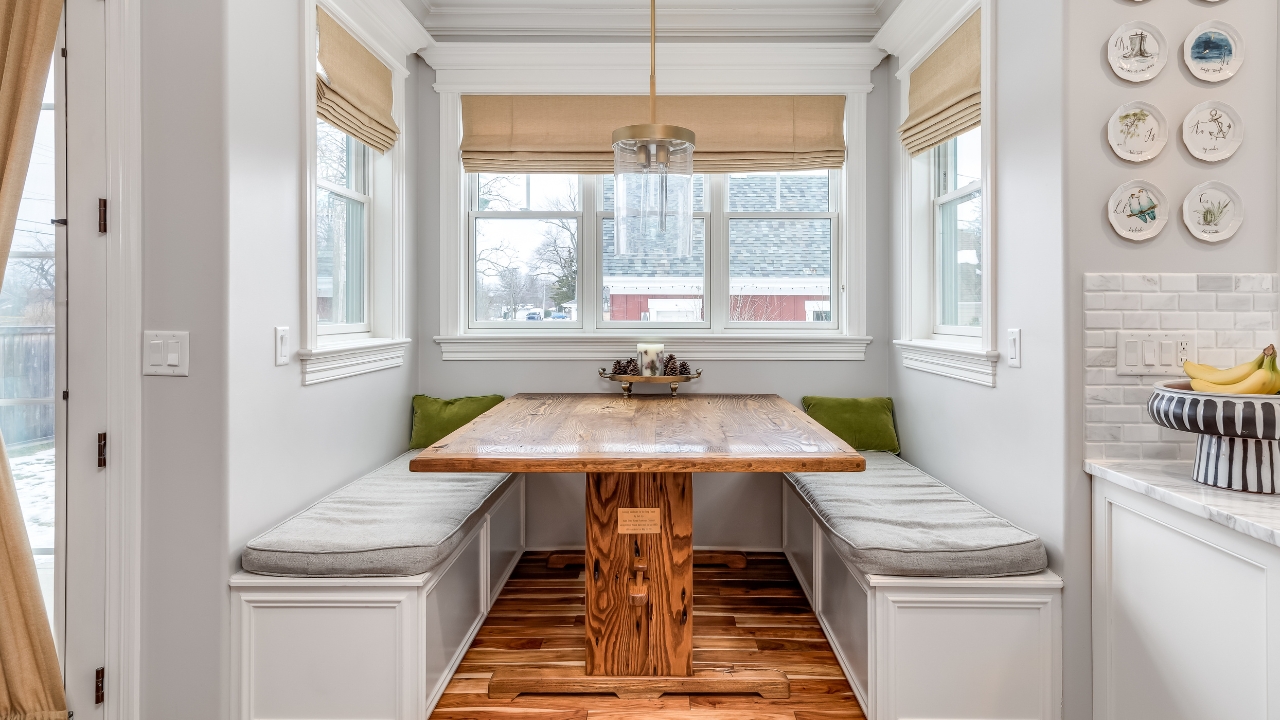
1. Bench under the window + slim table
If you have a window, that’s your anchor. Put a bench under it and a narrow rectangular table in front. Use chairs only on the open side. The bench saves floor space, and kids can pile together without a maze of chair legs clogging the walkway.
2. Corner banquette with storage under the seats
In a true corner, an L-shaped banquette earns its keep. Storage under the seats hides less-used dishes, placemats, or small appliances, and the table tucks into the corner instead of floating awkwardly in the middle. Add two small chairs on the open sides if you need more seating.
3. Round pedestal table in a tight spot
Round tables are forgiving in small spaces. One pedestal base means fewer legs to bump, and you can squeeze in an extra chair when you have company. This works well in square or odd-shaped nooks where a rectangle feels too long and pokey.
4. Wall-mounted bench with flip-up seats
If the nook sits in a high-traffic zone, a shallow built-in or wall-mounted bench keeps the floor clear. Flip-up seats give you hidden storage without extra furniture. Pair it with a smaller table that’s easy to slide closer or farther out depending on how many people are sitting.
5. Cafe-style setup with two small chairs
Sometimes you only have room for two. A small round or square table with two light chairs still counts as a nook. Keep the chairs visually light—open backs, simple legs—so the area looks airy, not cramped. It’s perfect for quick breakfasts or coffee with one friend.
6. Narrow rectangular table parallel to the wall
If your space is long and skinny, run the table along the wall instead of sticking it out into the room. Chairs sit on the open side and possibly at the ends. This creates more of a breakfast “counter” feel without committing to a full built-in.
7. Drop-leaf table you can expand or shrink
A drop-leaf table lets you live small day to day and open things up when family comes over. Keep it folded down most of the time with one or two chairs, then pull it out and raise the leaves when you need extra seating. It’s space-saving without feeling temporary.
8. Bar-height table with stools tucked underneath
In tiny kitchens, a taller table with stools that completely tuck under can be a lifesaver. You gain a little more visual space because you’re not staring at chair backs. Stools are easy to pull out for meals and slide away when you’re cooking or walking through.
9. Built-in bench + one side chair for flexibility
Even if you love the banquette look, it helps to keep at least one loose chair in the mix. That chair can angle out for extra room when someone is getting in and out, or move to another room when you need more seating. Built-in on one side, flexible on the other.
10. Nook that doubles as a homework or laptop spot
If space is tight, your breakfast nook probably needs to wear more than one hat. Use a table big enough for two placemats and a laptop, and store chargers, pencils, and paper in a nearby drawer or basket. That way the nook works hard all day instead of only at 8 a.m.
Like Fix It Homestead’s content? Be sure to follow us.
- I made Joanna Gaines’s Friendsgiving casserole and here is what I would keep
- Pump Shotguns That Jam the Moment You Actually Need Them
- The First 5 Things Guests Notice About Your Living Room at Christmas
- What Caliber Works Best for Groundhogs, Armadillos, and Other Digging Pests?
- Rifles worth keeping by the back door on any rural property
*This article was developed with AI-powered tools and has been carefully reviewed by our editors.