10 Places Ants Get In During Spring That Most People Miss
Spring sends ants searching for food and moisture, and your home offers both in abundance. You usually notice a trail across a counter or along a baseboard, but by that point the colony has already mapped out hidden routes inside. By understanding the less obvious entry points, you can cut off those paths before the first line of workers appears.
Rather than focusing only on doors and windows, it helps to think like an ant and follow the small seams, gaps, and shortcuts that run through every modern house. The ten locations below are where those trails most often begin, even though most homeowners rarely inspect them closely when the weather warms.
1. Hairline cracks in foundations and slab edges
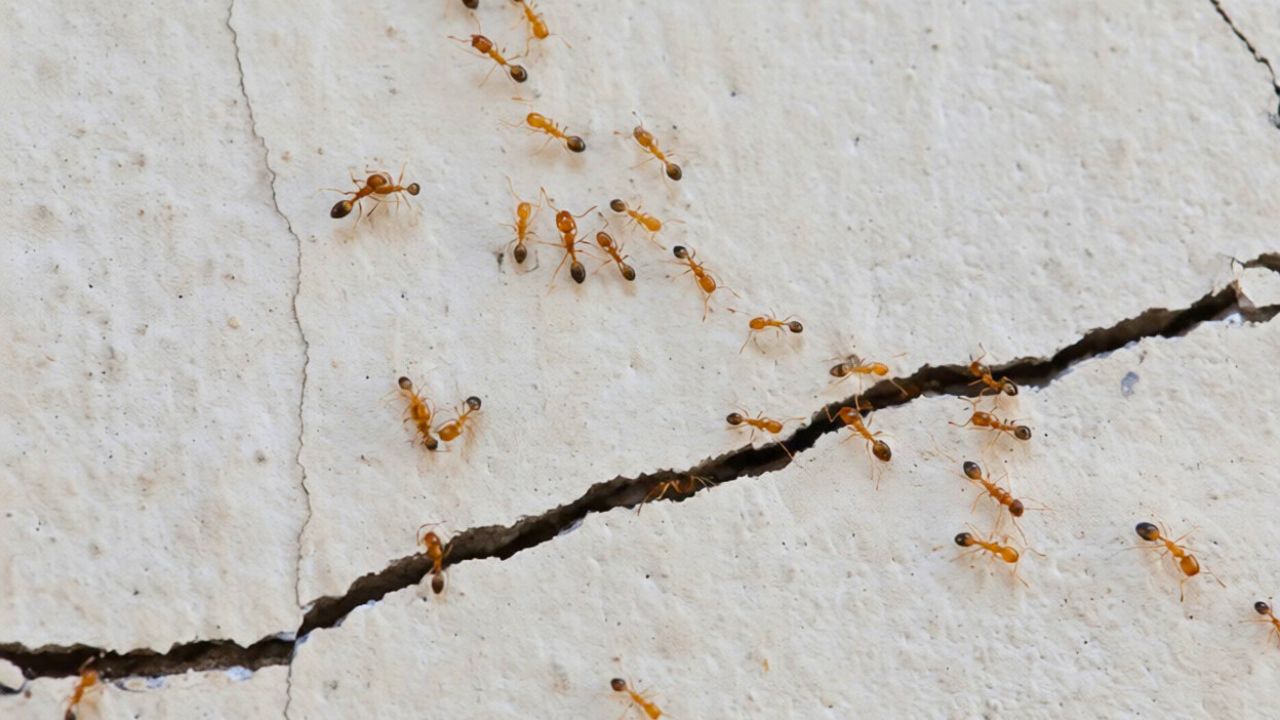
You probably expect to see pests around big gaps, yet spring ant invasions usually start at hairline fractures along your foundation. Professional inspections repeatedly find that tiny cracks in are enough for workers to squeeze through, especially when soil warms and colonies expand toward your exterior walls. As moisture collects near slab edges after rain, the concrete holds just enough dampness and warmth to draw scouts that then follow the fracture straight into framing cavities and subfloor spaces.
Because these fissures are narrow, you often cannot see them until you crouch down with a flashlight and run a fingertip along the concrete. Leaving those seams unsealed near utility penetrations or where patios meet the house gives ants an easy highway. When you patch visible fractures with mortar or high quality sealant and brush away soil that sits directly against the slab, you remove some of the most reliable routes that ants use to shift from outdoor nests into interior wall voids each spring.
2. Gaps around doors, windows, and thresholds
You might check whether a door closes properly, but ants care more about the thin line of daylight under a threshold or along a warped frame. Pest specialists describe doors, windows, and foundations as your first line of defense, and they point out that securing windows, doors, and is one of the simplest ways to block ant access before it starts. Even if you keep doors closed, worn weatherstripping or a loose sweep can leave a channel that workers follow from porch to foyer in a straight line.
Open windows and screen doors create an even more direct route. When you let in fresh air on a mild afternoon, it is easy to overlook the fact that open windows and also act as convenient entry points for foraging ants drawn to indoor food and drink spills. By pairing tight fitting screens with intact caulk around frames and a snug seal at the bottom of each exterior door, you make these high traffic areas much less attractive to scouting workers looking for the easiest shortcut into your kitchen or living room.
3. Cracks in walls, siding seams, and exterior holes
Even if your foundation is sound, ants can still reach interior spaces through vertical surfaces that look solid at a glance. Over time, siding shifts and trim boards pull away, creating small voids where the wall meets soffits or corner posts. Detailed inspections show that many ant species nest in soil and then move upward through cracks in walls, treating each seam as another tunnel in their network. Once inside the cavity behind siding, workers can travel laterally until they find an indoor gap around a window frame, outlet, or baseboard.
Holes left by old cable lines, damaged stucco, or missing mortar between bricks also become hidden doors that you rarely notice from a distance. Ant control guides advise you to look closely for holes in the that need sealing, since these punctures often sit behind shrubs or under decks where you do not routinely inspect. When you fill unused drill holes, repair loose siding, and repaint or re-caulk peeling trim, you remove the vertical channels that let ants bypass your foundation barrier entirely and appear suddenly on upper floors.
4. Utility penetrations around cables, pipes, and HVAC lines
Every modern home is laced with pipes, electrical conduits, and refrigerant lines that must pass through exterior walls, and ants treat each of those penetrations as a ready-made tunnel. Pest professionals explain that in most homes there are multiple openings where wires, pipes, and enter, and those spots often have gaps that are never fully sealed. When sealant dries out or foam shrinks, a ring of open space forms around the line, giving ants a sheltered passage straight into wall cavities and utility closets.
Because these penetrations are usually tucked behind appliances or hidden by landscaping, you rarely see the trails that form there. Guidance on ant inspections recommends that you search outdoors where siding meets service lines and around meter boxes, then follow any activity back toward the nest. Packing those openings with pest resistant sealant and escutcheon plates interrupts a major highway system that allows colonies to move from soil into interior framing without ever crossing an exposed surface where you might notice them.
5. Vents, weep holes, and hidden airflow gaps
Some of the most overlooked ant entry points are features you actually need for ventilation and moisture control. Brick walls, for example, rely on small openings that let water drain and air circulate behind the veneer. Spring ant activity often spikes when workers discover that these vents and weep connect directly to framing spaces that lead into kitchens, bathrooms, or basements. Because the gaps are part of the building design, you cannot simply seal them, which means ants can exploit them unless you add screens or barriers that still allow airflow.
Roof vents, gable vents, and dryer exhausts create similar opportunities. When louvers crack or screens tear, ants can climb siding or nearby vegetation and slip into attic spaces, then follow insulation or rafters until they reach interior light fixtures and wall voids. Inspection guides advise you to check these openings when you look for outdoor hotspots and to repair or add fine mesh covers that keep insects out while preserving the ventilation your structure needs. By tightening up these airflow gaps, you close off a network of vertical routes that would otherwise stay completely out of sight.
6. Kitchen hotspots: under appliances, grout lines, and pantry seams
Once ants are inside, the kitchen becomes the central prize because it combines food, water, and warmth in a compact area. Specialists describe the kitchen hotspots that attract colonies, including the trash can, sink, pantry, area under the sink, counters, windowsills, and the space under appliances. Tiny spills of sugary drinks, crumbs near a toaster, or grease under a stove provide enough calories to sustain a steady stream of workers, and moisture around the sink or dishwasher keeps them returning.
What you often miss are the structural gaps inside that same room. Reports on tiny invaders in food prep areas highlight how cracks in walls let ants move from voids behind cabinets into the open only when they reach a food source. They may travel behind backsplash tiles, along the underside of countertops, and through screw holes in cabinet backs, which means you might only see a few workers on the surface while a larger trail runs just out of sight. When you seal gaps along backsplash edges, tighten trim, and keep floors and counters free of residue, you reduce both the incentive and the opportunity for ants to turn your kitchen into a permanent foraging ground.
7. Bathrooms, laundry rooms, and other moisture pockets
Ants are drawn to water as much as they are to food, which makes bathrooms and laundry rooms prime real estate once temperatures rise. Pest reports point out that bathrooms provide high humidity, frequent condensation, and plenty of hidden plumbing chases, all of which support ant activity even when you keep surfaces relatively clean. Leaky faucet bases, damp shower caulk, and water-damaged trim create micro habitats where workers can drink and then retreat into nearby wall voids.
Laundry rooms add warm appliances, floor drains, and utility penetrations to that mix. Guidance on indoor hotspots stresses that ants can establish themselves virtually anywhere, but they are especially likely to appear where water lines, drainpipes, and vents converge. If you seal gaps around plumbing, repair soft or swollen baseboards, and keep these rooms dry with proper ventilation, you make them far less appealing as staging areas for larger infestations that later spread to adjoining bedrooms or hallways.
8. Wall voids, attics, and hidden structural channels
By the time you see a trail across a floor, ants may already be using the inside of your walls as a protected highway system. Industry data on other common hideouts shows that ants frequently occupy spaces around insulation, under floors, and near heating units, where they can stay warm and undisturbed while they expand the colony. From there, they emerge through tiny gaps at baseboards, electrical outlets, or trim joints, which explains why you might see them in several rooms that do not seem connected on the surface.
Attics and crawl spaces extend that hidden network even further. Inspection checklists advise you to look for ant activity along joists, around chimneys, and near the siding on your structure, since those areas often connect directly to wall cavities and exterior entry points. When you treat these structural channels as part of the same system, using targeted baits and sealing visible seams, you avoid the cycle in which you only wipe away surface trails while the main traffic continues behind the drywall and above the ceiling.
9. Baseboards, floor seams, and hidden interior gaps
Inside finished rooms, you tend to focus on open surfaces, yet ants usually prefer to move along edges where floors meet walls. Pest guidance on how ants enter the notes that they often follow seams in walls and other construction joints that are not fully sealed. Small gaps under baseboards, expansion joints in hardwood or laminate, and spaces where stair stringers meet drywall all give ants covered routes between rooms, so you may misjudge the scale of the problem if you only see a few workers at any one spot.
To track these concealed paths, ant inspection guides recommend that you watch where trails disappear, then look for small cracks, nail holes, or separations in trim that line up with that point. When you caulk along baseboards, repair loose quarter round, and close gaps at floor transitions, you gradually shut down the interior corridors that let ants keep reappearing after you clean up visible trails. Pairing that sealing work with bait placements along known routes and in hotspots for ants gives you a much better chance of stopping spring invasions at their source instead of fighting them room by room.
Like Fix It Homestead’s content? Be sure to follow us.
Here’s more from us:
- I made Joanna Gaines’s Friendsgiving casserole and here is what I would keep
- Pump Shotguns That Jam the Moment You Actually Need Them
- The First 5 Things Guests Notice About Your Living Room at Christmas
- What Caliber Works Best for Groundhogs, Armadillos, and Other Digging Pests?
- Rifles worth keeping by the back door on any rural property
*This article was developed with AI-powered tools and has been carefully reviewed by our editors.