10 Signs Something Is Nesting in Your Crawl Space
Photo credit: Chad Robertson Media/Shutterstock.com
Crawl spaces are out of sight, which makes them a favorite spot for animals looking for dry ground and a little warmth. The sooner you catch a visitor, the less cleanup, smell, and repair work you’ll be stuck with later. Some clues are obvious, others are easy to shrug off until the damage shows up.
1. New Scratching After Dark

Quiet house, then you hear it, a scrape, a rustle, a thump that seems to come from under your feet. Noises that start up around dusk and keep going off and on all night usually point to something active, not a loose duct or a settling joist. If it gets louder when the heat turns on, animals may be moving toward the warmer side of the crawl space.
Don’t waste time banging on the floor hoping it leaves. Do a daylight check instead: walk the foundation perimeter, look for disturbed soil by vents, and shine a bright flashlight through any vent screen you can reach. If the sound is heavy and slow, think raccoon or opossum, and that’s a good time to call wildlife control, not wrestle it yourself.
2. Strong Ammonia Or Musky Odor

A sharp, eye-watering ammonia smell points to urine, usually rodents. A heavier musky funk can be skunk, raccoon, or a nest that’s been used for a while. Either way, that odor sinks into insulation and wood, and it can drift into your living space through tiny gaps around plumbing and wiring.
Before you buy “odor remover” sprays, find the path. Check the crawl space access door, rim joist area, and the floor above for openings. Once the animal is out, contaminated insulation often needs to be bagged and removed, and droppings cleanup calls for a proper respirator, gloves, and controlled sweeping, not a shop vac blast that puts dust in the air.
3. Fresh Soil Piled At Foundation Edge
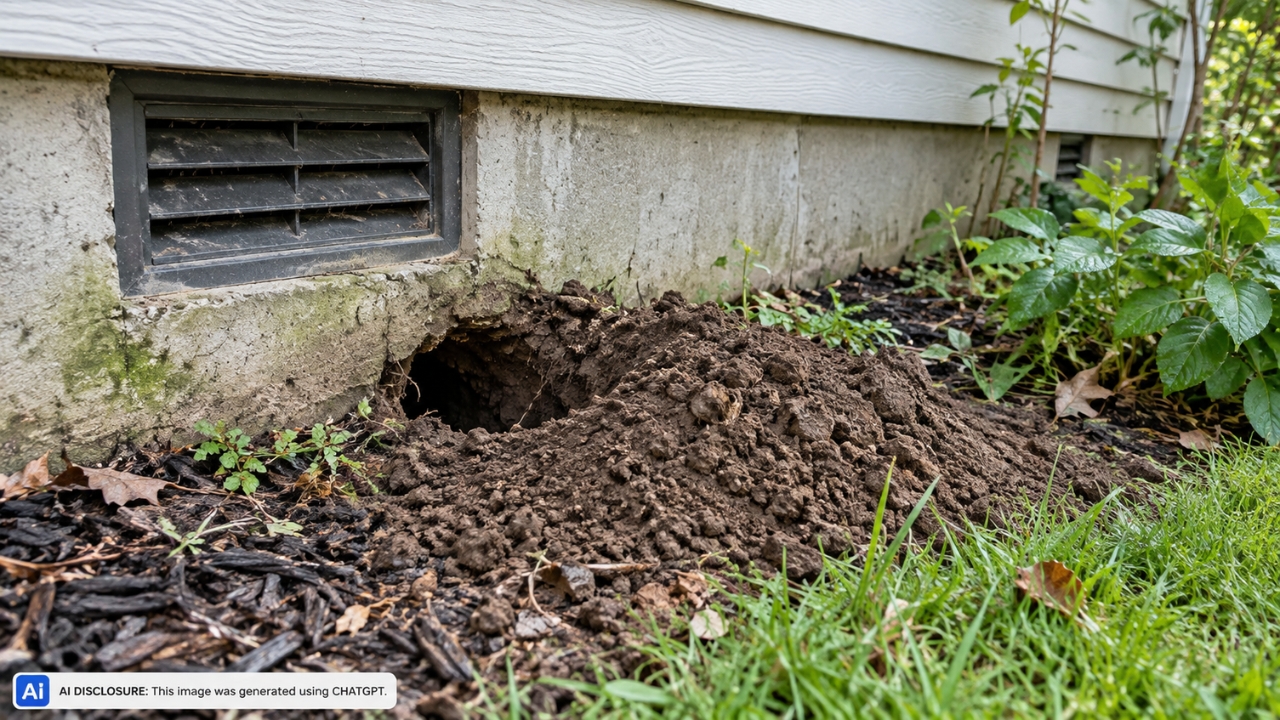
After a rain or a windy day, a little dirt movement happens. A neat pile of fresh soil, especially right at the foundation or under a vent, is different. That’s digging, and it’s often the first sign of a groundhog, skunk, or fox trying to make a den where it stays dry.
Mark the spot and look again the next morning. If the pile grows or the hole is larger, don’t collapse it with a shovel if you suspect a larger animal is inside. Blocked dens can lead to frantic chewing or a trapped animal, and the smell problem gets expensive fast.
4. Torn Vent Screens Or Warped Covers
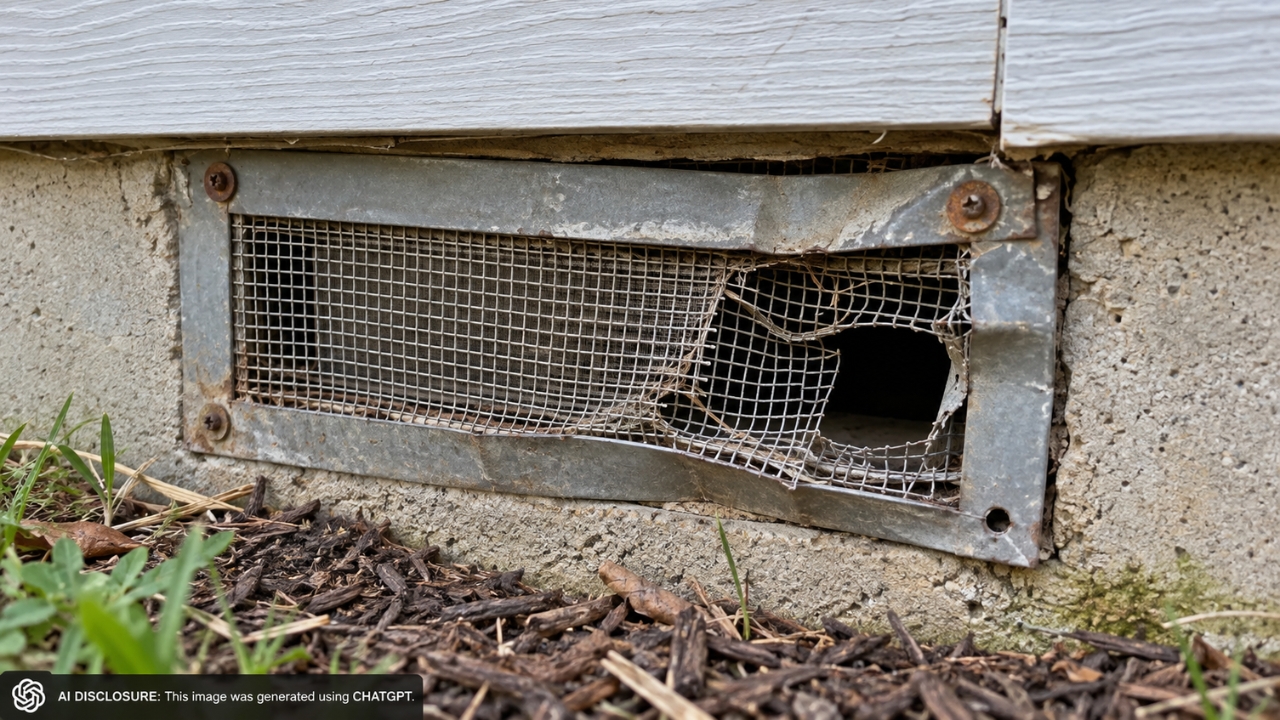
Metal vent screens don’t “fall off” in a clean rip. If the mesh is bent, pulled, or the screws are missing in a pattern, something worked at it. Cheap plastic covers crack, and once there’s a gap, it doesn’t take much for a rat or squirrel to squeeze through.
Fixing the opening beats trapping all day. Replace damaged screens with sturdy galvanized hardware cloth and exterior screws, and fasten it to framing or masonry properly. If you have an older crawl space with open vents, check local code and moisture conditions before sealing everything up, some homes need venting, others do better with a sealed, conditioned crawl space done right.
5. Droppings On Vapor Barrier Or Joists
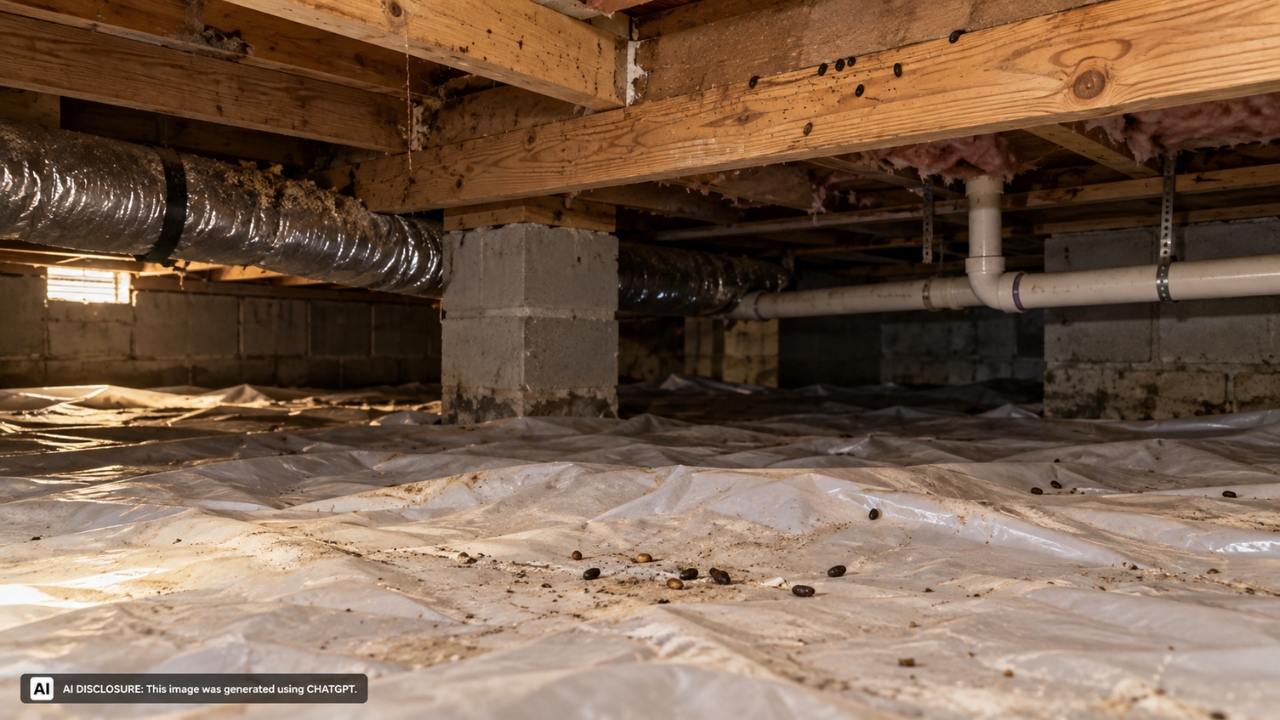
If you’ve got a vapor barrier down, it turns your crawl space into a giant evidence board. Mouse droppings look like dark rice. Rat droppings are larger and blunt. Raccoon droppings are bigger and often show undigested bits, and they tend to show up in a repeated spot like a latrine area.
Don’t touch droppings barehanded, and don’t sweep them dry. Lightly mist with a disinfectant cleaner, then pick up with paper towels and double-bag. If you’re seeing a lot, set your focus on exclusion first, then trapping, otherwise you’ll just keep cleaning the same mess.
6. Insulation Hanging Like Torn Cotton
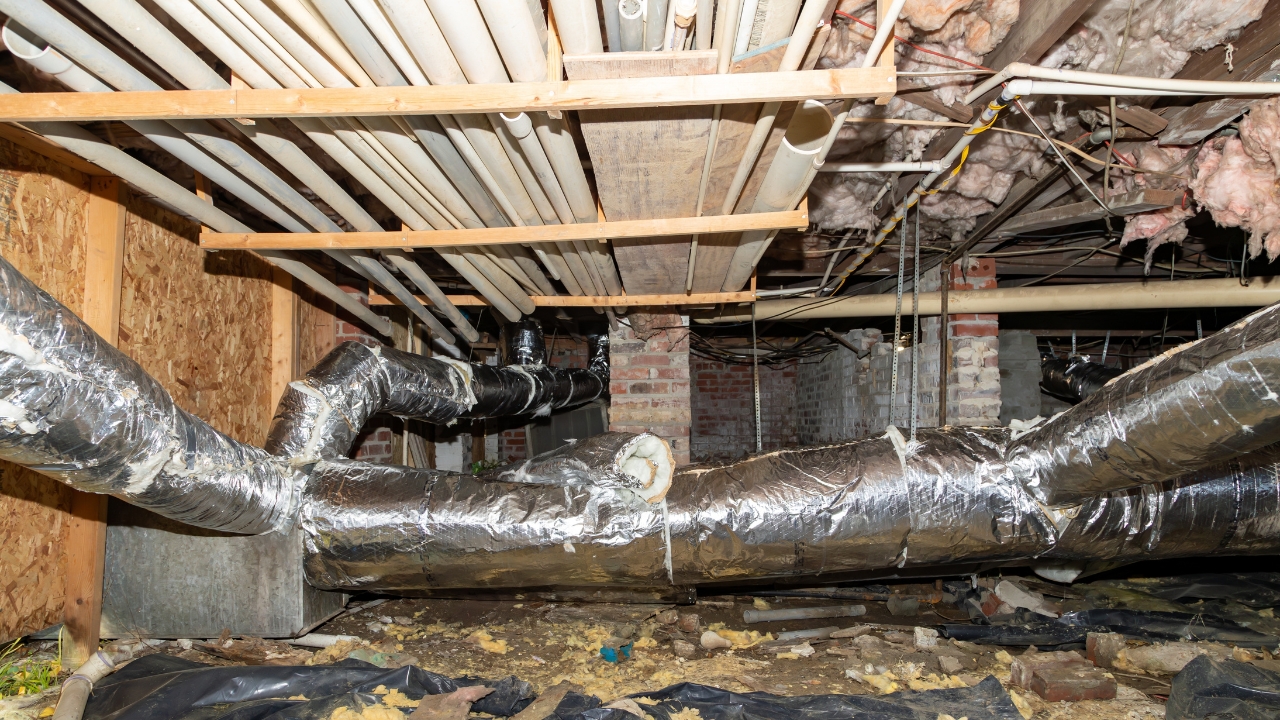
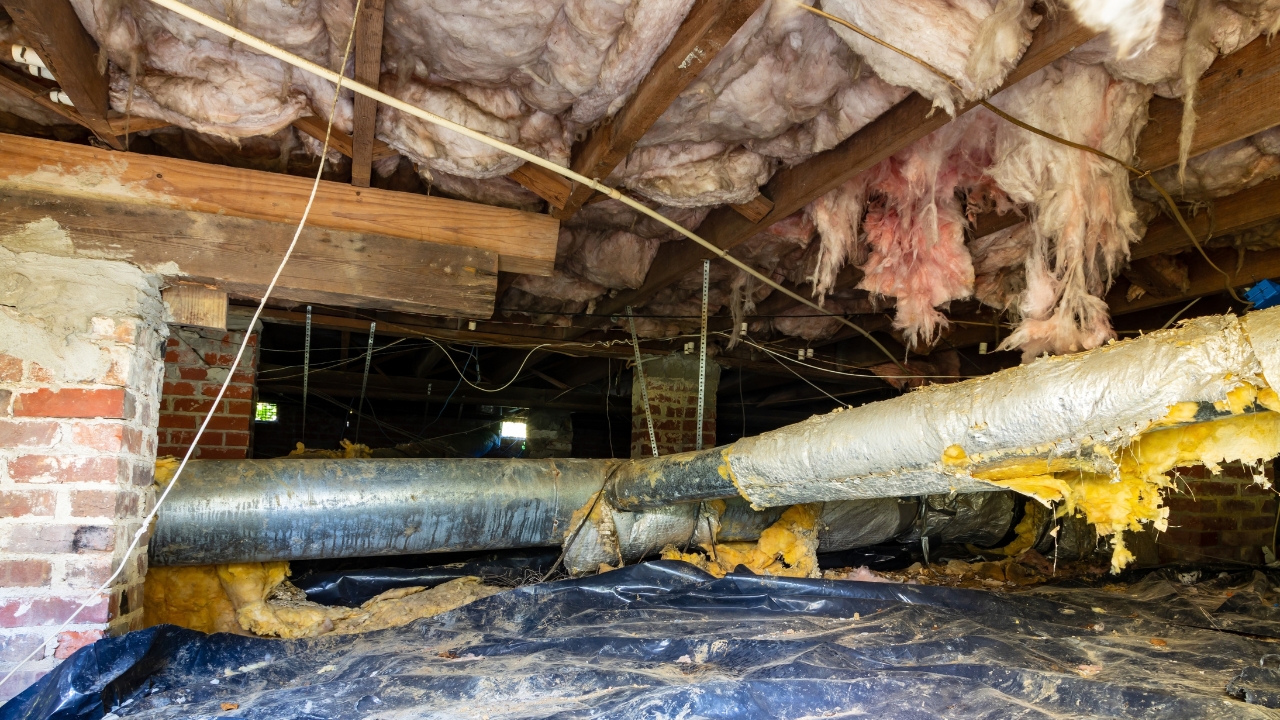
Fiberglass batts don’t sag in strips unless something has been in there. Animals pull it down for nesting, or they tunnel through it and shred the facing paper. Besides the heat loss, torn insulation can hide chewed wiring, which is where the real risk lives.
Once you’ve confirmed activity is over, replace damaged batts and support them properly with insulation hangers or wire. If you find chewed electrical cable, stop and call a licensed electrician. Crawl spaces are cramped, and fixing wiring “good enough” down there is how fires start.
7. Pet Fixation On One Floor Spot
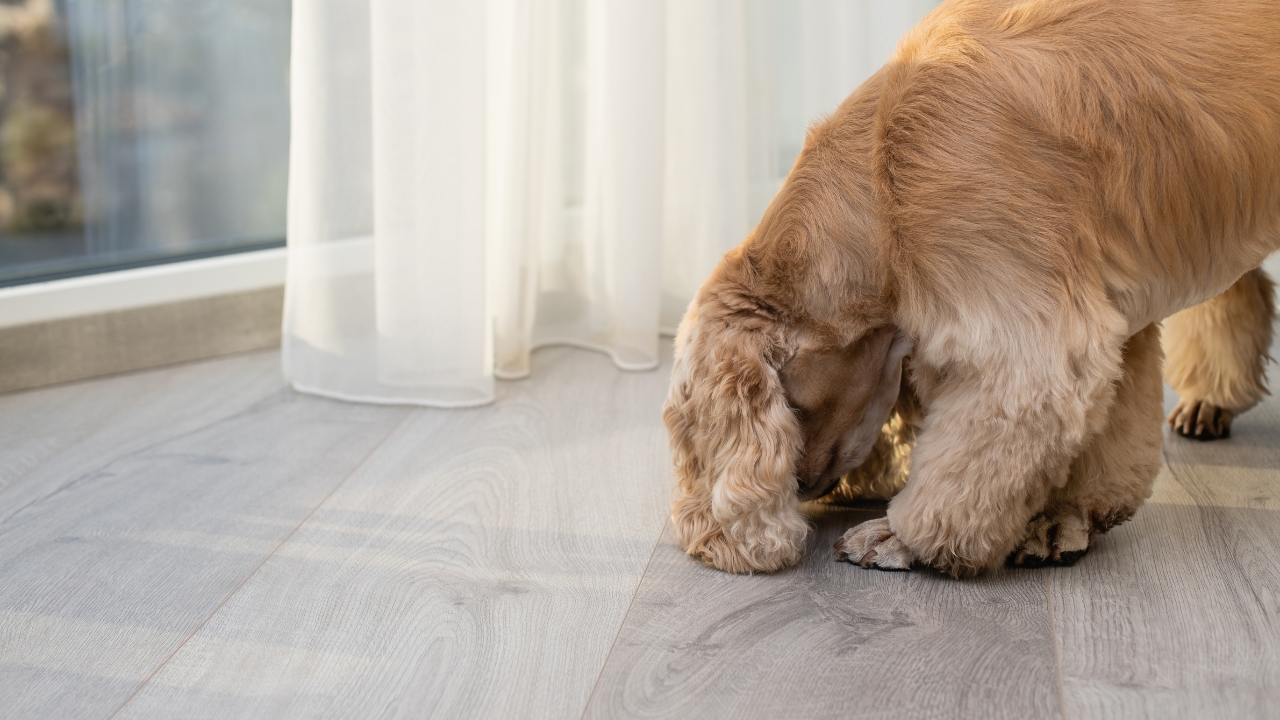
Does your dog keep staring at the same corner, whining, or pawing at a vent? Cats will sometimes park themselves over a warm spot and listen. Pets notice movement and scent long before you do, especially if a nest is close to the subfloor.
This one isn’t proof by itself, pets can get obsessed with bugs, too. Pair it with another sign like odor, droppings, or a torn vent. If your pet is trying to dig at the crawl space door, don’t let it “handle it.” That’s how bites happen.
8. Greasy Rub Marks Along Pipes
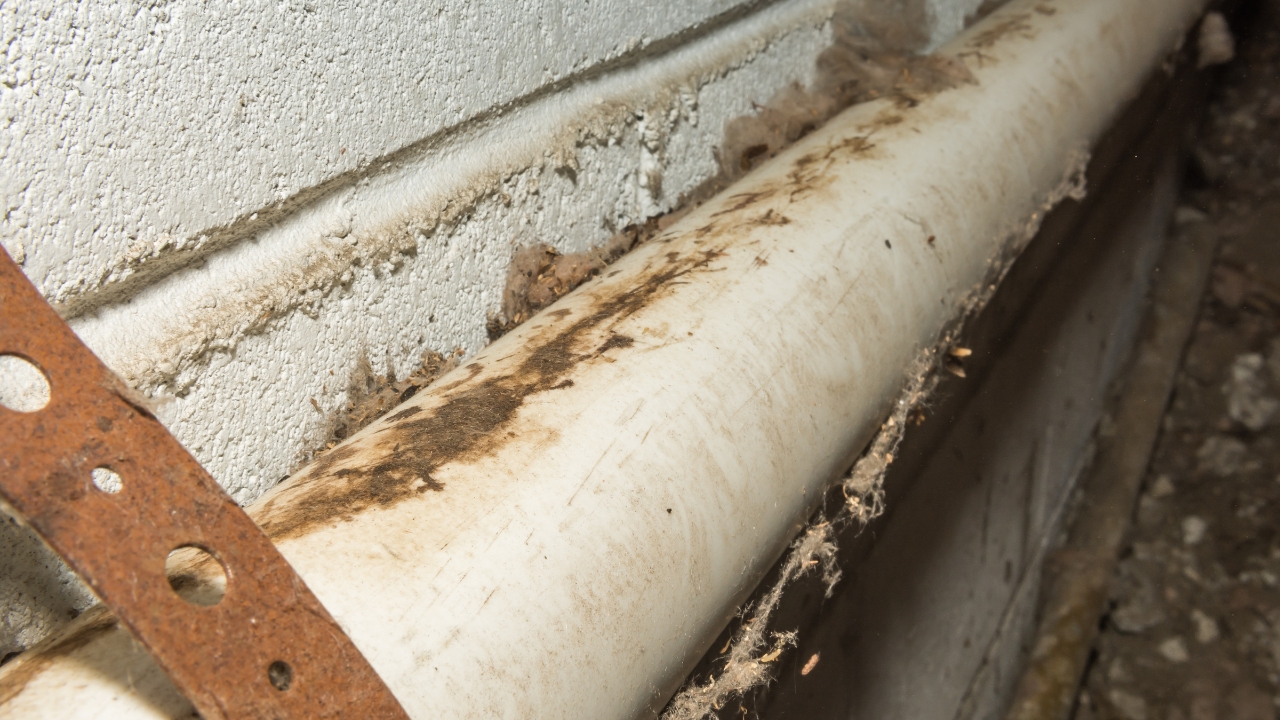
This is a sign most people miss because they aren’t looking for it. Rats and mice run the same routes and leave dark, greasy smears where their fur oils and dirt rub off on wood, ducts, and plumbing lines. You’ll often see it near a wall, along a sill plate, or on the side of a duct run.
Wipe a small area with a paper towel and cleaner, then check back in a week. If the mark returns, you’ve got traffic. Traps can work well here, but only after you’ve sealed entry points, otherwise you’re feeding the problem.
9. Sudden Duct Tape “Fixes” Failing
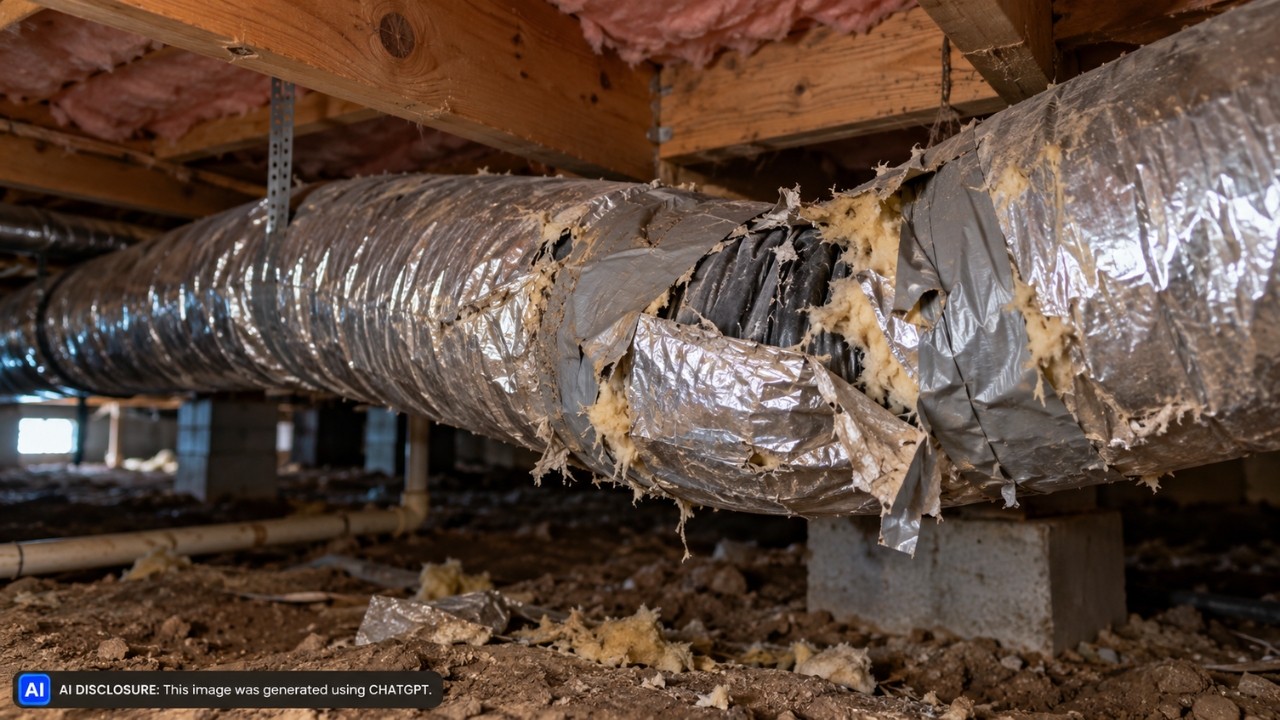
If your duct tape patches keep peeling, it’s not always bad tape. Animals climb and tug at flexible ducts, or they chew the outer jacket to get at warm air. That wrecks airflow and can dump conditioned air into the crawl space, which you pay for month after month.
Skip the bargain tape. Use mastic or UL 181 rated foil tape for ducts, and replace any flex duct that’s shredded or crushed. If the damage is near a furnace or gas appliance, get an HVAC tech involved, you don’t want to guess around combustion air and venting.
10. Flies Gathering Near The Access Door
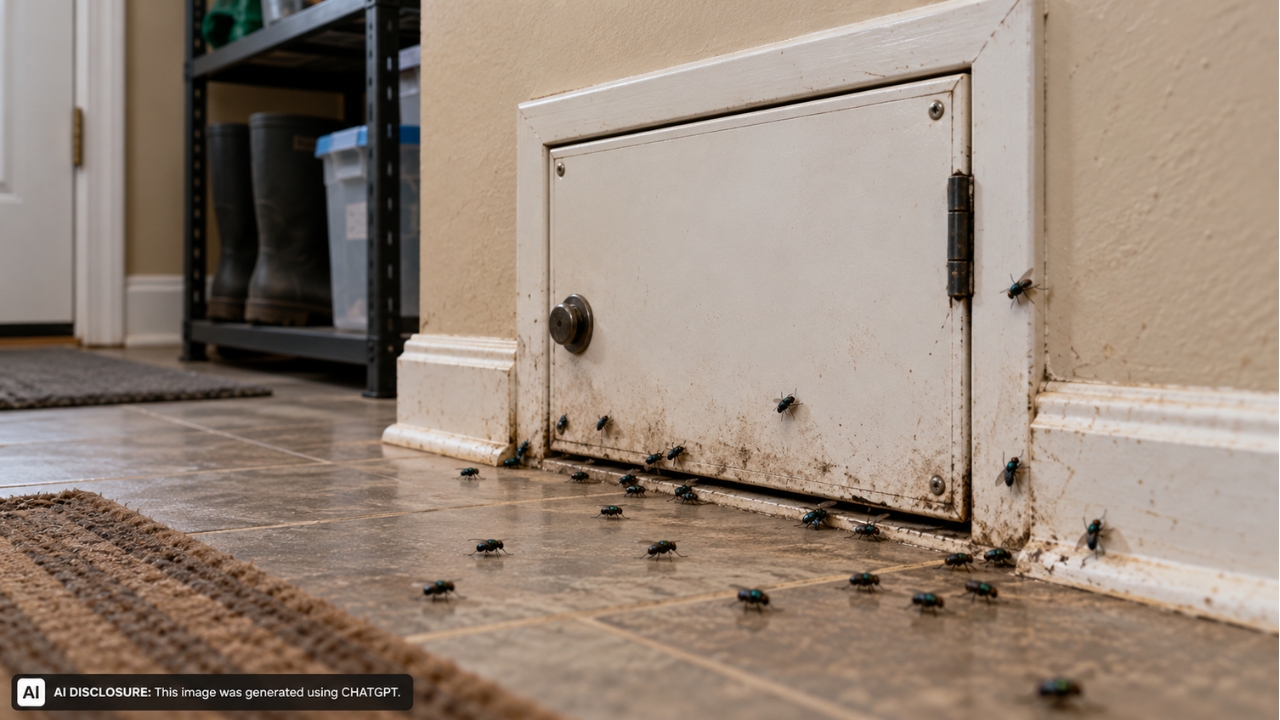
When blow flies show up inside near a crawl space hatch or along baseboards, pay attention. A dead animal in the crawl space brings flies, then maggots, then odor that seeps up for weeks. This tends to show up after a cold snap or right after someone “sealed a hole” without confirming what was inside.
This is one of the few times the cheap option can be fine: if you can see the carcass and safely reach it, a shovel, heavy-duty trash bags, and a disinfectant cleanup can solve it. If it’s under insulation, behind ducts, or you can’t stand the smell long enough to work, pay for removal. Getting it wrong turns into a full crawl space remediation job.
Once you spot signs of nesting, focus on two steps in order: get the animal out, then block how it got in. Do the sealing work with solid materials, metal mesh, wood, and proper fasteners, not expanding foam by itself. If you keep moisture under control with good drainage and a sound vapor barrier, the crawl space becomes a lot less inviting.
Like Fix It Homestead’s content? Be sure to follow us.