10 Things That Make Your Patio Look Cheap (Even If It Isn’t)
Your patio can be built from quality materials and still read as bargain-bin if a few details are off. Design missteps, neglected maintenance, or the wrong accessories can quietly drag down the whole space, even when you have invested serious money in it. By spotting the habits that visually cheapen an outdoor area, you can redirect your budget and effort toward changes that instantly look more considered and high end.
The most polished patios share a few common traits: they feel intentional, they are scaled correctly, and every element looks cared for. Edit out the visual clutter, fix the worn pieces, and layer in smarter finishes, and the same square footage becomes an outdoor room that feels far more expensive than it actually was.
1. Dated or damaged furniture that drags everything down
Nothing makes a patio feel tired faster than furniture that is clearly past its prime. Faded sling chairs, cracked plastic loungers, and sagging wicker signal that you have stopped paying attention, even if your paving and planting are immaculate. Design experts warn that Dated, Damaged Furniture is one of the first things people notice outdoors, because large seating pieces dominate the view and invite guests to sit; if they look flimsy or uncomfortable, the entire setting feels second-rate.
You do not need to replace everything with custom teak to fix this. Often, you can rescue a solid frame by cleaning it thoroughly, tightening loose joints, and swapping in new cushion covers in a simple, tailored fabric. When a piece is structurally failing or rusted through, however, you are better off letting it go and investing in fewer but sturdier items with clean lines and weather-appropriate materials, similar to the more refined sets highlighted in many patio decor ideas. Even a modest bistro table and two chairs that look fresh will elevate the space more than a full, mismatched set that has clearly seen better days.
2. Worn-out soft furnishings and missing textiles
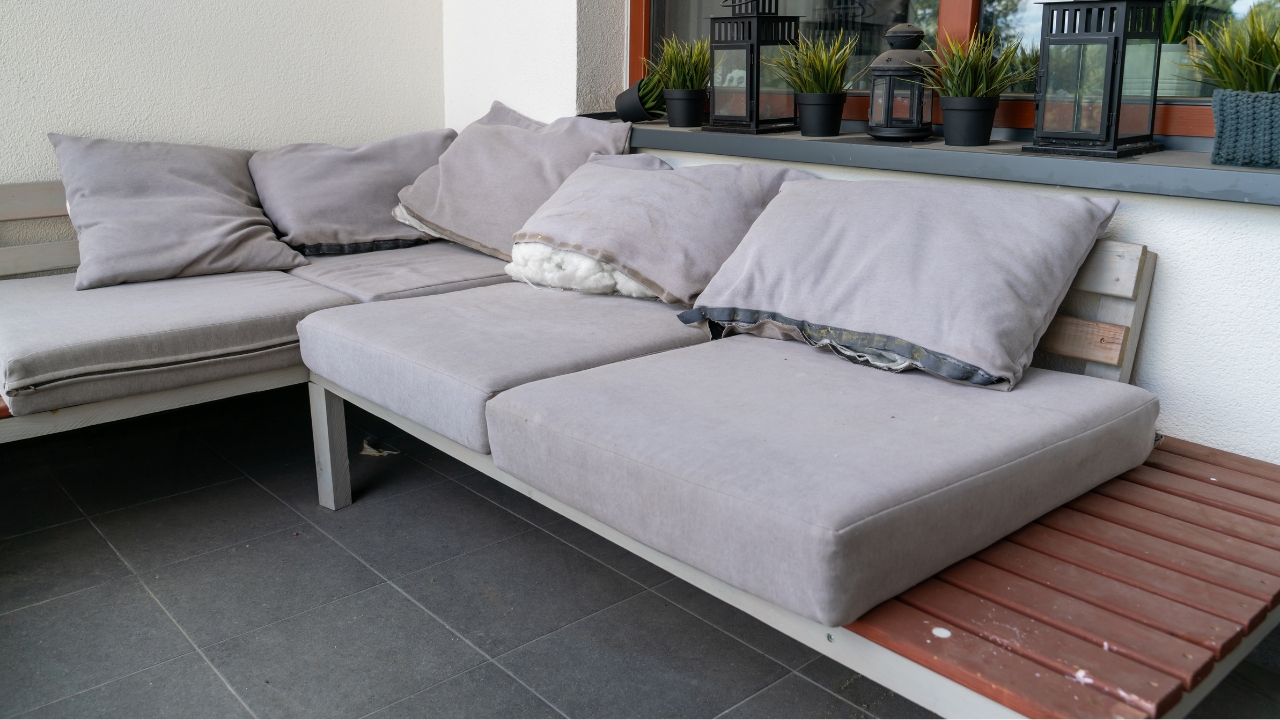
Indoors, you would never keep a sofa with flattened cushions and stained throw pillows in your main living room, yet many patios end up with exactly that treatment. Outdoor cushions that are sun-bleached, mildewed, or permanently flattened make seating look uncomfortable and uncared for. Designers who study what makes patios feel cheap consistently point to Worn Out Furniture and textiles as a major culprit, because fabric is at eye level and close to where you sit, so any flaw is immediately obvious.
A total lack of textiles can have the opposite problem, leaving your patio looking stark and unfinished. A single outdoor rug can visually anchor a seating group and make the area feel like a real room, as shown in guides that recommend you Put Down an Outdoor Rug to define the zone. Fresh cushions in a restrained palette, a weatherproof throw for cool evenings, and a durable rug underfoot immediately signal comfort and care, even if the underlying furniture is quite simple.
3. A cluttered mix of colors, pots, and accessories
Visual noise is one of the fastest ways to make an outdoor area feel chaotic instead of curated. Too many different pot styles, a rainbow of cushion colors, and a scatter of ornaments can make your patio resemble a clearance aisle rather than a considered extension of your home. Garden stylists warn that when you ignore a cohesive scheme and let a riot of plants build up, the result tends to look cheap, because the eye has nowhere to rest and the underlying structure disappears.
A more elevated feel comes from editing and repeating. Choose one or two pot materials, such as charcoal fiberstone and terracotta, and repeat them in different sizes rather than mixing ten unrelated finishes. Limit your accent colors to a tight palette that connects back to your interior rooms, a strategy that designers often use to make a patio feel like an extension of the house in ways to make. A few sculptural pieces, like a single lantern style or one statement planter, will read as intentional, while a scatter of novelty items will not.
4. Poor planning and awkward patio layout
Even expensive stone can look like an afterthought if the patio itself is the wrong size or in the wrong place. Squeezing a dining table into a narrow strip that barely allows chairs to pull back, or pouring a huge slab that dwarfs a small garden, makes the proportions immediately feel off. Outdoor design guides list Making the patio too small or too large and Putting the patio in the wrong place among the most common errors, because scale and siting are hard to disguise with decor.
A more polished result comes when you treat the area as a series of zones rather than one undifferentiated pad. Landscape specialists advise you to Plan Before You or Build and to Treat your patio as distinct areas for dining, lounging, and cooking, each with appropriate furniture and circulation. When your layout supports how you actually live, with enough room to move around chairs and clear paths to doors, the space feels more custom and far less like a generic concrete pad.
5. Neglected surfaces and dirty paving
You can spend thousands on paving and still end up with a patio that looks cheap if you never clean it. Algae, moss, and ground-in dirt dull the color of stone and concrete, which makes the whole surface read as faded and low value. Exterior cleaning specialists point out that Why It is Important is that a faded patio reduces curb appeal and that Dirty and dull surfaces can give visitors the impression that the whole property is neglected.
Basic maintenance goes a long way. A yearly pressure wash on the correct setting, re-sanding joints where needed, and spot-treating stains from grills or planters can restore the original color and texture of your paving. Paired with simple lawn care, such as regular edging and mowing, this aligns with advice that one of the easiest Ways to Make Your Outdoor Space Look Expensive is simply to Mow Your Lawn and keep hard surfaces clean. The contrast between crisp edges and fresh paving instantly makes even basic materials feel more premium.
6. Trend-chasing finishes that date quickly
Some patios look cheap not because they were inexpensive to build, but because they are locked into a trend that has clearly passed. Ultra-fashionable paver colors, overly patterned tiles, or novelty aggregates can age a space in just a few years. Hardscape experts warn that Most Common Patio include Choosing Trend Led Materials That Don not Age Well, especially Patio Design Mistakes home, because those surfaces are expensive to change and quickly signal a specific era.
A more timeless look comes when you treat the patio as part of your home’s architecture rather than a separate fashion experiment. Neutral stone or concrete in simple shapes, classic brick patterns, and restrained grout colors tend to hold up better over time. If you love bold pattern, it is safer to express it through rugs, cushions, or accessories that you can swap out as tastes shift, a strategy that aligns with design advice to Elevate Your Outdoor by layering personality through decor rather than permanent finishes.
7. Harsh or inadequate lighting after dark
Even the best-styled patio can feel budget after sunset if the lighting is wrong. A single glaring floodlight that casts hard shadows or a string of cold, bluish LEDs can flatten textures and make your seating area feel more like a parking lot than a retreat. Outdoor living specialists caution that Lighting that is dim and harsh can cancel out your efforts to make a deck or patio cozy, and that simply adding more bright fixtures is not a good strategy.
Layered, warm lighting feels far more considered. Combine low-level path or step lights with softer string lights and a couple of table or floor lanterns, and keep color temperatures consistent so the scene reads as unified. Treating lighting as part of your decorating plan rather than an afterthought aligns with broader advice that Off the Cuff Decorating usually leads to missed opportunities such as overlooked lighting. The result is a patio that feels inviting and intentional in the evening, which always reads more high end than a space that effectively disappears after dark.
8. Messy planting and outdated garden edging
Plants can make a patio feel lush and expensive, but only if you manage them with the same discipline you bring to the hardscape. Overcrowded beds, random impulse buys, and dead or dying containers send the message that you are winging it. Landscaping professionals note that Common mistakes with soft landscaping include overcrowding planting areas and ignoring seasonal changes, which prevents plants from thriving and can ruin your garden design.
The details at the edges matter too. Plastic border strips that have popped out of place or faded to chalky gray instantly cheapen a planting bed. Garden trend watchers point out that some plastic edging products eventually crack, pop up, and look unnatural, and that But over time this kind of edging draws the eye away from plants and mulch. You get a far more refined effect with simple steel, brick, or stone edging and a planting plan that repeats a few reliable species in generous groups, rather than a scatter of one-offs.
9. Lack of cohesion with the rest of your home
A patio that feels disconnected from your interior will almost always read as cheaper than one that clearly belongs to the same story. If your house is calm and neutral inside but the patio is painted in clashing brights with entirely different materials, the contrast can feel jarring. Exterior design guidance often stresses that a cohesive scheme is not about matching everything, but about repeating enough elements that your eye understands the connection.
You can create that link through color, symmetry, and material choices. Using similar tones for cushions and rugs as you use for your indoor textiles, echoing the metal finish of your interior hardware in outdoor lanterns, and balancing furniture arrangements so they respect the same Tip about balance and symmetry that you use at the front of the house all help. Exterior stylists also remind you that Step 9, Keep, Symmetrical When you arrange exterior elements, you maintain a sense of order that feels more expensive. When your patio looks like a natural continuation of your home rather than an afterthought, even modest furnishings and finishes gain a sense of polish.
Like Fix It Homestead’s content? Be sure to follow us.
Here’s more from us:
- I made Joanna Gaines’s Friendsgiving casserole and here is what I would keep
- Pump Shotguns That Jam the Moment You Actually Need Them
- The First 5 Things Guests Notice About Your Living Room at Christmas
- What Caliber Works Best for Groundhogs, Armadillos, and Other Digging Pests?
- Rifles worth keeping by the back door on any rural property
*This article was developed with AI-powered tools and has been carefully reviewed by our editors.