What Caliber Actually Drops Feral Hogs Without Destroying the Meat?
Photo credit: The Jungle Explorer/Shutterstock.com
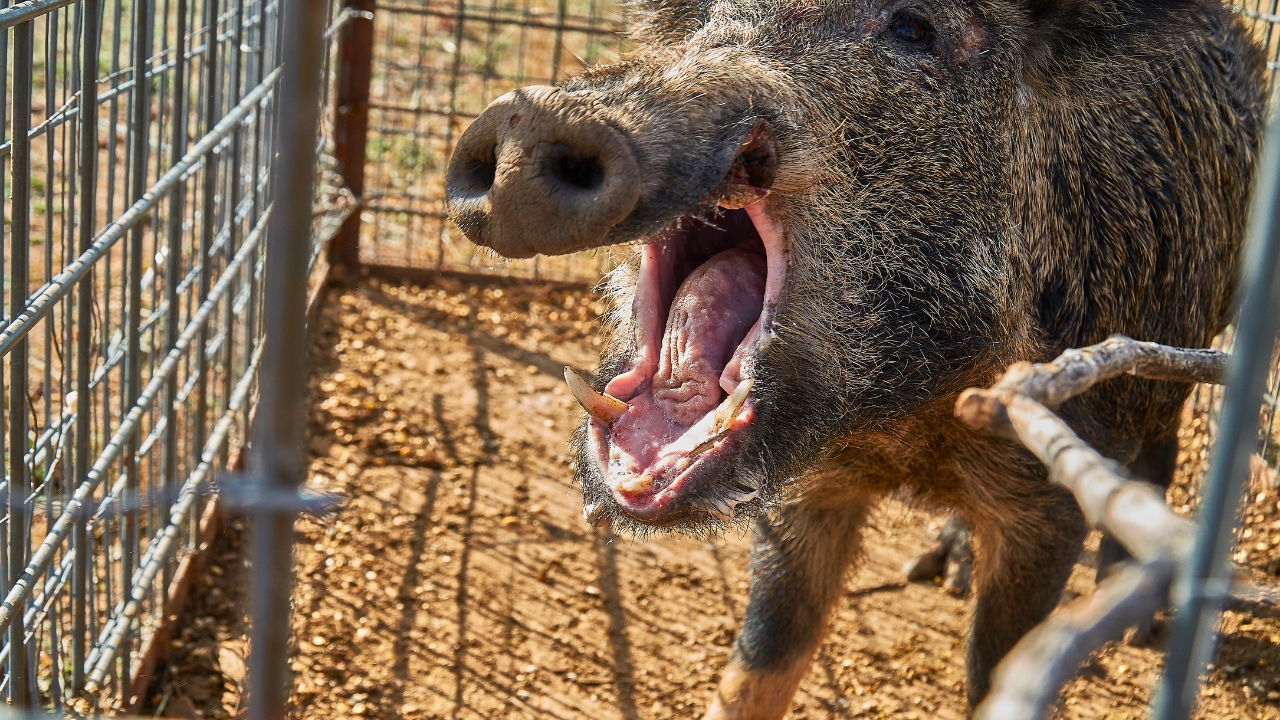
Feral hogs are a different category than foxes and raccoons. They’re tough, heavy-boned, and rarely stand still. At the same time, if you’re shooting them for the freezer, you don’t want to waste half the front shoulders because your bullet blew everything apart.
So you need enough gun to break them down reliably—but not so much that you’re turning good meat into a bloodshot mess. That balance is where a handful of proven hog calibers really shine.
Why hogs are harder on gear (and bullets) than deer
Boars carry thick shields of gristle over their shoulders, and even average hogs have heavier bones and tougher bodies than similar-sized deer. Poor bullets that work “okay” on whitetails can fail badly on hogs—fragmenting too early or not penetrating far enough.
That’s why bullet construction matters as much as caliber. A solid, controlled-expansion hunting bullet will do more for you than a random soft point, no matter what you’re shooting.
.223 Remington: the strict shot-placement option
Plenty of hogs have been killed cleanly with .223 Remington. With premium bullets and careful shot placement—broadside, tight to the shoulder, or behind the ear—it can absolutely work, especially on smaller hogs and inside 150 yards.
But there isn’t much room for error, especially on bigger boars. If you’re routinely dealing with 200+ pound hogs or don’t always get perfect angles, it’s smarter to step up to a mid-size caliber.
.243 Winchester for lighter recoil and solid performance
For folks who are recoil-sensitive but want more punch than .223, .243 Winchester is a good middle ground. With 90–100 grain controlled-expansion bullets, it carries plenty of energy for medium-sized hogs and offers better penetration than lighter varmint bullets.
You still have to be honest about your shot choices—quartering-toward shoulder shots on big boars will test any smaller caliber—but for most eating-sized pigs, .243 will put them down cleanly without wrecking as much meat as some larger calibers.
The “comfort zone” calibers: .308, .30-06, and 6.5 Creedmoor
For medium to large feral hogs, especially in areas where big boars are common, calibers like .308 Winchester, .30-06 Springfield, and 6.5 Creedmoor are extremely popular. They provide strong penetration, reliable expansion with good bullets, and enough extra margin for those less-than-perfect angles.
To protect meat, avoid ultra-fragile bullets designed for thin-skinned game at very high speeds. Instead, look for bonded bullets or well-regarded soft points. They expand, drive deep, and generally limit the “grenade” effect you can get from light, high-velocity varmint rounds.
Why shot placement and bullet choice matter more than raw power
Even with a .308 or .30-06, bad shots will waste meat—and may not drop a hog quickly. A good guideline is aiming for the high shoulder (to break bone and disrupt the spine) or a tight behind-the-ear shot when you can take it safely.
Pair that with bullets made for deeper penetration instead of explosive fragmentation. Controlled-expansion designs tend to mushroom and keep moving, which means less surface damage but more work done where it counts.
Calibers to be cautious with if you care about meat
High-velocity magnums (.300 WSM, some hot 7mm loads, etc.) will absolutely knock hogs flat, but they can also be extremely hard on meat at closer ranges, especially with lighter bullets.
If you’re mostly protecting crops and don’t care about recovery, that’s one thing. But if you’re filling the freezer, you’ll often be happier with something in the .243–.308 range where you get consistent penetration and less explosive impact on shoulders.
Matching the caliber to your actual hog problem
If you’re dealing with smaller hogs and you’re disciplined with shots, .243 or 6.5 Creedmoor with good bullets can give you a nice balance of meat recovery and clean kills. For mixed-size sounders and the chance of a big boar, .308 or .30-06 with a solid hunting bullet is a very safe bet.
Whatever you choose, practice from real hunting positions, know exactly where your rifle hits, and be willing to pass on sketchy angles. The right caliber helps, but respecting the animal—and your freezer—still comes down to how you use it.
Like Fix It Homestead’s content? Be sure to follow us.
- Man Says He Found Out the Fence He Paid For Wasn’t Actually on His Property
- Woman Says Her Neighbor Started Taking Mulch From Her Delivery Pile Before She Could Even Spread It
- I made Joanna Gaines’s Friendsgiving casserole and here is what I would keep
- What Caliber Works Best for Groundhogs, Armadillos, and Other Digging Pests?