9 Radiator Styling Tricks That Stop Making Your Old House Look Awkward
Photo credit: Marko Poplasen/Shutterstock.com
Old-house radiators are either charming or awkward—there’s not much in between. You can’t really hide them, and you shouldn’t block them (unless you like cold rooms and angry pipes). But you can work with them so they look intentional instead of like a leftover from three remodels ago.
1. Treat the radiator as a mini console table
If you’ve got a flat-topped radiator or a solid cover, use it like a shallow console. Add a simple tray, one plant that can handle heat, and maybe a framed photo. Skip anything tall and wobbly. You want low, solid pieces that won’t rattle every time the heat kicks on.
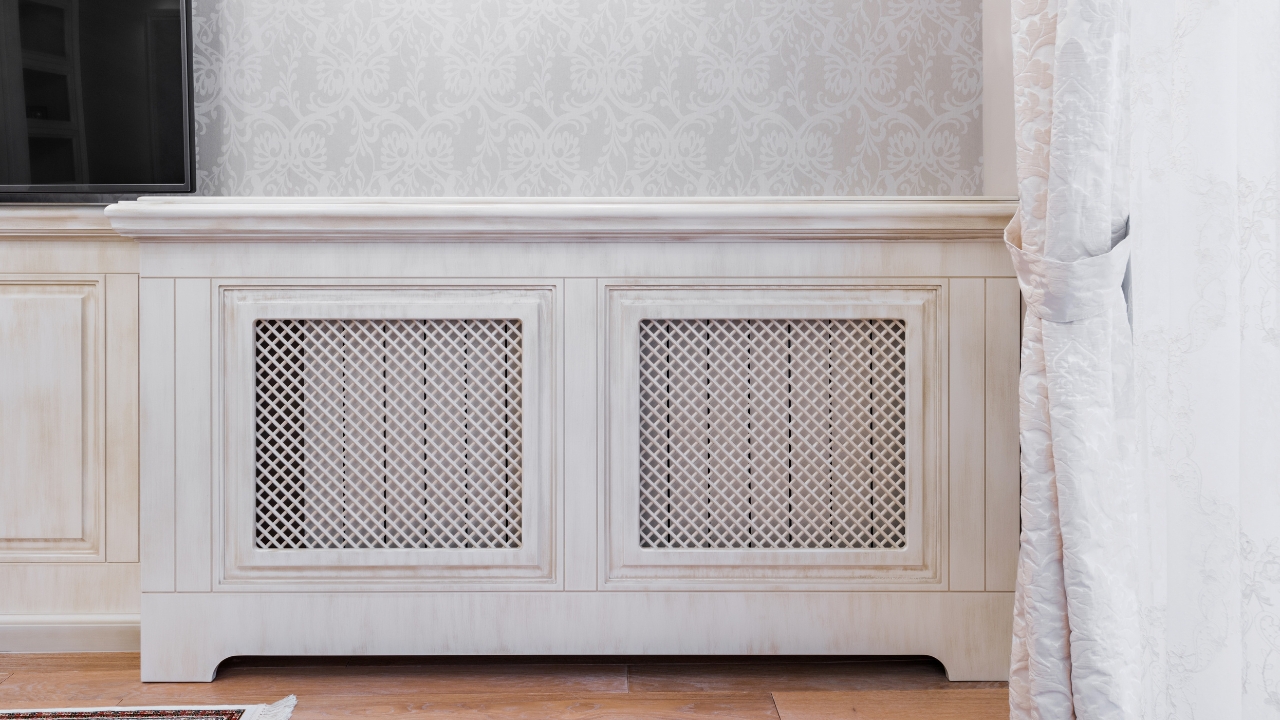
2. Add a made-for-it radiator cover (not a random shelf)
A good radiator cover with slats or grille fronts lets heat out but hides the heavy metal. Look for one sized to your unit so it doesn’t hang way over on either side. Paint it to match the trim or wall color and it suddenly feels like built-in furniture, not an eyesore you’re fighting with.
3. Paint the radiator to match the wall
If a cover isn’t in the budget, paint works harder than you think. A radiator in the same color as the wall falls back visually and doesn’t shout at you every time you walk in. Use a heat-safe paint and a small roller so you’re not fighting every corner with a brush.
4. Hang art just above, not right on top of it
Blank wall over a radiator makes it stand out. Hang one or two pieces of art a few inches above the top so air can still move freely. You get a clear focal point on the wall instead of the radiator being the only thing in that corner.
5. Use a narrow bench or ledge in front (with space)
If your radiator is tucked under a window, a narrow bench in front can make it look like part of a built-in reading nook. Leave a few inches of space so heat can still rise between the radiator and bench. Add a cushion on top and it feels intentional, not like you’re trying to hide it with random furniture.
6. Style with heat-friendly plants and materials
Don’t set delicate plants or plastics right on a radiator. Use terracotta pots, metal trays, and plants that can handle warm, dry air—like snake plants or pothos on nearby stands. If something keeps looking crispy in that spot, move it. The radiator isn’t changing for your decor.
7. Frame it with matching trim or baseboard
When the radiator sits against a plain wall with no trim, it looks like it got dropped there. Adding baseboard that runs behind or right up to the sides, or painting the nearby trim and radiator the same color, ties it in. It feels more like part of the room and less like a temporary fix from 1953.
8. Keep cords, storage, and clutter off and around it
Nothing makes a radiator look more awkward than draped extension cords, leaning boxes, or laundry hung all over it. Besides being unsafe, it looks chaotic. Clear the space around it, keep the top surface simple, and let it do its job without being a catchall.
9. Use matching radiators as a repeated design element
If your old house has multiple similar radiators, treat them like a feature. Paint them all the same color, style the tops similarly where it makes sense, and let them echo through the house. When something repeats, it starts to feel intentional instead of random.
Like Fix It Homestead’s content? Be sure to follow us.