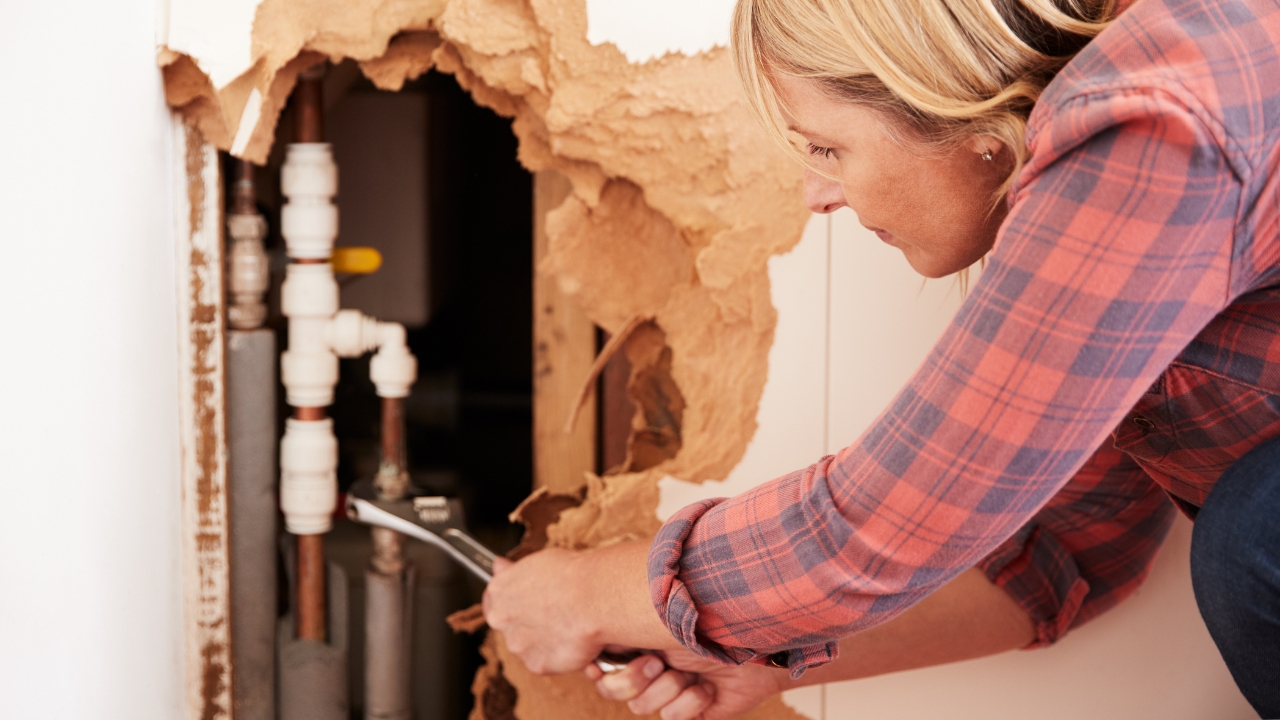
The growing gap between needed repairs and what homeowners can afford
Photo credit: Monkey Business Images/Shutterstock.com
For a growing share of American homeowners, the math of upkeep no longer works. The cost of keeping a roof sound, wiring safe and plumbing functional is rising faster than incomes, leaving essential repairs competing with groceries, car payments and student loans. The result is a widening divide between what houses need and what their owners can realistically pay for, with consequences that ripple through neighborhoods and the broader housing market.
That gap is not just about comfort or curb appeal, it is about whether homeownership remains a stable path to building wealth or becomes a precarious obligation that can tip families into debt. As repair bills climb and savings fall short, more owners are deferring fixes, living with deteriorating conditions or turning to risky financing that can undermine the very asset they are trying to protect.
The rising price of simply owning a home
The first pressure point is that the baseline cost of owning a home has surged before a single shingle is replaced or pipe is fixed. Property taxes, utilities, insurance and routine upkeep now add up to a second, often underappreciated housing bill that sits on top of the mortgage. One recent analysis found that Additional costs associated with owning a home, such as taxes, utilities and maintenance, jumped to $24,529 in 2025, a figure that can easily rival or exceed annual mortgage payments in many markets. When that much cash is already spoken for, there is little left to absorb a surprise furnace failure or foundation crack.
At the same time, the specific line item for repairs and maintenance has been inflated by a mix of higher material prices and more expensive labor. From April 2020 to April 2025, the cost of core homeownership expenses, including contractors and supplies, climbed sharply, contributing to what one study framed as hidden costs of homeownership that now average more than $21,000 a year. For households that budgeted based on pre-pandemic norms, those increases feel less like incremental inflation and more like a structural reset that permanently narrows their financial margin for error.
When essential repairs collide with limited incomes
The squeeze is most acute for lower income owners, who often live in older homes that need the most work but have the least financial cushion. Research on housing conditions shows that the housing stock requires continuous reinvestment to remain safe and habitable, yet many owners at the bottom of the income ladder simply cannot keep up. According to one analysis, Homeowners in the bottom fifth of the income distribution devote a far smaller share of their already limited resources to repairs than higher income peers, even though their homes are more likely to have serious deficiencies.
That mismatch between need and capacity shows up in peeling lead paint, aging electrical systems and leaky roofs that would be routine fixes for a wealthier household but become chronic hazards for a cash strapped one. The same research notes that many homeowners lack the resources to address even basic problems, which means issues that could have been handled with a modest early intervention instead compound into larger, more expensive failures. Over time, that pattern erodes both the physical quality of the housing stock and the financial stability of the families who live in it, deepening inequality between those who can invest in their homes and those who cannot.
Repairs are getting more expensive, and more frequent
Even for middle income owners, the repair side of the ledger is getting harder to ignore. A growing share of households are being hit with multiple, high dollar fixes in a single year, a trend that reflects both aging homes and a harsher climate. In one national survey, Our annual Housepower Report found that 46% of homeowners spent over $5,000 out of pocket on unexpected home repairs in 2024, a level of surprise expense that can wipe out emergency funds or push families onto high interest credit cards. Because that figure comes from a survey, it captures not just a handful of horror stories but a broad pattern of households struggling to absorb unplanned costs.
Behind those numbers is a cost structure that is shifting in ways owners cannot easily control. Repair and remodeling costs are skyrocketing as materials like lumber and copper remain volatile and skilled trades command higher wages. Repair and remodeling costs are now tracked by the Verisk Q1 2025 Repair and Remodel Index, which shows that the cost of home repairs and renovations has risen faster than general inflation, especially in labor intensive categories like roofing and HVAC. When every component of a job, from the shingles to the crew, costs more, even routine maintenance can feel like a luxury.
Why so many owners are putting off fixes
Faced with rising bills and limited savings, a significant share of homeowners are choosing to delay work they know needs to be done. That procrastination is not about ignorance, it is a rational response to financial strain. Surveys of owners show that Being a homeowner comes with many responsibilities and just as many headaches, and that when budgets are tight, repairs are one of the first things to be pushed down the list. One analysis of owner behavior found that Key findings included widespread deferral of maintenance, with respondents citing cost as the primary reason they were holding off.
Beyond the immediate financial logic, there is a psychological dimension to this delay. Beyond the constant drip of smaller issues, like a sticking door or a cracked tile, larger projects can feel overwhelming in both scope and price. Owners may fear that calling a contractor will reveal an even bigger problem, or that once they start one repair, a cascade of related fixes will follow. That mindset is understandable, but it is also dangerous, because small problems rarely stay small. A minor leak can become structural rot, and a flickering light can signal wiring that poses a fire risk, turning what might have been a manageable bill into a crisis.
The labor and materials crunch behind higher bids
On the supply side, contractors are grappling with their own constraints, which ultimately show up in the quotes homeowners receive. Skilled trades are in short supply, and that scarcity is pushing up wages and wait times. In Angi’s research on renovation plans, Skilled Labor Shortages: While nearly all homeowners say they want to tackle improvements in 2025, many are running into bottlenecks as they try to book electricians, plumbers and roofers. When demand for work is high and the pool of qualified workers is limited, contractors can charge more and prioritize larger, more profitable jobs, leaving smaller but urgent repairs waiting.
Materials are not offering much relief either. A 2024 analysis of home upkeep costs, titled Big Fixes, Big Price Tags, The Rising Cost of Home Maintenance and Repairs, underscores how Your home may be big or small, old or new, but the price of key components like appliances, roofing materials and mechanical systems has climbed across the board. When a replacement water heater or air conditioner costs significantly more than it did just a few years ago, even owners who plan ahead can find their savings falling short. The combination of pricier parts and scarce labor creates a structural headwind that individual households cannot solve on their own.
Policy efforts to close the repair affordability gap
Recognizing that private budgets alone cannot bridge the gap, some policymakers are trying to treat home repairs as a matter of housing stability rather than a purely personal responsibility. At the federal level, a new proposal called the Whole-Home Repairs Act of 2025 aims to help low and moderate income owners address critical health and safety issues before they spiral. The measure is framed as a response to a broader housing crisis, in which deteriorating owner occupied homes contribute to shortages of safe, affordable housing and undermine neighborhood resilience.
The bill is being championed by Congressman Troy Downing and Congresswoman Nikema Williams, who have cast it as a bipartisan attempt to shore up existing housing rather than focus solely on new construction. In their announcement, Congressman Troy Downing of Montana and Congresswoman Nikema Williams of Georgia described the Whole, Home Repairs initiative as a way to fund essential fixes, improve energy efficiency and support local contractors. While the details of funding and implementation will determine how far such a program can reach, the very fact that federal lawmakers are talking about repair assistance signals a shift in how the problem is understood.
When “making it” means struggling to keep it
For decades, buying a home was treated as the finish line of financial aspiration, the moment when a family had finally “made it.” Owning a house was supposed to provide stability, predictability and a foundation for building wealth over time. As one observer put it, Owning a home used to mean you had arrived. Now, in 2025, it is just as much about keeping it, a shift that reflects how fragile the economics of ownership have become for many households.
Now that repair costs, insurance premiums and property taxes are rising in tandem, the risk of falling behind no longer belongs only to those who bought at the top of the market or stretched for a luxury property. Middle class families in modest houses are discovering that the real test begins after closing, when the steady drip of expenses collides with stagnant wages and limited savings. The growing gap between what homes need and what owners can afford is not just a budgeting challenge, it is a question about whether the promise of homeownership still holds. Without targeted support, smarter planning and a more realistic understanding of the true cost of upkeep, more Americans will find that the house they worked so hard to buy is a financial burden they struggle to sustain.