Bezos’ Beverly Hills renovation is nearly done and the upgrades are full-on “private resort”
Photo credit: FameMaze/Youtube
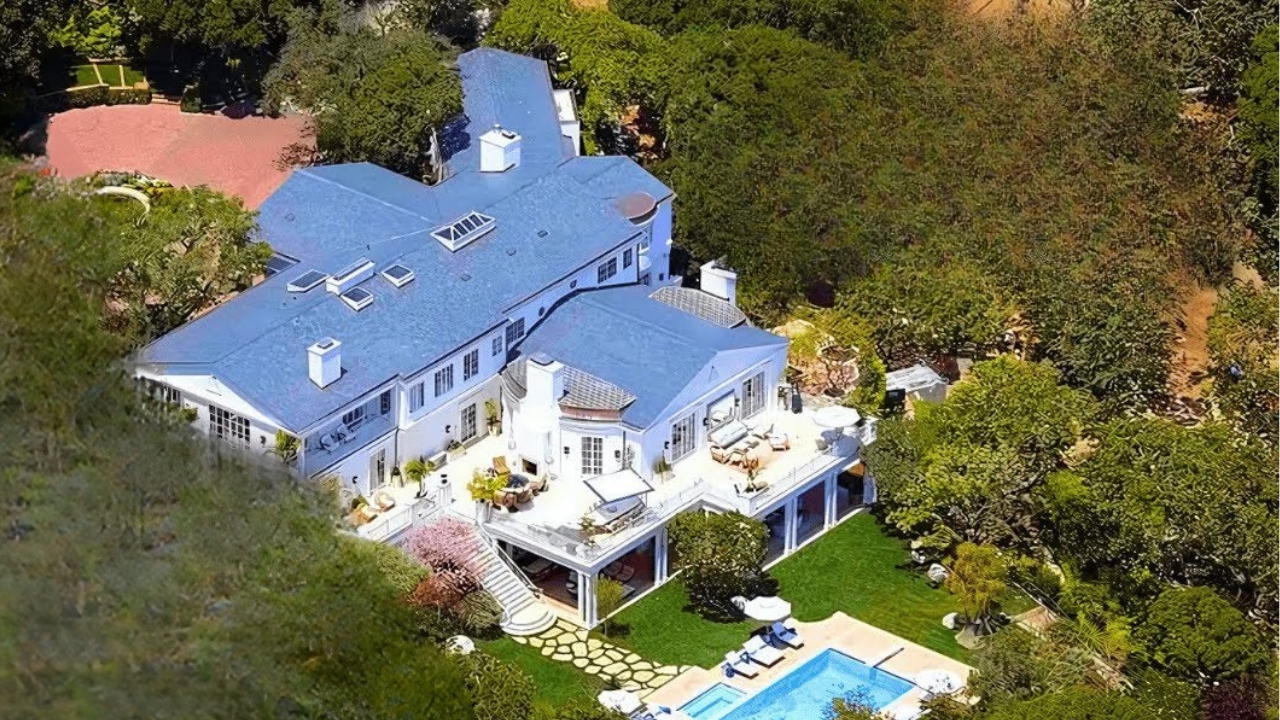
From the air, Jeff Bezos’ Beverly Hills compound no longer looks like a traditional movie mogul estate. As the renovation nears completion, the property reads more like a private resort, complete with a spacecraft‑shaped pod, sprawling gardens, and layers of security landscaping. You are watching a single home morph into a case study in how extreme wealth, design ambition, and privacy concerns collide in one of Los Angeles’ most exclusive ZIP codes.
The megamansion that set a Beverly Hills benchmark
You are not just looking at another celebrity remodel. The estate that Jeff Bezos and Lauren Sanchez are reshaping reportedly cost $175 million, a price that placed it among the most expensive residential transactions in Los Angeles history and instantly reset expectations for what a Beverly Hills address can command. The property, often described as a historic compound, sits in a pocket of Beverly Hills where old‑Hollywood pedigree meets new‑tech money, and the renovation has been extensive enough that aerial photos now show a dramatically altered landscape.
According to detailed descriptions of the project, the main house and surrounding structures are being treated less like a single residence and more like a campus, with multiple buildings, sports facilities, and landscaped gardens woven together as a unified whole. Reports on Jeff Bezos, Lauren Sanchez’s $175 million estate describe a property that has been under construction for years, signaling that you are seeing a long‑term vision reach its final stages rather than a quick cosmetic flip.
Traditional architecture, resort mindset
On paper, the mansion leans traditional. You are dealing with a residence whose design, according to Jeff Bezos and Lauren Sanchez coverage, is rooted in traditional architecture by a renowned architect, complete with classic lines and a formal layout. Yet the way the grounds are programmed feels closer to a luxury resort than a stately single‑family home, with dedicated zones for wellness, recreation, and entertaining that you would normally expect to find in a high‑end hotel.
That resort mindset shows up in the scale of the amenities and the way they are distributed across the acreage. Reports describe multiple sports facilities and carefully orchestrated landscaped gardens that turn the estate into a sequence of experiences rather than a simple front‑yard, back‑yard arrangement. When you factor in the futuristic pod, aquatic‑themed pool, and expansive terraces, the traditional shell becomes a backdrop for a lifestyle that is curated down to the last pathway and planting bed.
The UFO pod that turned heads
The most talked‑about upgrade is the gleaming structure that looks like it dropped in from another planet. Near a cactus garden on the property, a futuristic building with a rounded, metallic profile has been described as a UFO-like pod, a visual jolt against the more classic architecture of the main house. You see it in aerial shots as a shiny, spacecraft‑shaped object that instantly pulls the eye away from the tennis courts and gardens that would normally dominate a Beverly Hills estate.
Coverage of the renovation notes that this luxe pod sits beside a cactus garden and resembles a landed spacecraft, with smooth curves and reflective surfaces that make it look like a prop from a science‑fiction set. One detailed breakdown describes how the billionaire pair’s out‑of‑this‑world upgrades include this pod as one of the most striking home additions, with the shiny installation described as something that seems like it fell from outer space. For you as an observer, it is the clearest signal that this is not just a restoration of a historic property but a deliberate collision of old and new.
Inside the ‘UFO sauna’ and wellness wing
Speculation has centered on what exactly happens inside that pod, and reporting has converged on a wellness theme. You are told that the structure functions as a kind of “UFO sauna,” a high‑end relaxation space that fits neatly into the broader resort narrative of the estate. One account of Jeff Bezos’ $175M mansion notes that this pod is part of a suite of wellness‑oriented amenities, suggesting that you are looking at a private spa complex rather than a simple backyard sauna.
Newly captured overhead images reinforce that impression, showing the spacecraft‑shaped structure positioned beside the cactus garden and separate from the main house, like a standalone retreat. Reports on Newly surfaced aerial photos of Jeff Bezos’ $175 million mansion describe how onlookers have been left puzzling over whether the pod is used as a sauna, meeting space, or dining area, underscoring how thoroughly it blurs the line between art object and functional room. For you, the takeaway is that wellness is not an add‑on here, it is a central organizing principle of the design.
Gardens, water, and the “aquatic” pool
Step back from the pod and you see how the rest of the grounds have been choreographed to match that level of ambition. The property holds a main residence, guest quarters, and extensive landscaping, with water features and plantings that turn the estate into a controlled natural environment. One detailed environmental look at the property notes the combination of buildings, landscaping, and water features, giving you a sense of how thoroughly the land has been reshaped.
Within that setting, the pool becomes a centerpiece. Descriptions of the estate highlight an aquatic‑themed pool that stretches across one area of the grounds, framed by wide balconies and lounge spots that would not look out of place at a five‑star resort. Coverage of Jeff Bezos’ 175m property notes that, Meanwhile, the rest of the property shows the same level of detail, with that aquatic‑themed pool and multiple lounge areas reinforcing the impression that you are looking at a private resort carved into a residential lot.
Privacy walls and the Jack Warner Estate playbook
If the Beverly Hills compound feels like a resort, it is also a fortress. You can see the privacy strategy by looking at how Jeff Bezos handled another local property, the $168 million Jack Warner Estate in Beverly Hills, where he added a massive hedge that has been described as the tallest residential hedge in the neighborhood. That earlier move showed you how seriously he takes visual seclusion, and it set a template for the kind of perimeter control you would expect around the newer, even more expensive compound.
Another report on that same Jack Warner Estate notes that, To ensure his privacy, Jeff Bezos installed a towering hedge around his historic $168 property in Beverly, effectively wrapping the estate in a living wall. When you apply that playbook to the renovated mansion, the resort comparison becomes even sharper: like a luxury hotel with restricted access, the compound is designed so that what happens inside the walls is almost completely invisible from the street.
From historic estate to “spaceship” showcase
Part of what makes this renovation so striking is the contrast between the estate’s history and its new, almost sci‑fi centerpiece. You are dealing with what has been described as Jeff Bezos Adds Mysterious Spaceship-Like Structure to His Historic Beverly Hills Estate, a framing that captures how the pod reads against the more classic bones of the property. For you, that juxtaposition is the point: the estate is no longer just a preserved relic of Hollywood’s past, it is a live experiment in how far a private owner can push design on a storied site.
Other coverage underscores how thoroughly the land has been reimagined. One detailed account of the project notes that he has transformed a 1.84-acre plot into an oasis with the help of professional arborists, adding thousands of plants and reshaping the terrain to support the new structures and water features. For you as a reader, the message is clear: this is not a light renovation, it is a ground‑up reinvention that uses the language of a resort master plan more than that of a typical home remodel.
How the Beverly Hills project fits Bezos’ wider real estate moves
To understand why this renovation feels so expansive, you have to place it in the context of Jeff Bezos’ broader property portfolio. Earlier this year, Jeff Bezos sold his Seattle mansion for record‑breaking $63 m, a $63 million deal that followed his and Lauren’s move to a $237 million compound in Miami. That sale signaled a geographic pivot away from the Pacific Northwest and toward a lifestyle split between South Florida and Southern California, with the Beverly Hills estate emerging as one of the crown jewels of that shift.
Another analysis of his moves notes that, Some more cynical analysts, meanwhile, have pointed to Florida‘s tax‑friendly policies as a potential draw, and adds that Now, Bezos, Jeff Be has a real estate portfolio spread across three mansions. When you factor in the Beverly Hills renovation, you see a pattern: each property is treated as a self‑contained world, with its own amenities and design language, and the California compound is being tuned to function as a West Coast resort that complements, rather than duplicates, the Miami base.
What this “private resort” signals for ultra‑luxury living
For you as a reader, the nearly finished Beverly Hills renovation offers a glimpse into where ultra‑luxury residential design is heading. Instead of simply adding a bigger pool or another guesthouse, owners at this level are turning their homes into multi‑program campuses, with wellness pods, themed gardens, and hospitality‑grade amenities that rival boutique hotels. The way Dec coverage framed the UFO‑like amenity near the cactus garden, and how other reports describe the aquatic pool and layered landscaping, shows you that the bar for what counts as a “dream home” in this bracket has moved decisively into resort territory.
At the same time, the project underlines how privacy, spectacle, and personal branding now intersect in high‑end real estate. The UFO pod is a conversation piece visible from the sky, yet the towering hedges and controlled access keep day‑to‑day life shielded from view. When you connect the dots across the $175 million Beverly Hills estate, the $168 m Jack Warner Estate, and the record $63 m Seattle sale, you see a consistent strategy: build or reshape properties so they operate as private resorts, each tailored to a specific city, and use design not just to live comfortably but to signal a particular vision of what twenty‑first‑century billionaire living looks like.
Like Fix It Homestead’s content? Be sure to follow us.
Here’s more from us:
- I made Joanna Gaines’s Friendsgiving casserole and here is what I would keep
- Pump Shotguns That Jam the Moment You Actually Need Them
- The First 5 Things Guests Notice About Your Living Room at Christmas
- What Caliber Works Best for Groundhogs, Armadillos, and Other Digging Pests?
- Rifles worth keeping by the back door on any rural property
*This article was developed with AI-powered tools and has been carefully reviewed by our editors.