Why lithium power banks are becoming a real home fire risk, not just a travel problem
Photo credit: Hendra Galus/istock.com
Lithium power banks were sold as the perfect travel accessory, yet the real hazard is now sitting on your kitchen counter, nightstand, and home office desk. As you add more portable batteries to keep phones, laptops, toys, and tools running, you are also stacking up a new category of home fire risk that behaves very differently from a frayed cord or a forgotten candle. Understanding how these compact energy packs fail, and how to live with them safely, is quickly becoming as basic as knowing where your smoke alarms are.
The same chemistry that lets a slim power bank recharge your phone several times can, under the wrong conditions, turn it into a blowtorch that is difficult to extinguish and fast to spread. Fire agencies and safety experts now treat lithium power sources as a distinct hazard, not a niche concern for electric vehicles or industrial sites. If you use portable batteries at home, you need to treat them as serious fire loads, not harmless gadgets.
The quiet spread of lithium into every corner of your home
You probably think of power banks as accessories for travel days and long commutes, but the underlying lithium cells are now embedded in almost everything you plug in at home. Guidance on Lithium, Ion Battery Safety notes that these batteries are increasingly found in devices and systems that the public and first responders rely on, from phones and laptops to backup power supplies and home medical equipment. Each new device you add may only hold a few watt-hours, yet collectively they turn your living room and bedrooms into dense clusters of stored energy.
That ubiquity matters because it multiplies the number of potential failure points inside your walls. A separate advisory on how Lithium-ion batteries are increasingly used across a wide range of applications underscores that the same chemistry powering e-bikes and power tools is also inside the slim bricks you toss into drawers. When you treat those bricks as disposable clutter, you ignore the fact that they share the same basic fire behavior as larger packs that already worry fire departments.
Why power banks behave so differently when they fail
Traditional household fires usually start small and smolder, giving you time to notice smoke or a burning smell. Lithium packs, including the ones inside power banks, can instead jump almost instantly into what experts call thermal runaway, a chain reaction where internal temperatures spike and flammable gases vent in seconds. Federal guidance on risks and response strategies explains that overcharging and overheating can push a cell beyond its designed capacity, triggering rapid heating that is difficult to stop once it begins.
Once a cell enters that state, the fire is not just about the plastic case or nearby fabric, it is being fed from inside the battery itself. Technical analysis of causes of lithium ion battery fires notes that internal structures like the cathode and anode can be damaged by defects or abuse, leading to short circuits that ultimately produce flames. In a compact power bank, several cells are packed tightly together, so one failing cell can quickly ignite its neighbors, turning a pocket-sized device into a concentrated jet of fire.
From travel accessory to bedside ignition source
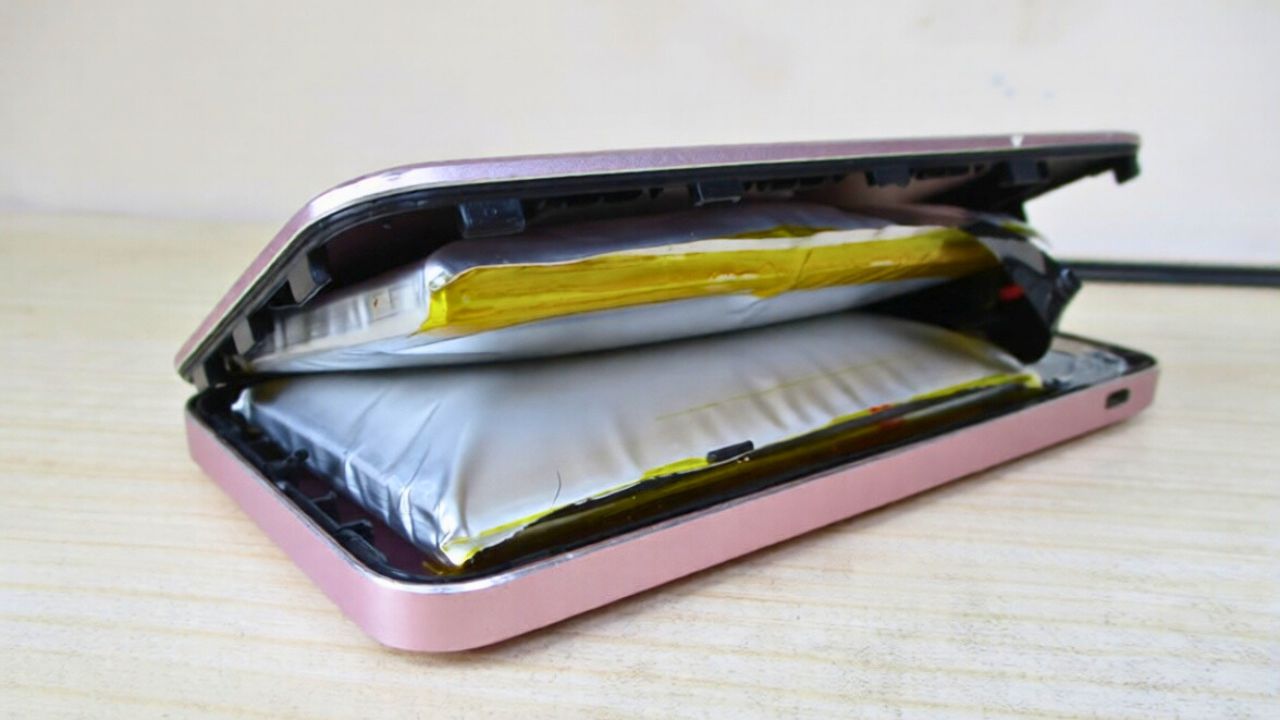
Power banks migrated from carry-on bags to nightstands and sofas without much thought about how that changes your exposure. You now leave them plugged in overnight next to pillows, blankets, and curtains, or charging on top of paperwork and books. A consumer advisory on Lithium, Ion Battery Fires, What You Need, Know stresses that your house is full of devices powered by lithium cells and that if you notice any of them swelling, overheating, or emitting an odor, you should stop using them immediately to avoid fires resulting from these devices. A swollen power bank on a wooden nightstand is not a cosmetic issue, it is a warning sign that the pack is becoming an ignition source.
Online safety discussions have started to catch up with that reality, particularly around where you charge devices. One widely shared tip warns that Many house fires are caused by overheating lithium batteries during charging, especially when they sit on soft surfaces like beds and couches that trap heat. When you combine a stressed battery with flammable bedding and the fact that you are likely asleep, a device designed for convenience becomes a direct threat to your home and your life.
How overheating and overcharging turn a handy gadget into a fire
The most common pathway from safe power bank to dangerous one is not dramatic impact damage, it is slow, repeated abuse through heat and charging habits. Insurance-focused guidance on Overheating, Lithium-ion batteries explains that these cells are susceptible to overheating, which can lead to thermal runaway, and that using incompatible chargers or placing devices in hot environments increases the likelihood of overheating. When you stack power banks on top of routers, leave them in sunlit windows, or charge them under a pillow, you are quietly pushing them closer to that tipping point.
Charging behavior matters just as much as ambient temperature. Technical summaries of Overcharging and cycling effects note that overcharging a lithium-ion battery beyond its designed capacity can lead to overheating, while repeated deep discharges and rapid recharges stress the internal structure. Legal analysis of Causes of Lithium Battery Fires adds that over-discharging, where you routinely drain a pack to empty, can damage the electrodes and set the stage for rapid heating and thermal runaway later. In practice, that means your habit of running a power bank to zero and then leaving it on a cheap, off-brand charger overnight is not just bad for battery life, it is a direct fire risk.
Why cheap or damaged power banks are especially dangerous
Not all lithium packs are created equal, and the ones that cut corners on quality control are far more likely to fail in your home. Engineering guidance on battery quality points out that of the various causes of lithium fires, poor manufacturing can leave internal imperfections that eventually lead to short circuits and flames. When you buy unbranded power banks from online marketplaces without clear safety markings, you are accepting that the internal cathode and anode plates may not be aligned or insulated correctly, even if the plastic shell looks fine.
Fire safety educators recommend looking for independent testing marks as a basic filter. Official General Safety Tips advise that when purchasing devices, you should look for the Underwriter Laboratories Mark, since The UL symbol shows that the product has been tested to meet specific safety standards. If your power bank lacks any recognizable certification, arrives with misspelled labels, or includes a charger that feels flimsy or overheats quickly, you should treat it as a suspect device rather than a bargain.
Home environments that quietly amplify the risk
Even a well-made power bank can become hazardous if you store and use it in the wrong conditions. State-level guidance on Storage, Read and emphasizes that you should store lithium-ion batteries and the devices they power in a cool, dry place, away from direct sunlight, and that larger packs like those in e-bikes should be kept outdoors if possible. When you toss power banks into hot cars, leave them on radiators, or pile them in humid basements, you are ignoring the conditions those cells were designed for.
Emergency planning advice on Lithium, Battery Equipment similarly urges you to store batteries in a cool, dry place and to avoid exposing them to extreme temperatures. Consumer guidance on Feb, Your portable power bank habits notes that many people leave their portable batteries anywhere they want, even in direct sun or near heat sources, which shortens their life and increases the chance of failure. Treating power banks like any other piece of electronics, instead of as compact fuel tanks that need deliberate storage, is how a minor design flaw can turn into a major incident.
What fire statistics and case patterns are already telling you
Although power banks are only one slice of the lithium landscape, the broader pattern of home incidents involving these batteries is already clear. A safety overview on Home Fire Statistics Due to lithium cells notes that residential fires linked to these batteries often trace back to improper charging, storage, or handling. The same behaviors that cause e-bike packs and cordless tool batteries to ignite, such as charging in cramped hallways or stacking devices near combustibles, are now being repeated with power banks in bedrooms and living rooms.
National fire educators have responded by publishing detailed Frequently Asked Questions on lithium safety that stress the importance of using the charger that is supplied with your device and avoiding makeshift charging setups. When you plug a power bank into a random adapter you found in a drawer, or daisy-chain it through multiple extension cords, you are recreating the same conditions that have already produced documented fires in other lithium-powered products. The statistics are not abstract, they are a preview of what can happen when you normalize risky routines.
Practical steps to keep lithium power banks safer at home
The good news is that you do not need specialized equipment to reduce the risk from power banks, only a shift in habits. Fire services that focus on Best Practices, Keeping Lithium Devices Safe
You should also build simple checks into your routine. Guidance on ChancesLithium, Ion Battery Safety
How to think about lithium power banks like a fire professional
Firefighters and investigators do not see a power bank as a neutral gadget, they see it as a compact energy store that can behave like a chemical fire if it fails. Coverage of the Risk of
Thinking like a professional also means planning for the worst case, not just hoping it does not happen. Emergency guidance on Avoid
Like Fix It Homestead’s content? Be sure to follow us.
Here’s more from us:
- I made Joanna Gaines’s Friendsgiving casserole and here is what I would keep
- Pump Shotguns That Jam the Moment You Actually Need Them
- The First 5 Things Guests Notice About Your Living Room at Christmas
- What Caliber Works Best for Groundhogs, Armadillos, and Other Digging Pests?
- Rifles worth keeping by the back door on any rural property
*This article was developed with AI-powered tools and has been carefully reviewed by our editors.