The “buy a quarter cow” trend is back, but here’s what to ask before you commit
Photo credit: Mr Vito/istock.com
Buying a “quarter cow” has shifted from niche homesteader move to mainstream dinner-table strategy, promising better meat, fewer grocery runs, and a hedge against price spikes. Before you hand over a deposit for a quarter, half, or whole animal, you need a clear picture of cost, cuts, storage, and how to talk to the farmer and butcher. With the right questions, you can turn a trendy bulk buy into a year of confident, stress-free cooking instead of an expensive freezer full of mystery packages.
Why the quarter-cow comeback is so appealing right now
You are seeing the quarter-cow conversation everywhere because it solves several modern pain points at once: food inflation, concern about supply chains, and a desire to know more about where your meat comes from. When you buy directly from a rancher, you are not just getting a box of steaks, you are buying into a system that prioritizes flavor, transparency, and often dry aging that typical supermarket beef never sees. Ranchers who focus on bulk sales emphasize Quality and consistency, positioning bulk beef as a premium product rather than a bargain-bin compromise.
The renewed interest is also about control. Instead of grabbing whatever is on sale, you decide how your animal is cut, how thick your steaks will be, and how much of your order becomes ground beef versus roasts. Some producers frame this as a chance for Bulk Beef buyers to tailor their freezer to the way they actually cook, from weeknight tacos to special-occasion rib roasts. That level of customization, combined with the security of having months of protein on hand, is what has pulled the “buy a quarter cow” idea back into the spotlight.
First decision: quarter, half, or whole, and what that really means
Before you get lost in cut charts, you need to decide how much of an animal you can realistically handle. A quarter is often the entry point, but it is not simply a random assortment of meat; it is typically a standardized share that represents a cross-section of the carcass. Some farms describe a quarter as a “standard cut side” that mirrors their own favorite instructions, similar to how Our Quarter Beef is sold as 100 pounds at $18.19 per pound, giving you a sense of both volume and price in one line item.
As you move up to a half or whole, you gain more influence over how each primal is divided, but you also take on more responsibility for using every part. Some ranches remind you that Traditionally a quarter beef meant one fourth of an entire cow, often split between neighbors, while a half or whole gives you the full range of front and hind cuts to customize. If you are new to bulk buying, starting with a quarter lets you test how your household actually eats through a share before you commit to hundreds of additional pounds.
How pricing really works, from hanging weight to take-home pounds
Sticker shock is common when you first see bulk beef prices, because you are not comparing apples to apples with the grocery store. Many farms charge by “hanging weight,” the weight of the carcass after slaughter but before trimming and deboning, and that number is higher than what you will ultimately bring home. For example, one farm lists COMMONLY ASKED QUESTIONS like WHAT THE PRICE is for a quarter, and spells it out as $11.50 per pound based on hanging weight, noting that you typically take home only 55 to 60 percent of that weight once the butcher has done the work.
Other producers use similar structures but different numbers, which is why you need to read the fine print. One operation prices a Quarter Cow at a Price of $8.50 per pound with the Weight based on the carcass, while another lists a quarter at $6.50Based on hanging weight with Bulk pricing that includes custom cutting and wrapping. Yet another front-quarter share is Priced at $8.29 per pound. When you compare these offers, you should calculate your effective cost per finished pound in your freezer, not just the per-pound figure on the invoice.
What you actually get in a quarter: steaks, roasts, and ground
Once you understand the math, the next question is what that investment looks like in real meals. A typical quarter gives you a mix of steaks, roasts, and ground beef, often with the option to add organ meats and bones. One farm notes that a quarter share Includes a variety of steaks, roasts, ground beef, organ meat, and bones, and that the total finished weight typically ranges between 90-150 pounds. That range reflects differences in the size of the animal and how aggressively the butcher trims fat and bone.
Some sellers go further and spell out the expected yield in both pounds and dollars so you can visualize the commitment. One “grillers pack” explains that a quarter beef will have a total cost of $1420 to $1600 and will yield between 110 and 130 pounds of beef, while the live animal that share comes from would have weighed between 200 and 225 pounds on the rail, according to 110 and 130 pounds of finished product. Another breakdown aimed at home cooks walks through Understanding a 1/4 Beef: How Much Meat Do You Get, emphasizing that you should expect a broad mix of cuts rather than a freezer full of ribeye.
Freezer space: the unglamorous deal-breaker
All that meat has to live somewhere, and underestimating freezer space is one of the fastest ways to turn an exciting bulk buy into a logistical headache. A practical rule of thumb is that you need roughly 0.5 cubic feet of freezer space per 15 to 20 pounds of meat, but producers who work with home buyers refine that further. One guide on storage spells out How Much Freezer Space Will You Need and advises that for a Quarter Beef you should Reserve at least 3.5 to 4 cubic feet, while a half or whole requires significantly more.
If you are shopping for an appliance specifically for this purpose, you can translate that into actual models. One consumer-focused breakdown of How Big of a Freezer for a 1/4 Cow notes that a 7 cubic foot chest freezer can comfortably hold a quarter cow with some extra room, while a larger upright model may serve you better if you want easier access to individual cuts. The key is to measure your available space, check the cubic-foot rating on the freezer you already own, and be honest about whether you are willing to dig through a chest-style unit every weeknight.
Questions you should ask the farmer before you put down a deposit
Once you know you have the space and budget, your next move is to interrogate the details with the person raising the animal. You should ask about breed, feed, whether the cattle are grass-finished or grain-finished, and how long the meat is dry aged, because those factors shape flavor and tenderness. A detailed checklist of Questions for the Farmer suggests you also clarify the average hanging weight of a quarter, half, or whole from that specific farm, what the estimated take-home weight will be, and how and when you can pick the beef up so you are not scrambling for transport on processing day.
Quality is not just about marbling, it is about how the animal lived and how the carcass was handled. A technical overview of meat science highlights Key Takeaways that Bulk beef quality is shaped by diet, breed, genetic makeup, and handling, and that compositional quality, visual appearance, and smell are all influenced by how the carcass is chilled and aged. When you talk to your farmer, you should feel comfortable asking how they manage stress at slaughter, how long they hang the beef, and which local processor they use, because those answers will tell you as much about the final product as any marketing language.
How to talk to the butcher so you get cuts you will actually cook
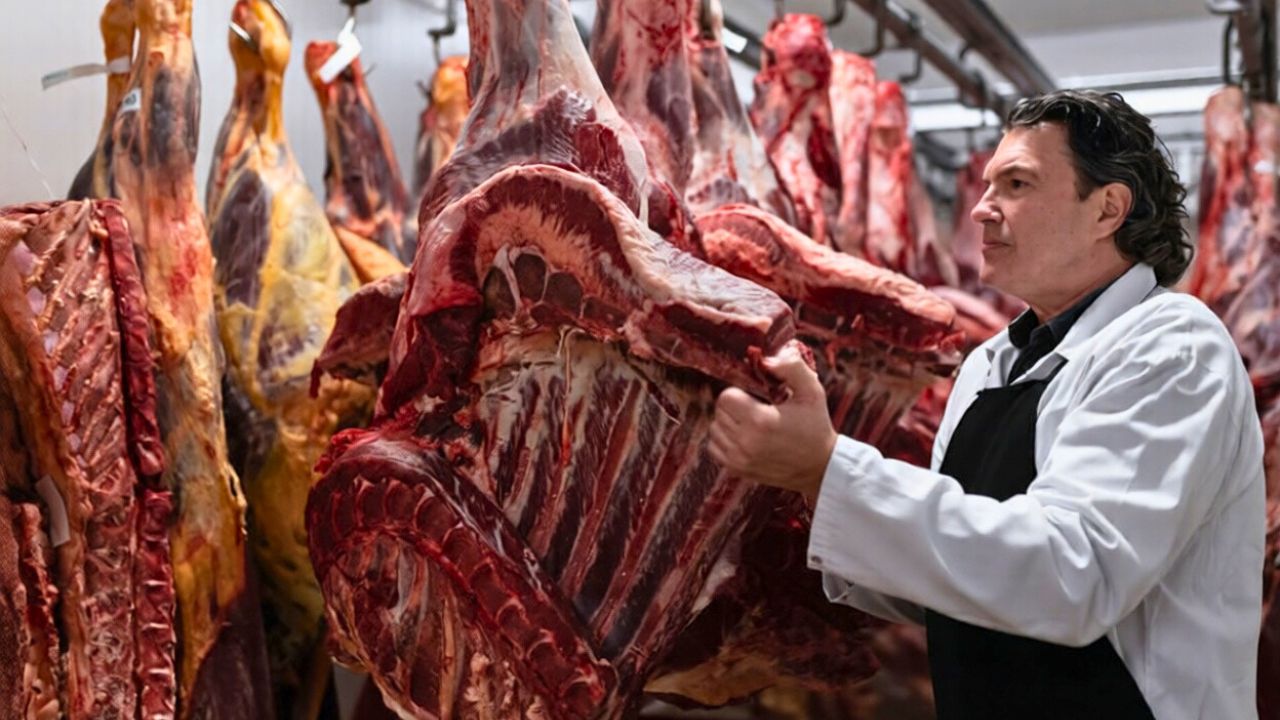
Even the best-raised animal can disappoint you if the cutting instructions do not match how you cook. When your farmer sends you a cut sheet or connects you with the processor, you should think through your household’s habits: do you grill steaks weekly, or do you rely on slow-cooker roasts and ground beef? A practical guide to ordering explains that a half beef is divided into the front quarter and the hind quarter, with the front consisting of chuck steaks, pot roasts, ribs, and brisket, and the hind offering sirloin, round, and more premium steaks, as laid out in a Jul guide to working with your butcher.
When you are buying only a quarter, you often receive a standardized mix from both front and hind, but you still have choices. You can specify steak thickness, whether you want bone-in or boneless roasts, how many pounds per ground-beef package, and whether you want specialty items like short ribs or stew meat instead of more ground. Some ranchers and processors now share videos on Apr tutorials about how to properly buy a 1/4 cow, walking through terms that might be unfamiliar if you have never filled out a cut sheet before. The more clearly you can describe your cooking style, the more likely you are to open every package in your freezer with a plan instead of confusion.
Comparing offers: using data, not vibes, to choose a rancher
With social media full of glossy photos of ribeyes, it is easy to pick a producer based on aesthetics alone, but you are better off treating this like any other major household purchase. That means comparing price per finished pound, understanding exactly what is included in the base price, and checking how transparent each seller is about weights and yields. Some ranches, like those that spell out What’s in Your Boxes?, tell you how many boxes you will receive and how much freezer space a quarter, half, or whole will occupy, which makes it easier to compare their offer to others that might only list a per-pound price.
You can also lean on broader retail data to sanity check what you are seeing. Tools that aggregate Product information from brands, stores, and other content providers show you the going rate for individual cuts like ribeye, ground beef, and brisket across major grocers and online meat companies. When you compare those prices to your effective cost per finished pound from a quarter cow, you can see whether you are paying a premium for local, dry-aged beef or landing a discount relative to high-end retail. That context helps you decide whether a specific rancher’s offer is fair, generous, or out of step with the broader market.
Is a quarter cow right for you, or should you sit this trend out?
Even with all the advantages, buying a quarter cow is not automatically the right move for every household. You need enough people at your table, enough freezer space, and enough cooking flexibility to work through cuts that are not part of your usual rotation. Some buyers find that a quarter, which might be around 100 to 130 pounds of finished meat, is simply too much if they eat out frequently or prefer more poultry and fish, while others discover that they could easily handle a half once they see how quickly they go through ground beef and stew meat from their first share.
Before you commit, you can test your readiness by tracking how many pounds of beef you actually buy in a typical month and what cuts you gravitate toward. If you are already buying several roasts, steaks, and multiple pounds of ground each week, a quarter cow that mirrors the mix described in How Much Meat Do You Get is likely to fit smoothly into your routine. If your current beef consumption is modest, you might be better off splitting a share with friends or neighbors, or waiting until your household size or cooking habits change. The trend may be back in fashion, but the smartest move is to treat it as a long-term pantry decision, not a fleeting social-media challenge.
Like Fix It Homestead’s content? Be sure to follow us.
Here’s more from us:
- I made Joanna Gaines’s Friendsgiving casserole and here is what I would keep
- Pump Shotguns That Jam the Moment You Actually Need Them
- The First 5 Things Guests Notice About Your Living Room at Christmas
- What Caliber Works Best for Groundhogs, Armadillos, and Other Digging Pests?
- Rifles worth keeping by the back door on any rural property
*This article was developed with AI-powered tools and has been carefully reviewed by our editors.