The Best Caliber Choices When You’ve Got Neighbors but Still Need Pest Control
Photo credit: vladee/Shutterstock.com
When you live close to other people, every shot you fire at a rat, raccoon, or starling carries legal and moral weight. You are not just choosing how to deal with pests, you are deciding how much risk and noise you are willing to push across the fence line. The right caliber lets you solve a problem in your yard or barn while keeping your neighbors, their property, and their nerves out of the line of fire.
That balance is less about raw power and more about precision, backstops, and how a particular round behaves when it hits (or misses) its target. By understanding how different calibers, from air rifles to rimfire shotshells and suppressed centerfire loads, actually perform in tight quarters, you can pick tools that control pests effectively without turning your neighborhood into a range.
Safety First: Why “Crowded Area” Ballistics Matter More Than Power
Your first responsibility in any built-up area is not to the pest, it is to the people and structures around it. In a neighborhood, a missed shot that skips off a rock, a fencepost, or even a pond can travel far beyond your property line, which is why you need to think about how a projectile behaves after impact, not just what it does on entry. The concept of Ricochet is central here, because a bullet that glances off at a shallow angle can turn a safe shot into a dangerous one in an instant.
In practical terms, that means favoring slower, lighter projectiles that lose energy quickly and are less prone to bouncing off hard surfaces. You also want ammunition that tends to deform or fragment rather than stay intact, because a bullet that breaks up is less likely to travel intact into a neighbor’s yard. That is why many experienced shooters in tight environments gravitate toward small calibers, frangible loads, and carefully chosen hollowpoints, and why you should treat every shot as if it might miss and hit something harder than fur or feathers.
Air Rifles: The Quiet Workhorses for Close Neighbors
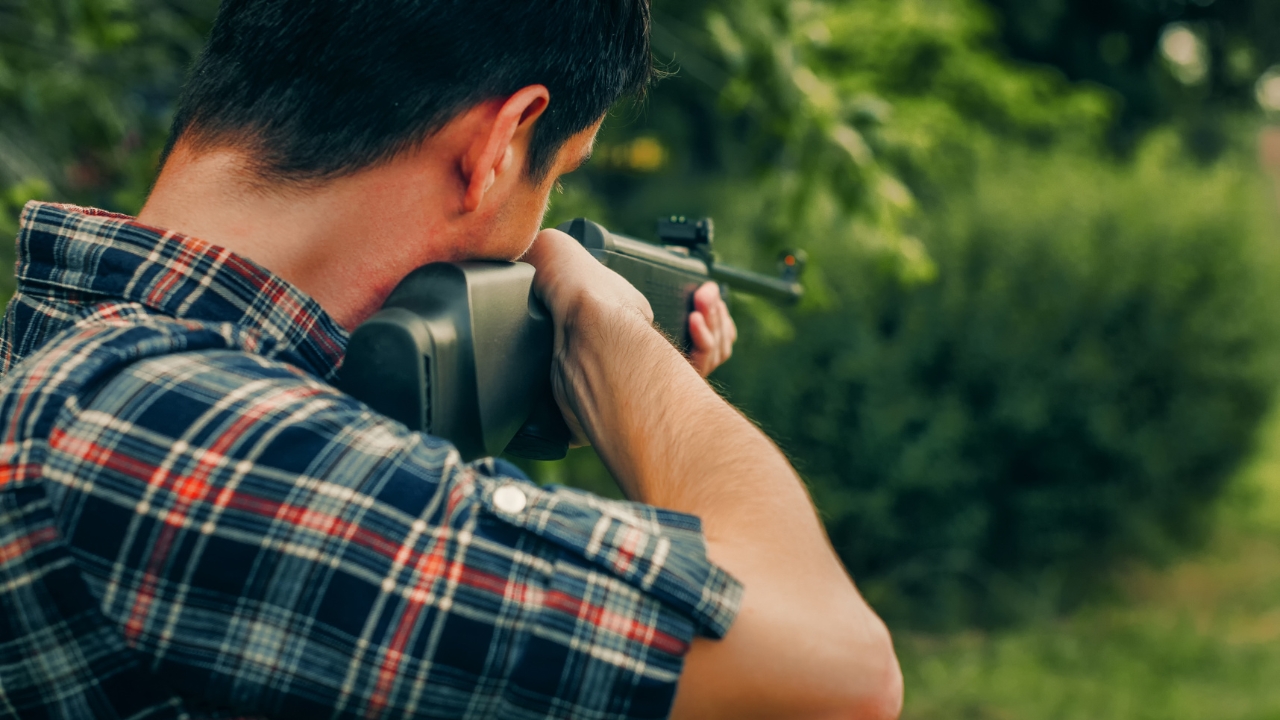
If you have neighbors on the other side of a fence, a quality air rifle is often the most neighbor-friendly starting point. Instead of burning powder, an Air Rifle uses compressed air or gas to push a pellet, which keeps noise low and recoil minimal while still delivering enough energy for small pests at modest distances. Modern designs have evolved far beyond the backyard plinkers you might remember, with repeaters, regulated actions, and optics-ready rails that make them serious tools rather than toys.
Manufacturers now offer models that rival the precision of a suppressed .22 LR, with some tests describing Modern air rifles as accurate and quiet enough for small game and pest control where noise is a concern. That combination of low report, limited range, and repeatable accuracy makes them ideal when you are shooting from a deck into a garden, or from a barn loft into a feed room, and you want the neighbors to hear little more than a muted thump.
.177 vs .22 Calibre Pellets: Picking the Right Airgun Round
Once you commit to an air rifle, your next decision is pellet size, and the classic debate is between .177 and .22 Calibre. The .177 option is popular because its smaller, lighter pellets fly flatter, which makes precise head shots on small pests easier at varying ranges. That flatter trajectory can be a real advantage when you are shooting across a yard or along a barn aisle and do not want to constantly adjust for drop.
The .22 Calibre, by contrast, trades some of that flat flight for more mass and a larger wound channel, which translates into more stopping power on slightly larger pests such as squirrels or tough-bodied birds. When you are working around neighbors, that extra energy can help you anchor animals quickly and avoid wounded pests running off into someone else’s property. The key is to match your pellet choice to the typical size of your targets and the distances you actually shoot, rather than chasing maximum power for its own sake.
Rimfire Shotshells and CCI Options: Tiny Pellets, Tiny Risk Window
For very close work around sheds, garages, and porches, rimfire shotshells give you a different kind of control. Instead of a single bullet, these loads use a capsule of tiny shot that spreads quickly and sheds energy fast, which limits both penetration and range. In revolvers, which one guide explicitly labels as Revolvers and calls the Best Choice for this role, you avoid cycling issues and get reliable ignition with calibers like .22 LR, . 38, . 357 M, and . 44 Special that can be tailored to everything from mice to larger pests.
At the smallest end, .22 rat shot is intentionally limited, with one detailed guide noting that the .22 version drops in power within a few yards and becomes almost worthless beyond 10 to 12 feet. That short effective range, described bluntly in a rat shot overview, is actually a safety feature when you are dispatching snakes or rodents in a barn aisle or under a deck and want the pellets to run out of steam before they can threaten a neighbor’s window.
.22 LR and Long Rifle Shotshells: The Classic Rimfire, Tuned for Neighbors
The .22 LR remains the default small-game caliber for a reason, but in a neighborhood you need to be selective about how you load it. Standard high velocity rounds can travel a long way if they miss, so many shooters in tight quarters turn to subsonic or segmented bullets that reduce noise and limit overpenetration. There are also .22 Long Rifle shotshell cartridges loaded with tiny No. 12 shot, which one account notes will do fine on small blackbirds at about 30 feet, a range that keeps the pattern useful while still limiting how far stray pellets can go, as described in a piece on Long Rifle shotshell use.
In practice, that means you can use a .22 LR rifle or revolver as a flexible platform, loading quiet subsonic rounds for precise shots on squirrels in a tree and switching to shotshells for swallows in a barn or starlings on a beam. The key is to remember that even a mild .22 can travel a surprising distance if it leaves the property, so you still need a solid backstop and a clear understanding of where every shot will end up if it passes through or misses the pest entirely.
Suppressed Centerfire Choices: When You Truly Need More Gun
Sometimes your pest problem is bigger than rats and sparrows, and you may be dealing with coyotes, feral cats, or other animals that require more authority than a rimfire or air rifle can reliably deliver. In those cases, a suppressed centerfire rifle can give you the energy you need while keeping noise and disturbance to a minimum. One detailed guide to the Best Suppressed Hunting Caliber highlights subsonic 300 Bla loads as a Quietest option for short range woods work, precisely because they combine heavy bullets with low velocity to reduce both report and overtravel.
For small game and plinking in noise sensitive areas, that same analysis points back to rimfire and mild centerfire loads that stay subsonic and use expanding bullets to dump energy quickly. In a neighborhood context, that means you should treat any centerfire rifle as a last resort, reserved for rural edges of town or large properties where you can guarantee a safe backstop and a clear field of fire. When you do step up to that level, a suppressor and carefully chosen subsonic ammunition are not just conveniences, they are essential tools for keeping your neighbors safe and your local noise level reasonable.
Bullet Design: Why Hollowpoints and Fragmenting Loads Help Your Neighbors
Caliber is only half the equation, because how a bullet is built has as much to do with safety as its diameter. In tight quarters, you want projectiles that expand, deform, or break apart on impact, which reduces the chance of a pass through and limits how far a missed shot can travel after hitting a hard surface. One detailed explanation notes that, Because of their shape, hollowpoint bullets that miss are less likely to ricochet and hit bystanders, making them counterintuitively safer in many defensive and close range pest control scenarios.
For you, that translates into a preference for hollowpoint or frangible ammunition in both rimfire and centerfire calibers when you are shooting near homes, barns, or vehicles. In an air rifle, it means choosing pellets that are designed to expand or flatten on impact rather than pointed, armor piercing styles that can zip through thin materials. Combined with careful shot placement and an awareness of what lies beyond the target, these design choices help you keep the energy of each shot inside the problem you are trying to solve instead of sending it into the neighborhood.
Real-World Setups: What Other Shooters Use Around Homes and Farms
When you look at how experienced shooters actually handle pest control near neighbors, you see a consistent pattern of moderation and creativity. In one discussion about small caliber options, a user posting under the name Sardukar333 jokes that if an American Shorthair (standard issue cat) is available it will solve many problems, but the same thread quickly turns to practical suggestions like .22 LR with CCI quiet loads, subsonic rounds, and air rifles for situations where you cannot risk a loud crack or a long ranging bullet. That mix of humor and caution reflects a broader culture of treating neighborhood pest control as a precision job, not an excuse to blast away.
Another conversation in a separate Comments Section includes a blunt warning from a user named 42AngryPandas who writes, “Don’t shoot a skunk. Ever. You’ll regret it if you don’t listen to me,” before others chime in with stories of lingering odor and unhappy neighbors. That same thread mentions that a small .22 revolver with a 6 shot cylinder does all right for certain pests, but the emphasis is on discretion, backstops, and thinking through the consequences, not on chasing maximum caliber or dramatic terminal ballistics.
Farm Edges, Outbuildings, and Legal Lines: Matching Tool to Terrain
On working land that bumps up against houses or public roads, your choice of rifle and caliber has to account for both geography and law. One practical guide to farm pest work notes that, When you are picking a rifle for general pest control, it often comes down to a toss up between a reliable rimfire and a well chosen air rifle, with the final decision driven by how close you are to buildings, livestock, and boundaries. In many jurisdictions, discharging a firearm within a certain distance of a dwelling is restricted, which can make an air rifle or low powered rimfire the only legal option for certain corners of a property.
That same logic applies to outbuildings, where you may be shooting inside barns, machine sheds, or grain storage areas that are only a few dozen yards from a neighbor’s home. In those spaces, pellets, shotshells, and quiet rimfire loads that lose energy quickly are far more appropriate than high velocity centerfire rounds that can punch through tin, wood, and drywall. By mapping your property, noting where neighbors live, and matching each zone to a specific tool, you can build a pest control kit that respects both the law and the people who share your fencelines.
Like Fix It Homestead’s content? Be sure to follow us.
Here’s more from us:
- I made Joanna Gaines’s Friendsgiving casserole and here is what I would keep
- Pump Shotguns That Jam the Moment You Actually Need Them
- The First 5 Things Guests Notice About Your Living Room at Christmas
- What Caliber Works Best for Groundhogs, Armadillos, and Other Digging Pests?
- Rifles worth keeping by the back door on any rural property
*This article was developed with AI-powered tools and has been carefully reviewed by our editors.