What buyers still misunderstand about breaker panels in old houses
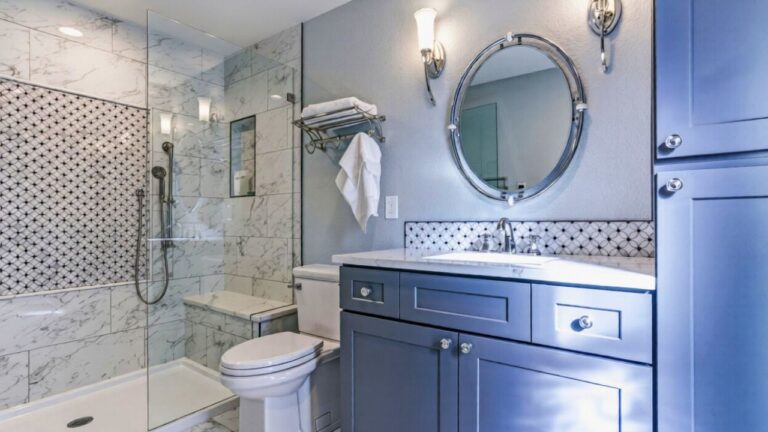
Photo credit: Oasisamuel/Shutterstock.com
Old houses sell on charm, but the breaker panel in the basement is not charming at all, it is life-safety hardware that quietly decides whether your wiring overheats or your lights stay on. Buyers routinely underestimate how much risk and cost is hiding behind that gray metal door, assuming that if the lights work and nothing looks scorched, the system must be fine. To protect your investment, you need to understand what those panels were designed to do, how far modern living has outgrown them, and where the real red flags lie.
1. The panel is not “just a box of switches”
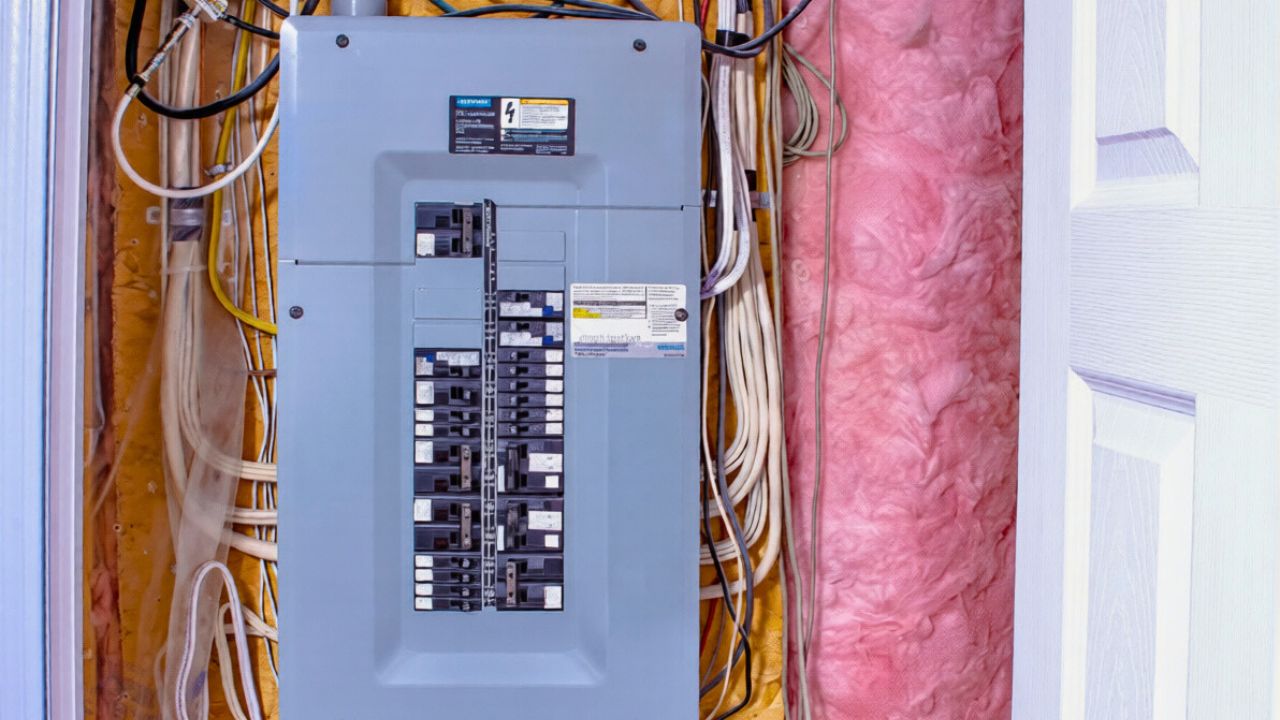
When you walk through an older home, it is easy to treat the electrical panel as a cosmetic detail, somewhere between a closet door and a water heater. In reality, it is the central safety device that decides whether a fault turns into a nuisance trip or a structure fire. Circuit breakers are engineered to sense when current exceeds safe levels and then cut power before wires overheat, which is how modern panels actively help prevent fires in the first place. Treating that hardware as an afterthought is like buying a classic car and never asking whether the brakes still work.
Older breaker panels also age in ways you cannot see at a glance. Heat cycles, dust, and minor corrosion can weaken internal parts so that breakers stop responding correctly, even if the handles still flip. Inspectors who specialize in older housing stock warn that older breaker panels are more prone to hidden defects, which means a quick visual once-over during a showing tells you very little about how they will behave under stress. As a buyer, you should be thinking of the panel as critical safety equipment, not a neutral background detail.
2. “If it’s not tripping, it’s safe” is a dangerous myth
One of the most persistent misunderstandings among buyers is the idea that a quiet panel is a safe panel. You might assume that if breakers never trip, the system must be comfortably within its limits, but electricians repeatedly warn that many dangerous conditions do not cause immediate trips. Loose connections, overheating conductors, and failing outlets can quietly damage insulation and hardware for years before anything shuts off, which is why professionals push back hard on the idea that If It is Not Tripping it must be Safe.
In older homes, that false sense of security is amplified by outdated equipment that may not respond even when it should. Some obsolete breakers have been shown in Tests to fail at alarming rates, which means a dangerous overload can continue without any visible sign until insulation fails or a connection arcs. Other panels allow current to keep flowing even when you flip a handle off, so you cannot rely on the absence of trips or the position of a switch as proof that everything is fine. When you buy an older house, you need evidence of proper operation, not just the absence of obvious drama.
3. Fuses, pennies, and other relics that still show up
Many buyers are surprised to open a panel in a prewar house and find screw-in fuses instead of breakers, or a mix of both. Fuses can provide effective overcurrent protection when correctly sized, but they are easy to misuse, especially after decades of homeowner tinkering. Inspectors still find circuits where someone has bypassed a blown fuse with a coin, even though a penny is in no way an over current protection device and can directly lead to a fire, a point veteran inspector Jan drives home when discussing Fuse over-current protection in older panels.
Even when no one has jammed a coin into a socket, the temptation to oversize fuses or breakers is common in older homes that struggle with modern loads. Putting a larger fuse on small-gauge wiring lets you run more devices without trips, but it also lets the wire overheat long before the protection device responds. Guidance on older systems warns that Installing a 30 Amp fuse on 14 AWG copper, for example, creates a real fire risk because the conductor is not designed for that load. As a buyer, you should treat any nonstandard fusing, mismatched sizes, or obvious improvisations as a serious negotiation point, not a quirky relic.
4. Obsolete brands and designs are more than a cosmetic issue
Another blind spot for buyers is the assumption that all breaker panels are roughly equivalent, so brand and design do not matter as long as the cover closes. In reality, certain models have such poor safety records that electricians and insurers flag them on sight. Federal Pacific Electric equipment is a prime example, with Types of Obsolete lists calling out Federal Pacific Electric and FPE Panels as obsolete hardware that no longer meets modern expectations. Some of these panels use split bus layouts that complicate shutoff and can leave parts of the system energized when you think everything is dead.
Other legacy brands have similar reputations. Zinsco Panels were popular around the 1970s, and while they are almost obsolete today, they still appear in older houses where breakers can fail to trip or even lose their connection to the bus bar. Inspectors also warn about Stab Lok Electrical Panels by Federal Pacific, which remained in homes for decades after problems were discovered. When guidance on Electrical Panels to Watch Out For says There are quite a few models that should simply be replaced, it is a signal that brand and design are not trivia, they are risk categories.
5. Age limits and hidden wear that buyers underestimate
Even if your prospective home does not have a notorious brand, age alone can push a panel past the point where repair makes sense. Guidance on older equipment notes that Old Electrical Panels is not a rhetorical question, because Electrical panels are the hub of a home’s electrical system and typically last for 25 to 40 years before corrosion, mechanical wear, and outdated components start to compromise performance. Once you are beyond that window, the odds of breakers failing to trip, bus bars pitting, or insulation breaking down rise sharply, even if everything looks tidy from the outside.
At a certain point, repair is not just unwise, it is not considered viable. Safety guidance on Repairing old equipment notes that repairing a panel that is 50 or more years old is not a realistic option, because you cannot reliably predict breaker performance without removing and testing each unit. That level of disassembly is rarely economical in a real estate context, which is why many electricians recommend replacement once a panel crosses that age threshold. As a buyer, you should treat a 40 to 50 year old panel as a likely capital expense, not a “nice to have someday” upgrade.
6. Capacity myths: 60 amps, 100 amps, and modern loads
Buyers also tend to misunderstand how much electrical capacity a modern household actually needs. Many older homes were built with small services that made sense when a few lights, a radio, and maybe a refrigerator were the main loads. Today, you are likely to have multiple large appliances, a high efficiency furnace, air conditioning, home office gear, and perhaps an EV charger, all of which add up quickly. Guidance on older housing stock notes that Many older homes are equipped with undersized electrical panels that cannot handle current and future electrical needs, and that Homes now draw far more power than their original designers anticipated.
Planning advice for new construction makes the same point in a different context. When professionals talk about Underestimating Power Requirements, they emphasize that Between EV chargers, high end kitchen appliances, and media systems, today’s homes use far more electricity than even a decade ago, and that underestimating those needs leads to overloaded panels and insufficient capacity. The same logic applies when you buy a 1950s bungalow with a 60 amp service. Even if it technically works, you may be one renovation away from chronic overloads, nuisance trips, or unsafe improvisations to squeeze more circuits into a cramped box.
7. Fire risk, insurance headaches, and panels your insurer hates
Fire risk from outdated panels is not theoretical, and it does not always announce itself with obvious warning signs. Guidance on aging equipment notes that Unfortunately, outdated electrical panels often fail silently, allowing overheating and arcing to continue without visible signs until fire breaks out. Some older designs even allowed current to keep flowing after breakers were manually switched off, which meant homeowners thought circuits were safe when they were not. Upgrade specialists describe how, in many cases, the panels allowed electrical load to continue flowing even after breakers were manually switched off, and that multiple fires have been linked to these failures.
Insurers have taken notice, which is where buyers often get an unpleasant surprise. Some carriers now treat certain models as uninsurable or surcharge them heavily, particularly Federal Pacific Electric and FPE equipment. Guidance on Federal Pacific Electric notes that FPE stab lok panels, also known as FPE panels, were commonly used in homes for decades, and that their track record has led some insurers to treat them as a reason to void or deny coverage. When you combine that with warnings that Why certain split bus panels are no longer installed and that they have not been used for over 40 years, you start to see why a panel can be as much an insurance issue as a safety one.
8. The real cost of catching up: upgrades, DIY traps, and hidden bills
Sticker shock is another reason buyers downplay panel problems, but the numbers are more manageable when you understand the range. National cost guides report that the cost to replace an electrical panel typically ranges from $519 on the low end to a $1,342 AVERAGE, with HIGH END projects reaching $4,500 and LOW END jobs as little as $125 for minor work. More detailed pricing breakdowns note that Expert Electrical Panel shows Replacing a standard electrical box typically costs between $1,300 and $1,800, while a Smart 2025 Guide to Home panel upgrades pegs a 100-amp upgrade at $1,200 to $1,800 and a 200-amp upgrade at $1,800 to $4,500. Other national data on How Much Does put the average replacement between $851 and $1,707, with full service upgrades running $2,000 to $4,000.
Those figures are significant, but they are small compared with the financial fallout from a fire or denied insurance claim. Trying to save money with unpermitted DIY work can backfire badly, because insurers and adjusters increasingly scrutinize electrical systems after a loss. Guidance on why DIY work is risky stresses that True Cost of financial impact extends far beyond the immediate repair costs, especially when coverage is reduced or denied. At the same time, buyers often underestimate the other hidden costs of ownership, from panel upgrades to appliance replacements, even though Appliance breakdowns and unexpected electrical work can seriously gouge your pocketbook. Building a realistic budget for professional electrical work is part of buying an older home responsibly.
9. How to read an old panel like a pro buyer
None of this means you need to become an electrician before you make an offer, but you do need a more disciplined way to look at panels in older houses. Start by noting the brand and layout, watching for names like Federal Pacific Electric, FPE, Zinsco, or Stab Lok, and for split bus designs that lack a single main shutoff. Check the panel label for ampacity and compare it with your lifestyle, remembering that Older homes were not built to accommodate the high electrical demands of today’s modern lifestyle and that Insufficient capacity often shows up as frequent trips or warm breakers. Look for obvious red flags like double tapped breakers, missing knockouts, rust, or any sign that covers have been left off or improvised.
Like Fix It Homestead’s content? Be sure to follow us.
Here’s more from us:
- I made Joanna Gaines’s Friendsgiving casserole and here is what I would keep
- Pump Shotguns That Jam the Moment You Actually Need Them
- The First 5 Things Guests Notice About Your Living Room at Christmas
- What Caliber Works Best for Groundhogs, Armadillos, and Other Digging Pests?
- Rifles worth keeping by the back door on any rural property
*This article was developed with AI-powered tools and has been carefully reviewed by our editors.