The front door update that can backfire if you pick the wrong finish
Photo credit: Dpproductions/istock.com
Your front door is one of the few design choices that has to impress guests and survive daily abuse at the same time. Updating the hardware can instantly sharpen your curb appeal, but the wrong finish can chip, fade, or tarnish so quickly that you end up with a tired entry and an expensive do‑over. To avoid a front door refresh that backfires, you need to think beyond color trends and weigh how each finish will actually live on your specific door.
That means looking closely at how different metals age, how much maintenance you are willing to take on, and how your climate and security needs factor into the decision. When you match the finish to the way you and your household really use the door, you get hardware that still looks intentional years after installation instead of a handle set that starts peeling before the paint on the trim dries.
Why finish choice can make or break your front door upgrade
When you swap out a front door handle, lock, and hinges, you are not just changing the color of the metal, you are choosing how that entry will wear over thousands of touches. A finish that looks perfect on a showroom sample can react badly to your sun exposure, humidity, or even the hand lotion your family uses, leaving you with pitted, blotchy, or flaking hardware long before you expected to replace it. Because the front door is a focal point from the street, any failure in the finish reads as neglect, undercutting the money you may have spent on new siding, lighting, or landscaping.
Finish is also a quiet security decision. If a coating breaks down quickly, it can expose a softer base metal that is more vulnerable to corrosion and mechanical wear, which in turn affects how smoothly the lock operates and how long the internal parts last. Guides on Durability and Maintenance stress that if you want a uniform appearance over time, you should favor finishes with protective top coats that keep the hardware looking close to the day it was installed. Ignoring those performance details in favor of a trendy color is how a simple upgrade turns into a recurring repair.
How hardware grades quietly decide how long your finish lasts
Before you even get to color, the grade of the lockset you choose sets the baseline for how the finish will hold up. Residential front door hardware is typically rated by standards from The American National Standards Institute and the Builders Hardware Manufacturers Association, which test not only mechanical strength but also how well the finish resists wear. A Grade 1 deadbolt is designed for heavy use and harsher conditions than a Grade 3 set, and that higher standard usually comes with better plating and more robust coatings that slow down corrosion and discoloration on the Front door.
Those same grading systems intersect with the finish options you see on the shelf. Common hardware finishes like polished brass, satin nickel, and dark bronze are often offered across multiple grades, but the higher grade versions tend to use thicker layers or more advanced processes that resist wear while still adding character. When you are comparing two similar looking handle sets, the cheaper one may rely on a thin decorative layer that looks rich on day one but cannot tolerate years of keys, rings, and weather. Treating grade as a non‑negotiable, rather than an afterthought, is one of the simplest ways to keep your chosen finish from failing early.
Brass: warm classic or high‑maintenance mistake?
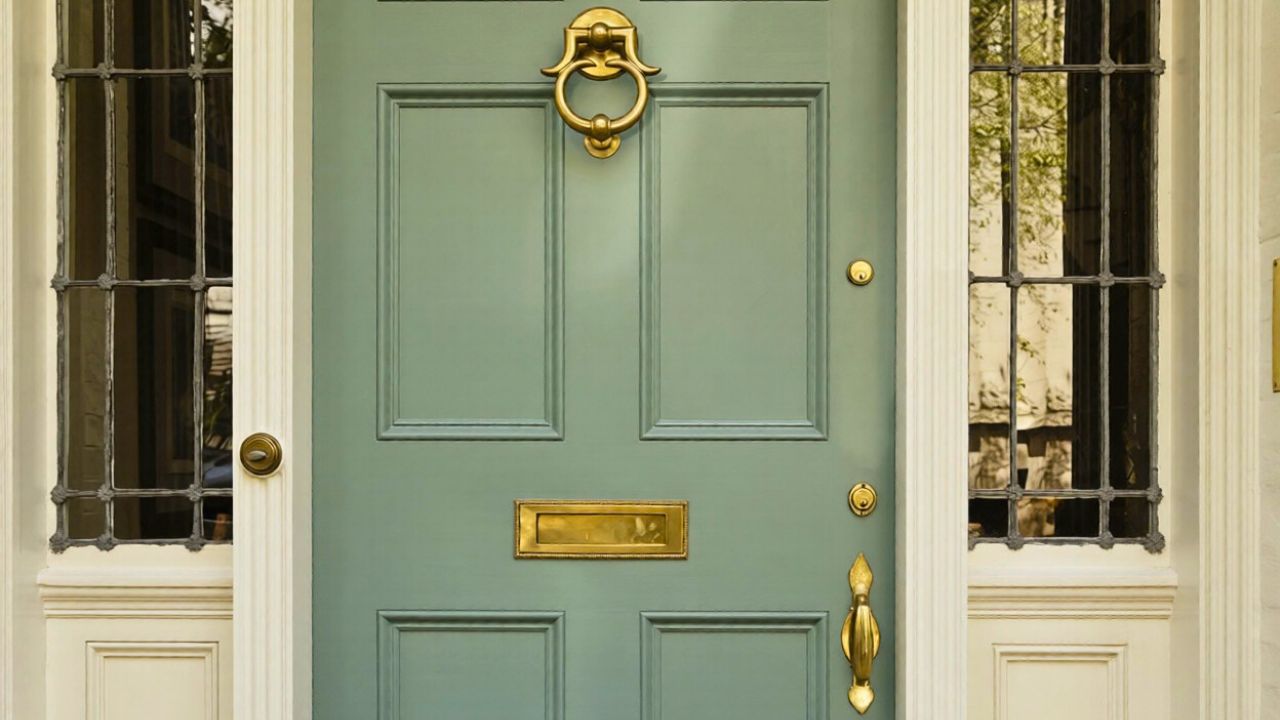
Brass has long been the default for traditional front doors because it reads as inviting and familiar, and modern versions can feel Warm without being gaudy. The term Brass now covers a spectrum of looks, from bright gold tones to muted antique shades, which gives you flexibility to match everything from a 1920s bungalow to a new build with black framed windows. That versatility is why you still see brass on high‑end doors even as cooler metals trend in magazines.
The catch is that not all brass finishes behave the same way once they are exposed to fingerprints, rain, and pollution. Some are lacquered to lock in the original color, while others are intentionally left to patinate, developing darker spots and variation over time. If you love a uniform, polished look, you need a protective top coat and regular cleaning to keep the metal from dulling or spotting, especially in coastal or urban environments. If you prefer a living finish that changes, you should be honest about whether you will still like that aged look on the front of your house in five years, because reversing heavy patina on a full handle set is rarely simple or cheap.
Black hardware: the trendiest finish with the highest risk of regret
Matte black locks and levers have become the go‑to choice for modern exteriors because they frame a door color sharply and pair well with black window grids, railings, and house numbers. On a white or pale gray facade, black hardware can make the entry feel crisp and architectural. Yet the very coatings that create that deep, uniform color can be fragile, especially when they are applied over softer base metals that are chosen to keep costs down. Industry discussions of Considerations with Black Hardware point out that while the look is visually striking, the underlying metal is often more prone to scratching and fading over time.
Real‑world feedback backs that up. Homeowners who have installed black knobs and levers report that the finish can wear off quickly at high touch points, especially around the latch and on the underside of levers where fingers naturally grip. One widely shared account singled out Emtek as one of the worst offenders for premature wear, noting that hands are the main culprit as oils and friction break down the coating. If you are set on black, you should look for higher grade hardware with more durable processes, be prepared for visible dust and fingerprints, and accept that you may need to replace or refinish sooner than with a more forgiving finish.
Bronze and dark tones: patina that works with, not against, aging
If you like the depth of black but worry about chipping, oil‑rubbed or dark bronze finishes can be a smarter compromise. These finishes are often designed as living surfaces that expect some change over time, so minor wear at edges or around the keyhole reads as character rather than damage. When the underlying metal and coating are chosen carefully, dark bronze can deliver the same graphic contrast as black while being more forgiving of small scratches and scuffs that would stand out sharply on a pure matte surface.
That does not mean every bronze option is bulletproof, but the best versions are engineered so that the patina deepens instead of flaking. Some manufacturers highlight how their dark bronze hardware can be an attractive option for modern homes because it bridges contemporary lines with a finish that feels grounded and substantial. If you live in a climate with strong sun or abrasive dust, a high quality bronze finish can age more gracefully than a painted black coating, especially on a busy front door that sees constant use from kids, deliveries, and guests.
Chrome and satin finishes: low drama, high practicality
For many front doors, the most successful finish is the one you barely notice because it simply stays clean and functional. Chrome, particularly in satin or brushed versions, falls into that category. Both satin chrome and polished chrome are known for their Durability and Maintenance advantages, with Both finishes offering strong resistance to corrosion, which is critical on an exterior door that faces rain and temperature swings. Satin chrome tends to hide fingerprints and minor scratches better, while polished chrome gives a mirror‑like shine that can look sharp on mid‑century or minimalist facades.
The trade‑off is that polished chrome usually demands more frequent wiping to maintain its reflective appearance, and any water spots or smudges will be obvious from the street. Satin chrome, by contrast, diffuses light and disguises everyday wear, which makes it a smart choice if you want a finish that quietly does its job. In coastal or high humidity regions, chrome’s inherent resistance to rust can be a major advantage over some painted or plated finishes that start to bubble or peel when moisture gets underneath the coating.
Climate, humidity, and how your environment attacks finishes
Even the best finish will struggle if it is mismatched to your environment. High levels of humidity, salty air near the ocean, and wide temperature swings all accelerate corrosion and can shorten the lifespan of door hardware. Analysis of a handle’s Cost Factor notes that the durability and quality of the materials used in the construction of the door handle have a significant impact on how long it lasts, and that high humidity can corrode internal springs and components. If the internal parts are suffering, the finish on the outside is usually under attack as well, especially around seams and screw heads where moisture can creep in.
Your microclimate at the front door matters too. A south‑facing entry that bakes in direct sun will be harder on dark finishes, which can fade or chalk, while a recessed porch that never fully dries out may encourage tarnish and spotting on brass or bronze. In snowy regions, road salt tracked onto the stoop can splash up and attack lower hinges and kick plates. When you choose a finish, you should picture the worst conditions your door sees in a typical year and ask whether that coating is designed to handle them, rather than assuming any exterior‑labeled hardware will perform the same way.
Maintenance realities: how much work are you really signing up for?
Every finish comes with a maintenance profile, even if the box does not spell it out. High gloss metals and deep, uniform colors usually require more frequent cleaning to look their best, while brushed or antiqued surfaces can hide a surprising amount of grime. Guidance on However you approach upkeep emphasizes that if you prefer a more uniform appearance, you should opt for finishes with protective layers that are easier to wipe clean and keep consistent. That might mean choosing a sealed satin nickel over a raw brass that will spot and darken unless you polish it regularly.
Maintenance is not just about aesthetics. Lubricating moving parts with products like WD‑40 for springs, tightening loose screws, and gently cleaning around keyholes can extend both the mechanical life and the appearance of your hardware. If you know you are unlikely to follow a detailed care routine, it is better to choose a finish that tolerates benign neglect than to install a high maintenance option that will quickly look worse than what you replaced. Being honest about your habits at the buying stage is one of the most effective ways to prevent your front door update from turning into a short‑lived experiment.
Budget, lifespan, and when paying more actually saves you money
Sticker price can be misleading when you are comparing finishes. A lower cost handle set with a fashionable coating may look like a win at the register, but if the finish starts peeling or the internal parts corrode within a few years, you will pay again in both money and hassle. Evaluations of a handle’s life span point out that the durability and quality of materials significantly affect how long hardware lasts, and that investing in better construction up front can reduce long term replacement costs. When you spread the price difference over a decade or more of daily use, a higher grade finish often works out cheaper per year than a bargain option that fails early.
Like Fix It Homestead’s content? Be sure to follow us.
Here’s more from us:
- I made Joanna Gaines’s Friendsgiving casserole and here is what I would keep
- Pump Shotguns That Jam the Moment You Actually Need Them
- The First 5 Things Guests Notice About Your Living Room at Christmas
- What Caliber Works Best for Groundhogs, Armadillos, and Other Digging Pests?
- Rifles worth keeping by the back door on any rural property
*This article was developed with AI-powered tools and has been carefully reviewed by our editors.