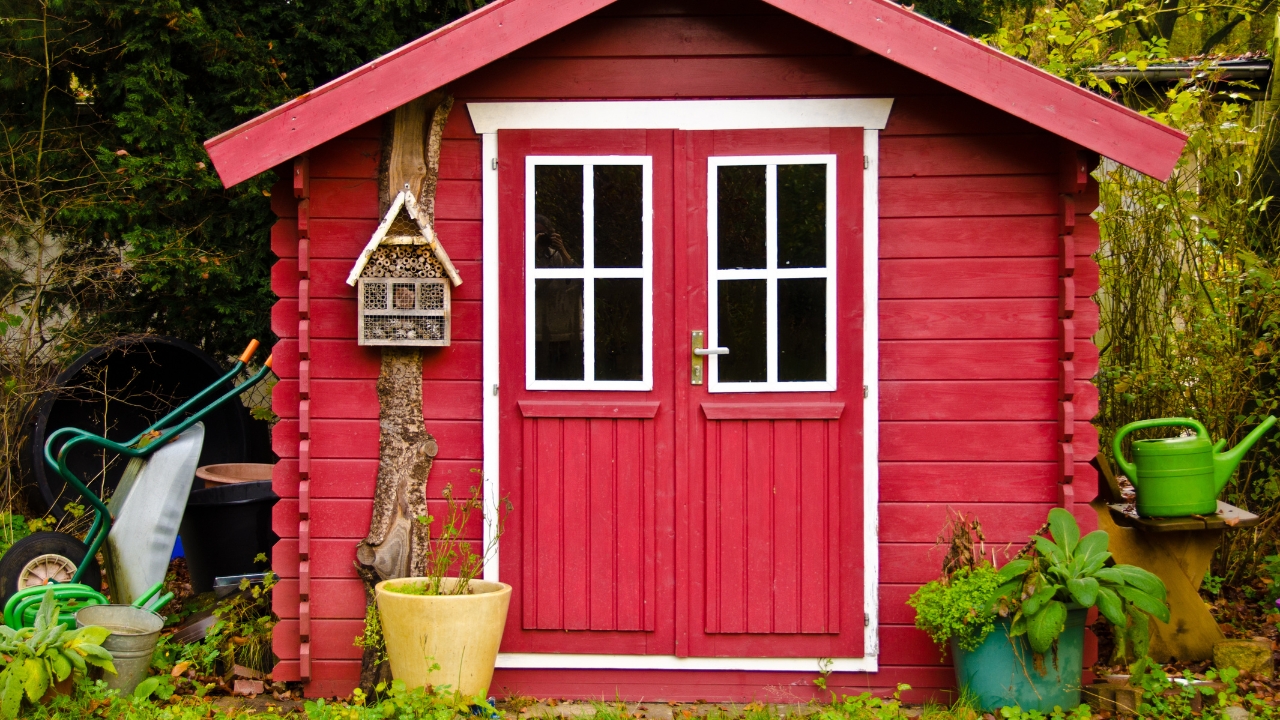
Are you setting up your shed so that rain will always win?
Photo credit: Brinja Schmidt/Shutterstock.com
Sheds fail slowly. It’s not usually a dramatic collapse. It’s the door that swells and sticks, the floor that starts feeling soft near the edges, the mildew smell that shows up in spring, and the tools that start rusting even though you swear the roof doesn’t leak. Most shed water problems come from setup, not the shed itself. If rainwater can sit under it, splash onto it, or run toward it, the shed will always be fighting moisture, and moisture always wins eventually. The frustrating part is people focus on sealing gaps while ignoring grading and base work, which is like mopping while the sink is still overflowing.
The base mistake that invites moisture from below
Putting a shed directly on soil or on an uneven base is a fast way to create long-term water issues. Soil holds moisture, and when the shed sits low, water will pool around the perimeter. Even if the shed floor is raised slightly, damp air rises and keeps the underside humid. That’s how you get rot, mold, and that “everything feels clammy” problem inside. A proper base—gravel pad, blocks on compacted material, or a built foundation—keeps the shed elevated and lets water drain away instead of sitting and soaking.
How roof runoff and splashback quietly destroy sheds
If your shed roof dumps water right along the base with no drainage plan, splashback can soak lower walls and door frames. Over time paint fails, trim swells, and water sneaks into seams. Gutters on a shed sound extra, but in wet climates they can make a huge difference, especially if you’re storing anything you care about. At minimum, you want the shed located so runoff flows away, not into a low spot. You also want the ground around it sloped so water doesn’t sit against the sides after storms.
A shed setup that stays dry without constant patching
Pick the highest reasonable spot, build a base that drains, and keep vegetation trimmed back so airflow can dry things out. Gravel around the perimeter helps reduce splashback and weeds, and a simple ramp or threshold plan keeps the door area from becoming a mud pit. If the shed is already in a bad spot, improving drainage around it and building up a pad can still help. The goal is not a waterproof bunker. It’s a shed that sheds water naturally because the setup supports it.
Like Fix It Homestead’s content? Be sure to follow us.