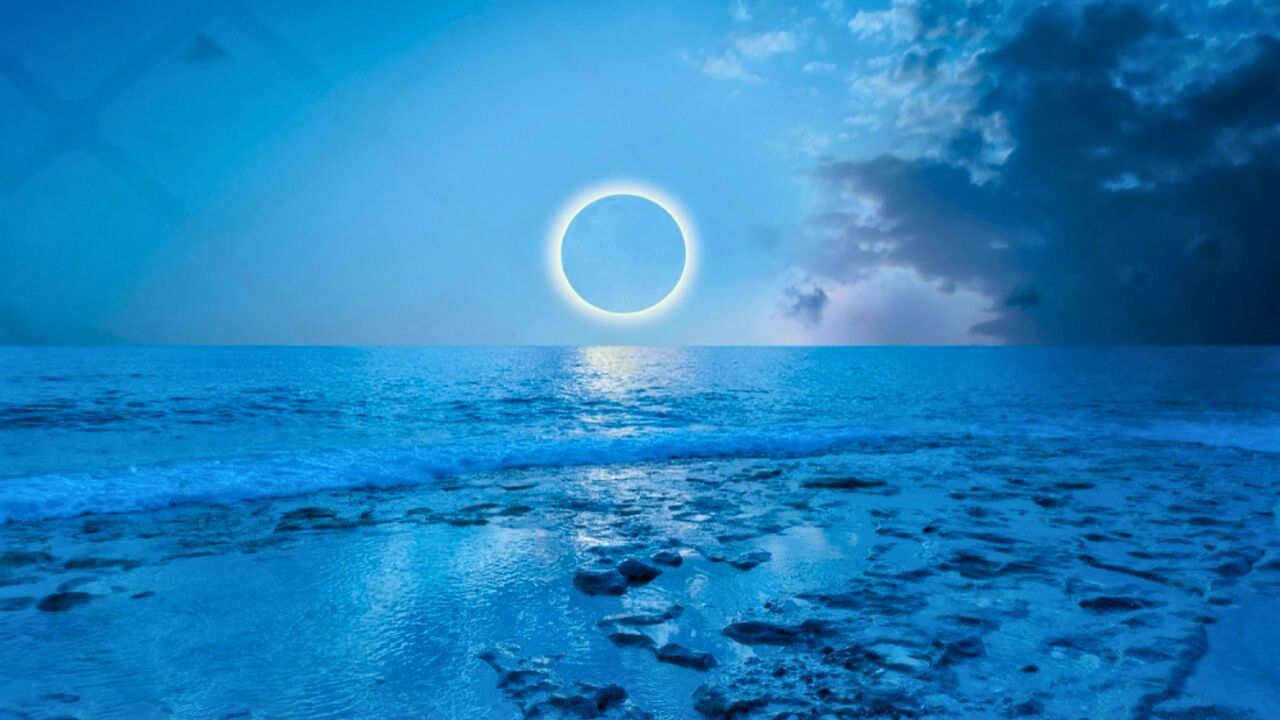
The ‘ring of fire’ solar eclipse that almost nobody will see (except Antarctica)
Photo credit: Muratart/Shutterstock.com
NEW YORK — Skywatchers looking for the next big solar eclipse will have to travel far south — and even then, odds are they’ll still miss the main event.
An annular solar eclipse — the type that creates a bright “ring of fire” around the moon — is set for Tuesday, Feb. 17, 2026, but the full annular view will be limited to a remote track across Antarctica and the surrounding Southern Ocean, where few people live or can easily reach.
Annular eclipses happen when the moon passes between Earth and the sun while the moon is slightly farther away in its orbit. From the ground, the moon appears a bit smaller than usual and does not fully cover the sun, leaving a thin ring of sunlight visible during the peak phase.
According to eclipse forecasts, the path where the complete “ring” is visible will largely cross western Antarctica and offshore areas near the Davis Sea coast, meaning the best views are expected to come from isolated research stations, ships, or expedition teams already operating in the region. The maximum annular phase is expected to last up to about 2 minutes and 20 seconds along the track.
For most of the world, the eclipse will be either partial or not visible at all. Even so, astronomers say a partial eclipse will be visible across Antarctica and in parts of the Southern Hemisphere, including southern South America and parts of southern and southeastern Africa, depending on location and local weather.
Safety remains a central message for anyone catching a partial view: looking at the sun without proper protection can cause serious eye damage. Experts recommend eclipse viewers use solar-viewing glasses that meet the ISO 12312-2 standard or use indirect methods such as pinhole projections.
The Feb. 17 eclipse is one of several major sky events on the 2026 calendar. Another widely watched event later this year is expected to be a total solar eclipse in August 2026, with a path that crosses parts of Europe and the North Atlantic region.