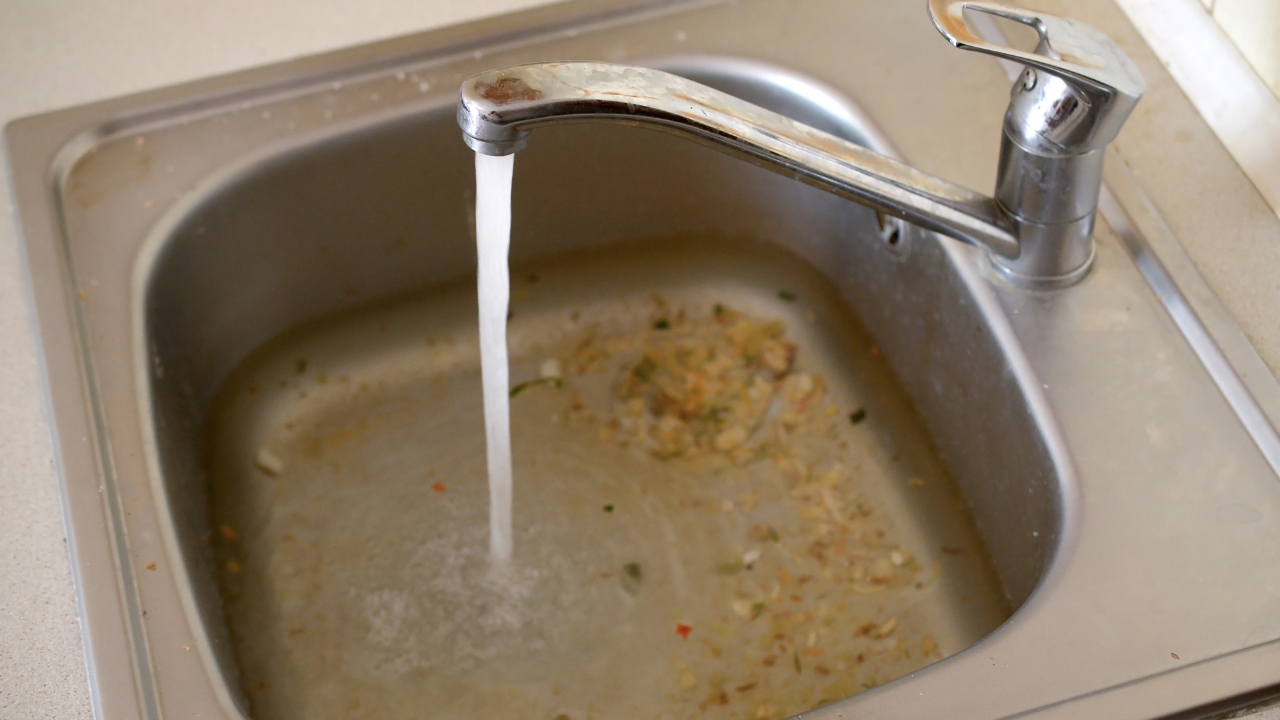
These kitchen sink habits make drains smell worse long-term
Photo credit: Mehaniq/Shutterstock.com
Kitchen sink odors rarely appear out of nowhere. They usually build slowly as small daily habits feed bacteria, trap sewer gases, and coat your pipes in grime that gets harder to remove over time. If you keep treating your drain like a catch‑all, you eventually lock in smells that no quick fix can fully erase.
Understanding which routine moves quietly make things worse helps you break the cycle and keep your kitchen from smelling like a sewer every morning. The habits that feel convenient in the moment are often the ones that let food, grease, and gases linger in your plumbing long after the dishes are done.
1. Letting food scraps ride the drain instead of the trash
Every time you rinse plate scrapings down the sink, you load your pipes with material that will rot in the dark. Even if you have a garbage disposal, fibrous peels, coffee grounds, starchy rice, and tiny meat bits cling to the walls of the drain and the P‑trap, where they break down and feed odor‑producing bacteria. Plumbing specialists describe how food debris is in the pipe and begins to smell as it decomposes, especially when it gathers into partial clogs that never quite clear.
Over time, this built‑up organic matter becomes a layered sludge that traps new particles and slows water flow, which gives smells more time to rise back into your kitchen. Several guides on food or other in the waste pipe point out that even small scraps add up when you repeat the habit every day. If you keep relying on the drain instead of the trash can, your pipes eventually act like a compost bin you never meant to install.
2. Rinsing grease and oil with hot water and hoping for the best
Pouring liquid bacon fat, fryer oil, or buttery sauces down the sink might feel harmless when you chase them with hot water. In your plumbing, though, that grease cools, solidifies, and coats the inside of the pipe like candle wax. One breakdown of grease solidifies explains how this sticky film then traps other particles, including food and soap scum, which creates a thick, foul‑smelling ring that keeps growing.
As that ring narrows the drain, water moves more slowly and leaves behind even more residue, which becomes a perfect surface for bacteria and mold. Plumbing pros who outline the common causes of link this type of buildup directly to clogs that slow water flow and intensify smells. When you keep sending grease down the sink year after year, you set up a long‑term odor problem that no scented cleaner can fully mask.
3. Ignoring the P‑trap and vent, the quiet hardware that keeps smells out
You probably never see your P‑trap, but it does most of the work that keeps sewer gases out of your kitchen. This curved section of pipe holds a small amount of water that blocks odors from traveling up from the main line. When that water evaporates or the trap becomes clogged or dirty, gases escape and your sink can start to smell like sewage, a pattern detailed in explanations of a clogged or dirty. If you rarely run water in a particular sink, you let that protective water seal disappear and invite odors back into the room.
The plumbing vent, often on the roof, is just as easy to forget and just as important for odor control. It equalizes pressure and lets sewer gases escape outdoors instead of bubbling through your drains. When you overlook vent maintenance or block it with debris, you can create gurgling, slow drains, and persistent smells that no amount of scrubbing at the sink will fix, as guides to plumbing vents explain. Treat these components as invisible and never check them, and you give odors a permanent back door into your kitchen.
4. Relying on quick spritzes and surface cleaning while the drain rots
Wiping your countertops, shining the faucet, and spritzing a scented cleaner can make your kitchen look spotless while the real problem festers in the drain. Odors usually come from inside the pipes, where you cannot see the buildup of food, grease, and soap film. Plumbing teams who break down why your sink point to hidden biofilm, decaying debris in the trap, and even minor sewer line issues that are not touched by surface‑level cleaning.
When you keep treating the smell as a cosmetic issue, you delay the deeper cleaning or inspection that would actually solve it. That delay lets mold and mildew spread along the damp, dark interior of the drain, which experts on mold and mildew describe as a perfect breeding ground. Your nose ends up telling you the truth that your eyes cannot see: unless you address the inside of the drain, the smell will always return once the spray wears off.
5. Treating “just a little” drain slowdown as normal
You might accept a sink that drains a bit slower after big dinners or heavy dishwashing, but that hesitation in the water is your early warning system. A partial clog holds on to food particles, grease, and soap scum, which then start to decompose and release gas. Plumbing breakdowns that list the reasons why your repeatedly tie slow drainage to odor issues, since the trapped material has more time to sit and rot in the pipe.
When you shrug off that slowdown instead of clearing it fully, you let the clog harden and expand. Over months, the pipe interior narrows, water backs up more often, and the smell becomes stronger and more constant. One overview of the dangers of ignoring warns that these odors can signal more severe plumbing issues that grow harder and more expensive to fix. By normalizing minor symptoms, you give long‑term problems room to grow.
6. Overusing harsh chemicals instead of clearing the cause
When a bad smell hits, it is tempting to reach for the strongest chemical cleaner you can find and pour it straight into the drain. That habit may offer temporary relief, but it often leaves the underlying clog or biofilm in place. Some manufacturers that explain how their products emphasize correct use and safety precisely because repeated heavy doses can damage older pipes, especially if the cleaner sits against a blockage instead of flushing through.
Harsh chemicals can also disrupt the balance inside your plumbing by stripping away material unevenly, which creates rough surfaces that catch even more debris. Guides that discuss health risks of point out that lingering clogs and slow flow keep odors and moisture in place, which encourages bacterial growth. If you keep masking the smell with chemicals instead of physically removing the blockage or checking for damage, you trade a lasting fix for a cycle of short‑lived cover‑ups.
7. Forgetting the dishwasher, disposal, and overflow channels
Your kitchen sink does not work alone. The dishwasher drain line, garbage disposal, and overflow openings all tie into the same system and can carry their own hidden smells. Plumbing technicians who outline dishwasher drain issues explain that food left in the filter or hose can decay and then vent through the sink, even when the basin itself looks spotless. If you never clean those components, you end up chasing a smell that keeps returning from a neighboring pipe.
Garbage disposals add another layer, since their blades and splash guards can hold on to slimy residue long after you turn them off. Resources that cover kitchen drain odor stress that these hidden surfaces need regular flushing and scrubbing to stay fresh. When you focus only on the visible drain opening and ignore the connected hardware, you let smells travel from one neglected part of the system into the rest of your kitchen.
8. Letting moisture, soap scum, and mold settle in
Every time you run the tap, you add more moisture and soap residue to the inside of your pipes. If the drain does not clear quickly or the pipe walls are already rough with buildup, that moisture clings and creates ideal conditions for mold and mildew. Plumbing experts who list mold and mildew among the top reasons for a smelly sink describe how the damp, dark environment of sink drains encourages colonies that release musty, earthy odors.
Soap scum plays a bigger role than many people realize. It acts like glue for hair, food, and grease, locking them in place where they can decompose and feed bacteria. One breakdown of soap scum highlights how this film can trap odors and make natural cleaning methods less effective if you do not first remove the residue. When you let that mix of moisture and residue sit undisturbed, you turn your pipes into a permanent habitat for odor‑producing growth.
9. Treating a sewer‑like smell as a minor annoyance
A faint sewer odor around the sink might feel like something you can live with, especially if it comes and goes. Over time, though, that smell can hint at more serious issues, including partial sewer line blockages or damaged connections. Plumbing teams who answer why your sink point to problems such as dry or faulty P‑traps, venting issues, or even clogged or damaged sewer lines that let gases escape into your home.
Ignoring those signs can carry health and structural risks. Overviews that focus on the understanding foul smells in drains explain that persistent odors can indicate clogs that slow water flow and allow bacteria and gases to accumulate. When you treat that smell as background noise instead of a warning, you give time for minor issues to become major repairs and for unpleasant odors to become a permanent feature of your kitchen.
Like Fix It Homestead’s content? Be sure to follow us.
Here’s more from us:
- I made Joanna Gaines’s Friendsgiving casserole and here is what I would keep
- Pump Shotguns That Jam the Moment You Actually Need Them
- The First 5 Things Guests Notice About Your Living Room at Christmas
- What Caliber Works Best for Groundhogs, Armadillos, and Other Digging Pests?
- Rifles worth keeping by the back door on any rural property
*This article was developed with AI-powered tools and has been carefully reviewed by our editors.