You’re making your yard look smaller with this border choice
Photo credit: Wirestock Creators/Shutterstock.com
Your yard can feel cramped even when you technically have plenty of square footage, and one of the fastest ways to shrink it visually is with the wrong border. The edges you choose for beds, paths, and fences control how the eye travels, so a single harsh line can make everything inside it feel tighter and more boxed in. By rethinking that border choice and a few related details, you can reclaim a surprising amount of breathing room without moving a single fence post.
Often, the main culprit is a rigid, narrow edge that chops your space into hard rectangles and draws attention to its limits instead of its depth. Swap that for shapes, materials, and colors that stretch sightlines and soften transitions, and your yard immediately feels longer, wider, and calmer. The difference is less about adding more plants and more about how you frame what you already have.
The border mistake that instantly shrinks your yard
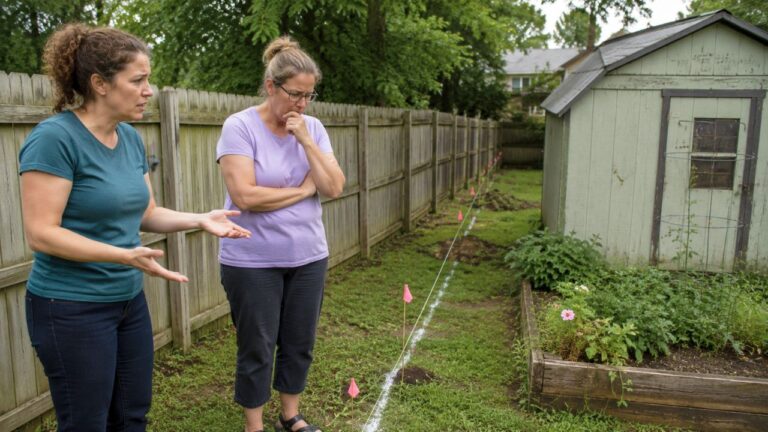
The border that most quickly makes your yard feel smaller is a thin, ruler straight strip that runs tightly along the fence or patio like a picture frame. That kind of rigid edge emphasizes the exact outline of your plot, so your eye jumps straight to the perimeter and stops there. When you repeat that same straight line in multiple places, such as a narrow bed against the house and another along the back fence, you create a grid that chops the garden into shallow slices instead of inviting you to look through and beyond.
Designers who work with compact plots often steer you away from these pinched outlines and toward deeper, more generous beds that let planting spill and overlap. Guidance on border depths and highlights how sweeping, curved borders can pull your gaze diagonally across a space instead of straight to the boundary, which makes any yard feel longer. Keep your edging too tight and shallow, and you lose that visual journey, ending up with a layout that feels more like a corridor than a garden.
How straight lines box in a small garden
When every border in your yard runs in a straight line, you reinforce the exact dimensions of the plot, especially in a narrow space. Long, parallel edges along both sides of a slender garden behave like rails, so you notice the distance between them and become more aware of how little width you have to work with. That effect is amplified if your paths and planting strips all follow the same direction, which can make even a generous length feel like a tunnel.
Advice on narrow yards warns that this kind of rigid, linear layout can feel overwhelming and cramped, especially when you line every edge with hard materials. Rather than repeating straight, parallel borders, you are encouraged to interrupt those lines with angled beds, clipped portholes in hedges, or planting that bulges in and out to break the corridor effect. When your borders bend, widen, or step forward in a few places, the eye has to weave, which makes the journey feel longer and the space more generous.
Why depth matters more than length
Focusing only on the length of your beds and ignoring depth leaves you with a thin strip of soil that cannot hold much more than a single row of plants. That shallow planting looks mean and flat, which brings the fence or wall visually closer because there is no layered foliage to soften it. By contrast, a deeper border lets you stagger heights, colors, and textures, so the back of the bed appears to sit further away behind a foreground of planting.
Guidance on border depths explains that generous planting areas help you build this kind of layered structure, especially in a sunlit garden where taller perennials and shrubs can sit at the back. Give yourself enough depth to mix heights and you create a sense of perspective similar to a stage set, with low plants at the front and taller ones receding into the distance. That depth tricks the eye into reading more space than you actually have, which is exactly what a small yard needs.
Curves, sightlines, and the illusion of space
Curved borders are one of the most reliable ways to make a compact yard feel larger because they interrupt straight sightlines and invite you to look around corners. Instead of seeing the entire boundary at once, you glimpse part of a bed that disappears behind planting, which suggests there is more garden beyond. Even a simple arc that pushes into the lawn can create a pocket of space that feels like a separate room, adding complexity without adding square footage.
Guidance on sweeping, curved borders explains that these shapes are especially effective when they lead the eye diagonally across the plot instead of straight from one end to the other. That diagonal movement lengthens the view and distracts from the true boundaries, particularly in a sunlit garden where curves can frame focal plants. If your current edging is a straight, skinny strip, trading it for a deeper, gently curving bed can transform how large the entire yard feels.
Material choices that visually shrink or stretch your yard
The material you use for edging can either reinforce the sense of tightness or help your yard feel more open. Tall, chunky blocks or bright, high contrast bricks create a heavy frame that dominates the view and draws a hard line between lawn and bed. In a small space, that kind of bold outline behaves like a border in a picture frame, which makes the contents feel smaller and more contained.
By contrast, slim metal edging such as steel landscape edging gives you a clean, contemporary line that almost disappears once plants grow over it. This kind of unobtrusive edge can follow curves with structural integrity while keeping the focus on foliage rather than on the border itself. Where you want an even softer effect, a living border made of low plants can define edges without a hard line, and guidance on a small garden fence suggests letting nature define its own edges for a soft, organic look that blends seamlessly with the surroundings.
Color, contrast, and how your fence line reads
Color is another quiet factor that can make your yard feel smaller if you get it wrong at the borders. Dark, high contrast edging or a fence painted in a strong, saturated shade creates a sharp stop for the eye, especially when it sits right behind a thin planting strip. That combination highlights the exact point where your property ends, which compresses the space visually because there is no gradual transition from garden to boundary.
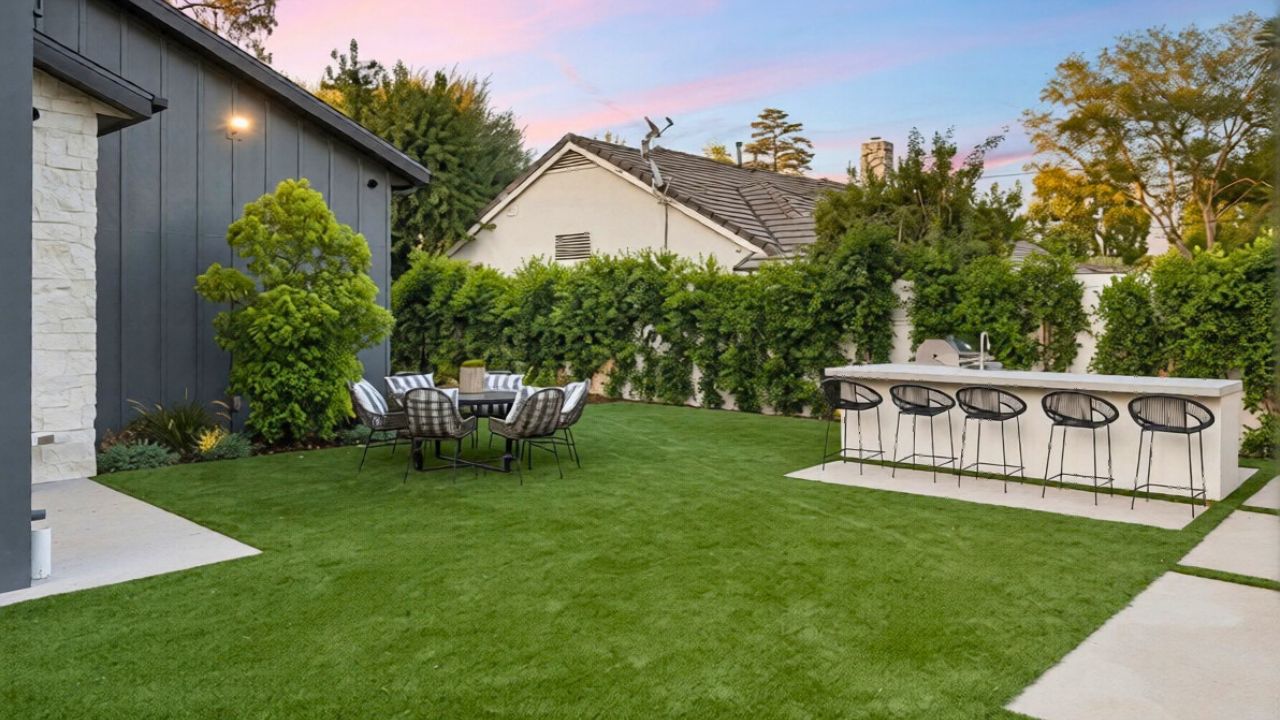
Advice on fence paint color suggests that lighter shades such as white, pale gray, or light beige can make a garden appear larger and more open. Pair a light, recessive fence with a slightly deeper, curved border in front of it, and the plants take center stage while the boundary recedes into the background. Even if you keep your existing edging material, softening the color contrast between border, planting, and fence can stretch the perceived depth of the yard.
Living borders and layered planting that expand the view
Rigid, low edging that runs in a straight line can make your beds feel like narrow trays, which emphasizes how little planting depth you have. Swapping some of that hard edging for a living border, such as a row of small shrubs or a ribbon of groundcover, blurs the transition between lawn and bed. That softness encourages your eye to move through the planting rather than along a hard edge, which makes the space feel more fluid and generous.
Guidance on a living border explains that letting nature define its own edges creates an organic look that can keep your garden looking good for years. Combine that approach with layered planting, such as low groundcovers at the front, medium perennials in the middle, and taller shrubs at the back, and you build depth that visually pushes the boundary away. In a tight yard, that layered, living edge is often more forgiving and more space enhancing than a rigid row of bricks or plastic strips.
Edging styles that work harder in small spaces
In a compact garden, edging needs to do more than keep mulch off the lawn; it has to help organize the layout without chopping it into pieces. Low, simple materials that sit nearly flush with the soil tend to work best because they define shapes without becoming a visual barrier. A thin metal strip or a discreet row of pavers set level with the ground can, for example, mark the edge of a bed while allowing plants to spill slightly over, which keeps the boundary soft.
Guidance on garden edging for explains that strategic edging can create illusions of space while still bringing clarity to a limited area. Similarly, advice on DIY landscape edging highlights classic wood and natural options that help suppress weeds and retain soil moisture without dominating the view. When you choose an edging style that quietly supports your layout instead of shouting for attention, your yard feels calmer and, by extension, larger.
Layout mistakes that make borders feel busier and tighter
Even with the right materials, you can still shrink your yard if your overall layout is jumbled and irregular. A scattering of tiny beds, each with its own edging style and shape, creates visual noise that makes the space feel bitty and cluttered. In a small garden, that kind of patchwork layout can be more damaging than a single straight border because your eye never gets a clear route through the space.
Guidance on mistakes that make warns that a jumbled, irregular layout can undermine even good planting. Instead of scattering borders everywhere, you are encouraged to create a coherent structure with a few well defined edges and clear paths. When your borders align with a simple circulation route and echo each other in shape or material, the garden reads as one larger whole rather than a series of disconnected fragments.
How to fix a space shrinking border without starting over
If you already have a border that makes your yard feel smaller, you do not have to rip everything out to improve it. Start by widening the bed in key spots, especially near corners, to break up long straight runs and create gentle curves. You can cut into the lawn in a few sweeping arcs, then soften the new outline with layered planting that gradually increases in height toward the back.
Next, look at your edging material and color. If you are working with a heavy, high contrast border, consider swapping it for something slimmer, such as discreet metal or low timber, or allow a living edge of plants to spill over and disguise the hard line. Tools such as the Frame It All visualizer can help you experiment with shapes and materials before you commit. When you pair these tweaks with thoughtful fence colors and a simplified layout, you transform a space shrinking border into a quiet frame that makes your yard feel wider, deeper, and more inviting.
Like Fix It Homestead’s content? Be sure to follow us.
Here’s more from us:
- I made Joanna Gaines’s Friendsgiving casserole and here is what I would keep
- Pump Shotguns That Jam the Moment You Actually Need Them
- The First 5 Things Guests Notice About Your Living Room at Christmas
- What Caliber Works Best for Groundhogs, Armadillos, and Other Digging Pests?
- Rifles worth keeping by the back door on any rural property
*This article was developed with AI-powered tools and has been carefully reviewed by our editors.