Basic gutter guards now priced from $4 to $25 per linear foot
Photo credit: Suzanne Tucker/Shutterstock.com
Basic gutter guards now start around $4 per linear foot and can climb to about $25 per linear foot, so a small purchase decision quickly turns into a four-figure project once you multiply those prices across an entire roofline. Understanding what drives that spread helps you match your budget to the right level of protection instead of overpaying for features you do not need or underbuying and ending up with clogged gutters anyway.
By looking at current price ranges, real product examples, and installation practices, you can see how a modest per-foot number becomes a total cost that competes with other big-ticket home improvements. You also gain a clearer sense of when you can safely handle installation yourself and when professional work is a better investment.
What “basic” gutter guards really cost per foot
When you hear that simple gutter guards now run from $4 to $25 per linear foot, you are usually looking at the entry to mid tier of products that sit on top of your existing gutters rather than fully replacing them. Several pricing guides describe a broad band of $3 to $25 per foot for typical projects, with the low end tied to lightweight screens or foam inserts and the high end tied to premium micro mesh or integrated systems that still rely on your current gutters. One national estimate notes that for a 2,500 square foot home, gutter guards usually total $800 to $5,000, which lines up with that $3 to $25 per linear range once you factor in the length of the roof perimeter and standard installation practices in your area.
Those same cost breakdowns stress that the per-foot figure you see in marketing is rarely the whole story, because labor, roof pitch, and prep work can all nudge a “basic” system into a more expensive bracket. In some cases, the per-foot number that looks like product pricing already bundles labor, which is why one calculator lists pro installation at $15 to $45 per linear foot, with total project costs of $3,000 to $9,000 for larger homes. Compared with the $3 to $25 band, it is easy to see how a modest product-only cost can double once you hire a contractor and add safety equipment, travel time, and overhead to the bill.
How project size turns small per-foot prices into big totals
The impact of a $4 to $25 per-foot range becomes most obvious when you look at the full length of your gutters, not just a short sample section. A typical 2,500 square foot home might have 150 to 200 linear feet of gutters, so even a basic $4 per-foot guard quickly becomes a $600 to $800 materials purchase, while a $15 option lands closer to $2,250 to $3,000 before you pay for labor. That is why one national cost guide frames the typical total between $800 and $5,000 for a 2,500 square foot property: the combination of home size and per-foot pricing leaves a lot of room for variation.
Once you add professional installation, the numbers climb again. One pricing breakdown lists pro-installed gutter guards at $15 to $45 per linear foot, with total averages of $3,000 to $9,000 for full-home coverage, which puts even basic systems on the same budget tier as a midrange appliance package. Another installer-focused guide pegs common projects around $652 on the low side, with ranges of roughly $4 to $6 per linear foot for standard materials and labor, which fits neatly into the “basic but professionally installed” category. Taken together, these figures show how a small per-foot difference, multiplied across your entire roofline, can shift a project from a few hundred dollars to several thousand.
Entry-level materials and where they fit in the $4 to $25 band
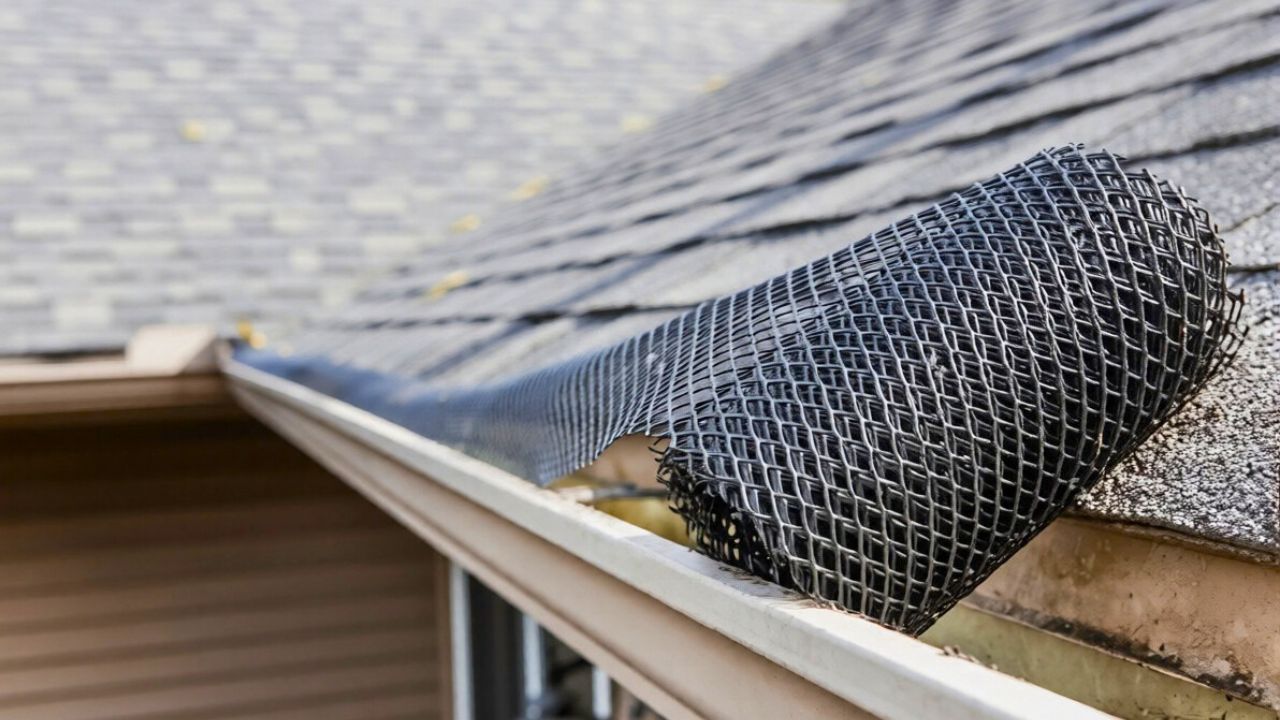
At the bottom of that $4 to $25 range, you usually find foam inserts, brush-style fillers, and simple plastic or steel screens that sit inside or over the gutter channel. One product overview describes these as entry-level guards that are DIY-friendly and budget-conscious, since you can slide foam or polypropylene bristle brushes into place without special tools, and they do a decent job of blocking large debris while letting water pass through. Another cost guide lists screen gutter guards at $1.50 to $6.00 per linear foot for materials, with the lower end covering thin metal or plastic screens and the upper end reserved for more durable coated steel or aluminum options that still qualify as basic protection.
Brush and foam systems often fall near the $4 to $5 per-foot mark once you include tax and incidental supplies, which keeps them squarely in the “basic” category but also exposes their limitations. These products can trap seeds and fine debris inside the foam or bristles, which means you may still need to pull them out and clean them periodically. By contrast, simple mesh or perforated aluminum panels, such as the Amerimax Home Products Titan Aluminum Mesh Gutter Guard you can find through a retail product listing, typically cost a bit more per foot but offer a cleaner profile and better long-term durability while still staying under the upper end of the $25 band.
Why some “basic” guards creep toward $25 per foot
As you move beyond simple foam or screen designs, you start to see micro mesh panels, thicker aluminum bodies, and proprietary brackets that push even basic systems toward the higher end of the price range. One national comparison of gutter guard types notes that mesh gutter guards, which are often sold as a step up from screens, command higher prices because they use finer stainless steel or aluminum mesh that blocks small debris and shingle grit. Another cost analysis points out that material quality alone can push total project spending up to $5,000, since wider gutters, special coatings, and corrosion-resistant fasteners all add incremental cost that shows up in the per-foot figure.
Even within the “basic” category, some brands market semi-premium systems that still sit on existing gutters but borrow design cues from fully integrated products. These might include reinforced front lips to handle heavy rain, color-matched finishes, or stepped profiles that blend more cleanly into your roofline. When you combine those material upgrades with professional installation, you can easily reach $20 or more per linear foot, especially on taller homes or properties with complex rooflines. In that context, the top of the $25 band is less about exotic technology and more about the cumulative effect of better metals, stronger fasteners, and labor-intensive fitting on each section.
How labor, repairs, and roof design affect the final price
The sticker price on a box of gutter guards only tells part of the story, because you often need cleaning and minor repairs before any system can be installed safely. One project guide advises you to budget a few hundred dollars for gutter repairs and cleaning before you install your guards, since sagging sections, loose spikes, or leaky seams can undermine even the best product. Another contractor-focused breakdown explains that the total to install gutter guards on an average home, including labor and any necessary gutter repairs, can start around $652 and climb from there, especially if your gutters need realignment or new hangers.
Roof design also plays a direct role in labor cost. Steep pitches, multiple stories, and complex valleys all require more ladder moves, staging, and safety precautions, which show up in the per-foot labor rate. One installation cost guide notes that factors such as roof height and difficulty directly affect labor costs, even when the material price per foot stays constant, which is why you might see a range of $4 to $6 per linear foot for similar products across different homes. Once you add those realities to the baseline material price, the “basic” $4 to $25 band becomes a more practical planning tool rather than a simple marketing claim.
DIY installation versus hiring a professional
If you are comfortable on a ladder and your roofline is straightforward, basic gutter guards are one of the more approachable DIY projects on the exterior of your home. Several how-to guides emphasize that you can cut and fit foam, brush, or screen guards with simple tools, then secure them according to the manufacturer’s instructions. One step-by-step resource advises you to secure the guard by snapping it into place or using screws, and to use the recommended number of screws per foot so the system can handle heavy rain and wind without shifting. That kind of detailed guidance makes it easier to translate a low per-foot material cost into real savings, since you are not paying for labor on top.
Professional installation still has a strong case, especially if your home is taller than one story or your gutters are hard to reach. A national cost breakdown that lists pro installation at $15 to $45 per linear foot reflects not only the labor of attaching the guards but also the time spent cleaning, inspecting, and repairing the gutters beforehand. Another analysis of gutter guard products points out that custom fitting and specialized tools are often needed for higher-end systems, which can make DIY work risky or void warranties. When you weigh those factors, a basic guard that might cost you $4 per foot in materials could end up closer to $10 or $15 per foot once you factor in professional labor, but you also gain the assurance that the system is installed correctly and safely.
Comparing basic guards to premium and integrated systems
Basic guards in the $4 to $25 per-foot range usually sit on top of existing gutters, while premium systems replace the gutters entirely and integrate the guard into a single continuous unit. One cost comparison for integrated gutter systems notes that people who search for “LeafGuard gutters cost” are often surprised to see average project totals in the $8,000 to $12,000 range for larger homes with steep roofs, which dwarfs the $800 to $5,000 band for add-on guards on a 2,500 square foot house. Another pricing guide focused on a branded integrated system explains that these products are marketed with lifetime clog guarantees and custom-formed sections, which naturally come with higher material and labor costs than basic add-ons.
That does not mean premium systems are always overpriced; instead, it highlights how you need to compare apples to apples when you look at per-foot numbers. A simple micro mesh panel that costs $10 per foot and uses your existing gutters will never match the durability or water-handling capacity of a fully engineered integrated gutter and guard system that runs several times that amount. However, if your current gutters are in good shape and you mainly need to keep leaves and small debris out, basic guards give you a way to control costs without stepping into the $8,000 to $12,000 territory associated with full replacement. By understanding where your needs fall on that spectrum, you can decide whether the higher upfront price of an integrated system is justified by long-term performance or whether a more modest add-on is enough.
How to read and compare contractor estimates
When you start collecting quotes, you will see a mix of per-foot pricing, flat project fees, and bundled offers that include cleaning and repairs. One homeowner guide urges you to look past the headline number and focus on the details, such as whether the contractor includes downspout screens, corner miters, and end caps in the per-foot cost or charges separately for those components. Another estimate-focused resource encourages you to compare qualifications and promotions, highlighting that some installers offer seasonal discounts or package pricing that can bring the total closer to the lower end of the $800 to $5,000 range for a 2,500 square foot home. Using that approach, you can turn a confusing set of quotes into a clear comparison of what you get for each dollar.
Why moisture control and roof health justify the investment
Using current pricing data to plan your project
Like Fix It Homestead’s content? Be sure to follow us.
Here’s more from us:
- I made Joanna Gaines’s Friendsgiving casserole and here is what I would keep
- Pump Shotguns That Jam the Moment You Actually Need Them
- The First 5 Things Guests Notice About Your Living Room at Christmas
- What Caliber Works Best for Groundhogs, Armadillos, and Other Digging Pests?
- Rifles worth keeping by the back door on any rural property
*This article was developed with AI-powered tools and has been carefully reviewed by our editors.