“ICE Out” protests grow nationwide as immigration enforcement intensifies
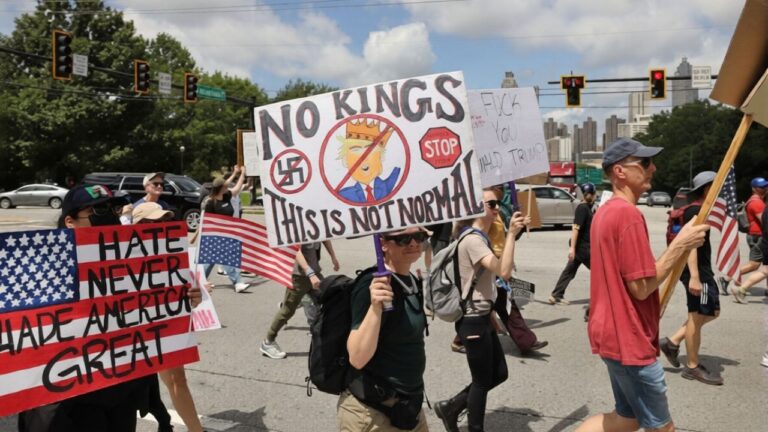
Photo credit: Christopher Penler/Shutterstock.com
From Minneapolis to Southern California, the “ICE Out” protest wave has grown into a nationwide challenge to aggressive immigration enforcement. What began as local outrage over a fatal shooting linked to Operation Metro Surge has expanded into coordinated strikes, student walkouts and calls for a national economic shutdown.
At the center of the unrest is a clash between a White House that has ordered tougher tactics and communities that say federal agents are operating with too little transparency and too much force. The result is a rolling confrontation that now reaches schools, major retailers and city streets across the United States.
From Operation Metro Surge to “ICE Out”
The spark for the current crisis was Operation Metro Surge, a large-scale immigration enforcement deployment launched by the Department of Homeland Security in Minnesota. According to an overview of the 2025–26 Minnesota ICE, the operation concentrated raids and arrests in and around Minneapolis, culminating in a fatal shooting of a United States citizen in the city.
The shooting quickly became a national flashpoint. A separate account of Operation Metro Surge notes that the president and federal officials publicly defended the enforcement push even before any full investigation had concluded, which critics seized on as proof that political messaging had overtaken accountability.
Outrage did not stay confined to Minnesota. Massive anti-ICE protests erupted across the United States after federal agents fatally shot the Minneapolis resident during “Operation Metro Surge,” with social media video amplifying the moment and spreading the slogan “ICE Out” into a national rallying cry.
Cold streets, hot politics
The scale of the backlash became clear when thousands joined coordinated “ICE Out” actions across multiple states. In Minnesota, organizers reported that Minnesotans braved -10°F to participate in a statewide strike and rally against ICE and Operation Metro Surge, a sign that resistance had hardened rather than faded in the winter cold.
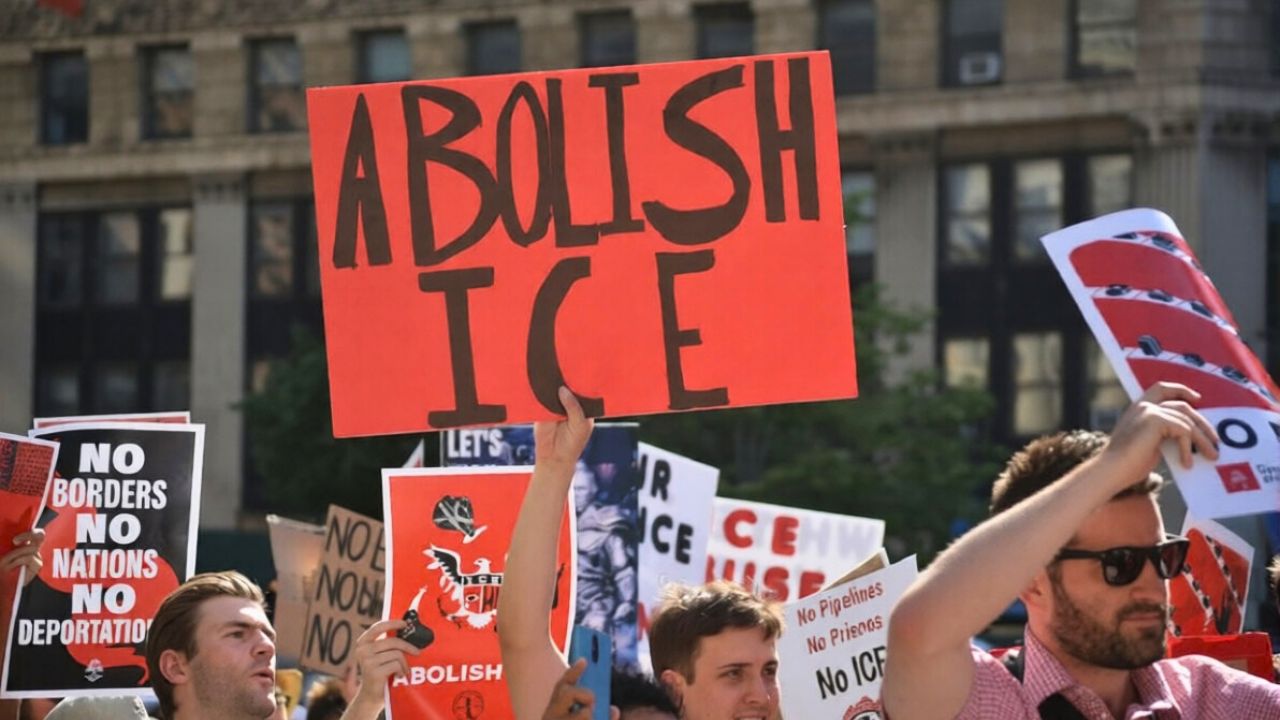
In Los Angeles, hundreds gathered downtown to demand an end to immigration raids tied to the Minnesota deployment, with demonstrators explicitly linking their march to the events in Minneapolis and calling for ICE to be abolished as raids continued in that city. Coverage of the L.A. march described Hundreds filling the streets and chanting against the agency.
Southern California quickly became another epicenter. Local reports described how ICE protests spread as activists called for a nationwide shutdown, with clashes between L.A. demonstrators and police underscoring how tense the standoff had become.
Across the country, images of “ICE OUT!” banners and crowds chanting against Immigration and Customs Enforcement circulated widely. One widely shared dispatch described Hundreds across the country rallying in mass protests against Immigration and Customs Enforcement, part of a broader wave that organizers framed as a demand for dignity and due process.
Organizers of the “ICE Out” strike argue that their actions reflect a broader rejection of current ICE operations and policy decisions. A detailed explanation of the ICE Out strike describes how activists are urging workers to stay home, students to walk out and consumers to boycott targeted businesses until the administration reins in enforcement surges.
Escalating enforcement from Washington
The protests are colliding with a federal strategy that has moved in the opposite direction. The Trump administration has directed ICE to expand deportation efforts in America’s largest cities, with one account noting that Trump directs ICE while vowing forceful protection of federal buildings.
At the same time, ICE has rapidly grown its network of 287(g) agreements that allow state and local police to act as immigration agents. Civil liberties advocates report that Feb findings show the administration using these partnerships to conduct “show me your papers” style enforcement, which in some jurisdictions has led to more than 300 immigration arrests tied to a single local program.
In Washington, the fallout from the Minneapolis shooting has spilled into Congress. One account of the federal response notes that Democrats in Congress have threatened to block a key government financing package if it includes funding that would expand ICE operations, raising the prospect of another federal shutdown.
Other Democrats have zeroed in on the secrecy around ICE tactics. A report on the political fallout from the agency’s use of masks during operations notes that Democrats demand “masks off,” arguing that agents who cover their faces erode public trust and make it harder to hold individuals accountable for misconduct.
Schools, shutdown threats and a fractured public
The “ICE Out” mobilization has reached classrooms as well as city centers. In Colorado Springs, According to multiple, hundreds of Liberty High School students walked out of classes to join protests against ICE enforcement, with organizers predicting more youth-led actions in the days ahead.
In Los Angeles and other California cities, student walkouts have coincided with larger rallies. One broadcast segment described how USD students left school to protest ICE actions in L.A. and across the country, linking their local concerns to the national “ICE Out” push.
Economic pressure is also part of the strategy. In California, local coverage has warned that California Braces for as anger and fear over ICE intensify, with activists calling for a coordinated halt in business activity to force a change in policy.
Organizers have targeted major employers as leverage points. A national report on anti-ICE activism describes Anti ICE protesters calling for national action against federal immigration tactics, including pressure campaigns on a large retailer headquartered in Minneapolis that they accuse of cooperating with federal agents.
The unrest has deepened existing partisan divides. A detailed account of the Minneapolis shooting’s political impact notes that the incident has become a battleground of competing narratives, with partisan leaders using it to intensify conflict and warning that mistrust between the public and law enforcement may escalate further. Another analysis of United States turmoil argues that heavy-handed ICE tactics have helped push nationwide protests toward a spiral that is difficult to contain.
Local leaders in Minneapolis have echoed that concern while backing continued protests. A statement from a city council office described a Surge in Enforcement: that indicate a significant rise in violent tactics and enforcement surges, and concluded with an explicit call for the abolition of the agency, framed with the promise, “We’re not stopping anytime soon. Abolish ICE!”
Fault lines and what comes next
International observers have treated the crisis as a window into deeper structural tensions. One “World Insights” analysis from Washington argued that the ICE shooting triggered protests that exposed fault lines in U.S. immigration enforcement, highlighting how Republican control of the federal government and Democratic control in many cities have produced open conflict over who sets the rules. The same piece, published by World Insights at Xinhua, described the situation as a test of American governance.
A related commentary on escalating protests stressed that ESCALATING TENSIONS Amid control of the federal government and Democratic resistance in local jurisdictions have created a patchwork of cooperation and defiance that confuses residents and complicates enforcement.
For activists, the path forward is more confrontation, not less. A widely shared video of Massive anti ICE captured crowds chanting in multiple cities after the Minneapolis shooting, with organizers promising that strikes and shutdowns will continue until the administration changes course.
The “ICE Out” movement has also elevated individual voices. One of the better known organizers, Alex Pretti, has been cited by supporters as an example of a new generation of activists who blend online organizing with traditional street protest.
At the same time, some commentators argue that only local civil discourse can lower the civic temperature. A reflection on the national partisan divide warns that the country has grown so fractured that citizens increasingly follow their like-minded friends “into the abyss,” and urges communities to rebuild forums where neighbors can argue about immigration policy without treating one another as enemies, an idea developed in a local civil discourse essay.
Like Fix It Homestead’s content? Be sure to follow us.
Here’s more from us:
- I made Joanna Gaines’s Friendsgiving casserole and here is what I would keep
- Pump Shotguns That Jam the Moment You Actually Need Them
- The First 5 Things Guests Notice About Your Living Room at Christmas
- What Caliber Works Best for Groundhogs, Armadillos, and Other Digging Pests?
- Rifles worth keeping by the back door on any rural property
*This article was developed with AI-powered tools and has been carefully reviewed by our editors.