What I changed after my tomatoes kept getting too leggy and crowded
Photo credit: Mercepararols/Shutterstock.com
Leggy, overcrowded tomato seedlings are more than an eyesore. They signal stress that can follow plants into the garden, cutting yields and inviting disease. After several seasons of tall, floppy starts that collapsed in the first strong wind, one home grower overhauled light, spacing, and transplant habits and saw sturdier vines and cleaner fruit set.
The changes were simple but consistent: stronger light from day one, aggressive thinning, deeper potting, and wider spacing in the bed. Each step lines up with what experienced growers describe as the difference between spindly stems and compact, productive plants.
Spotting the real problem behind leggy tomatoes
Legginess is not a variety quirk. It is a growth pattern that appears when seedlings stretch faster than they build stem thickness and roots. Garden educators describe it as the classic result of weak light, excess heat, or crowding, especially in indoor setups that rely on windowsills rather than full-spectrum fixtures.
Detailed guides on leggy seedlings point to a few consistent triggers. Seedlings that lean toward a window, tilt at sharp angles, or have several centimeters of bare stem between leaves are reacting to insufficient light intensity. Warm rooms that stay above the ideal germination range can accelerate that stretch, particularly when seeds are sown thickly in a single tray.
Tomato starts that look tall but fragile at two or three weeks often share the same early story. They were sown too densely, kept under lights hung too high, and left in that cramped tray for too long. Recognizing that pattern pushes many gardeners to rethink the first ten days after germination rather than scrambling to fix problems later.
Light first, then everything else
The most effective shift in routine usually begins with lighting. Instead of relying on a bright window, successful growers move tomato trays under dedicated fixtures as soon as the first hooks of green appear. Guidance on tall spindly plants stresses that tomatoes are high light feeders even as seedlings and that intensity matters more than the human eye suggests.
In practice, that means hanging LED or fluorescent lights just a short distance above the canopy and adjusting them as the plants grow. Some growers use simple shop lights and keep them 5 to 8 centimeters above the leaves, which reduces stretching and encourages stocky stems. A consistent 14 to 16 hour light period, paired with a true dark period at night, creates a predictable rhythm that seedlings meet with steady, compact growth.
Videos that walk through seedling lighting setups often show another small but telling habit. Trays are rotated every day or two so that any slight directional bias is corrected before plants lean. That simple rotation, combined with close overhead light, keeps stems growing straight rather than arching toward one side of the room.
Temperature control fits into the same early window. Heat mats are useful for germination, but experienced growers remove or dial them back once the first leaves open. Cooler air, often in the range that feels comfortable indoors with a light sweater, slows the rush to stretch and gives stems time to thicken.
Thinning crowded trays without guilt
Even perfect light cannot fully compensate for overcrowding. Tomatoes that sprout shoulder to shoulder compete for light and air, and that competition shows up as extra height instead of extra strength. Many home growers hesitate to thin because every seedling looks like a potential harvest, yet the physics of space do not change.
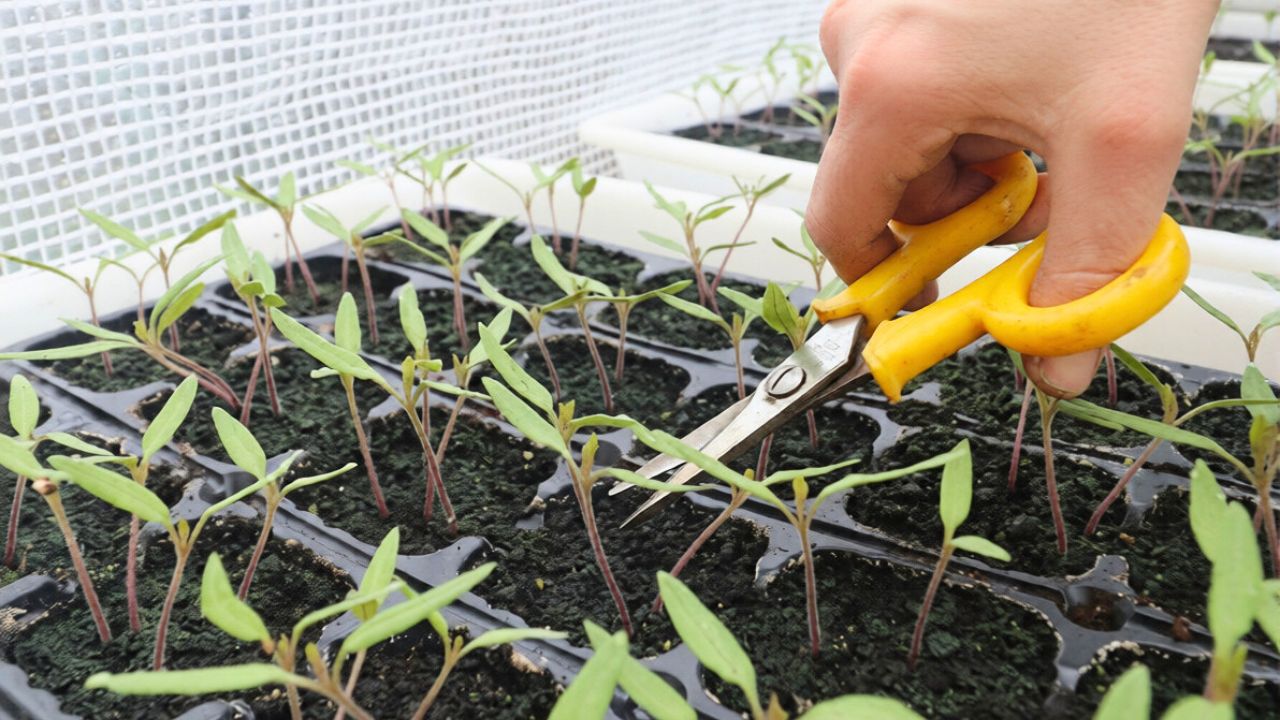
Guides on how to thin your tomato frame the decision as choosing one strong plant over several weak ones. The recommended method is decisive. Rather than pulling extras and disturbing roots, gardeners use clean scissors to snip weaker seedlings at the soil line, leaving one sturdy start per cell or soil block.
Other growers describe the same approach in more personal terms. One homesteading guide to thinning tomato seedlings recommends making the cut as soon as the first true leaves appear, while the root systems are still small. That timing limits shock and gives the remaining plant immediate access to more light and nutrients.
For gardeners who truly cannot bear to compost extras, some tutorials suggest transplanting a few of the strongest culls into separate pots. Even then, the core rule holds. Each container should host a single plant, not a cluster, or the original problem simply moves from tray to pot.
Repotting deep and rebuilding leggy stems
Once thinning and light are under control, the next adjustment focuses on how tomatoes are transplanted. Unlike many vegetables, tomatoes can grow new roots along buried portions of their stems. That trait turns a leggy seedling into a candidate for rescue rather than a lost cause.
Practical walkthroughs on how to fix leggy tomato show a consistent technique. Gardeners pot up into larger containers and bury the stem almost to the first set of true leaves, sometimes even at a slight horizontal angle. The buried stem then produces additional roots, which stabilizes the plant and supports stronger top growth.
Other step-by-step guides, including advice on leggy tomato seedlings, recommend removing the lowest leaves before planting deeper so that no foliage sits in damp soil. That small hygiene step reduces the risk of rot while still taking full advantage of the tomato’s ability to root along the stem.
Some growers repeat this deeper planting a second time, moving from a starter cell to a mid sized pot, then from that pot into the garden. Each move buries more of the stem and yields a sturdier, more anchored plant by the time it faces wind and rain outdoors.
Spacing in the garden and air around the vines
Even the best started seedlings can fall behind if they are crowded again in the garden. Spacing is not just a matter of convenience for harvesting. It controls airflow, disease pressure, and how easily leaves dry after rain or overhead watering.
Regional guides to tomato plant spacing often suggest around 60 centimeters between determinate plants and up to 90 centimeters for indeterminate vines, with more room in humid climates. That distance lets light reach the lower canopy and gives gardeners space to prune and tie up stems without constantly brushing against wet foliage.
Crowded tomatoes, by contrast, create a shaded thicket where leaves touch and airflow stalls. That environment favors foliar diseases, which then strip leaves and force the plant to put energy into recovery rather than fruit. Spacing is therefore part of the same leggy story. Plants that stretch to escape shade at ground level are often the same ones that started life in crowded trays indoors.
Some growers in cooler regions trade a few plants for more room, especially in short growing seasons. Fewer vines, each with better light and air, can match or exceed the yield of a cramped bed where disease and stress cut production.
Support, pruning, and the final shape of the plant
Once tomatoes are in the ground or large containers, support and pruning habits finish the transition from lanky seedling to manageable vine. Tutorials on staking tomatoes often show gardeners tying stems to stakes or strings as soon as plants reach 20 to 30 centimeters tall. Early support prevents flopping, which can kink stems and undo much of the careful early work.
Pruning practices vary by region and variety, but many experienced growers remove lower leaves as the plant climbs and selectively pinch side shoots. Short videos on tomato suckers demonstrate how removing some of these shoots concentrates energy into a few main stems rather than a dense, tangled mass.
Online communities, including gardeners who trade photos and advice in groups such as a Calgary gardening forum, often highlight the same pattern. Plants that were given strong light, thinned early, buried deep, spaced widely, and supported from the start tend to carry heavier clusters of fruit with fewer disease problems.
Like Fix It Homestead’s content? Be sure to follow us.
Here’s more from us:
- I made Joanna Gaines’s Friendsgiving casserole and here is what I would keep
- Pump Shotguns That Jam the Moment You Actually Need Them
- The First 5 Things Guests Notice About Your Living Room at Christmas
- What Caliber Works Best for Groundhogs, Armadillos, and Other Digging Pests?
- Rifles worth keeping by the back door on any rural property
*This article was developed with AI-powered tools and has been carefully reviewed by our editors.