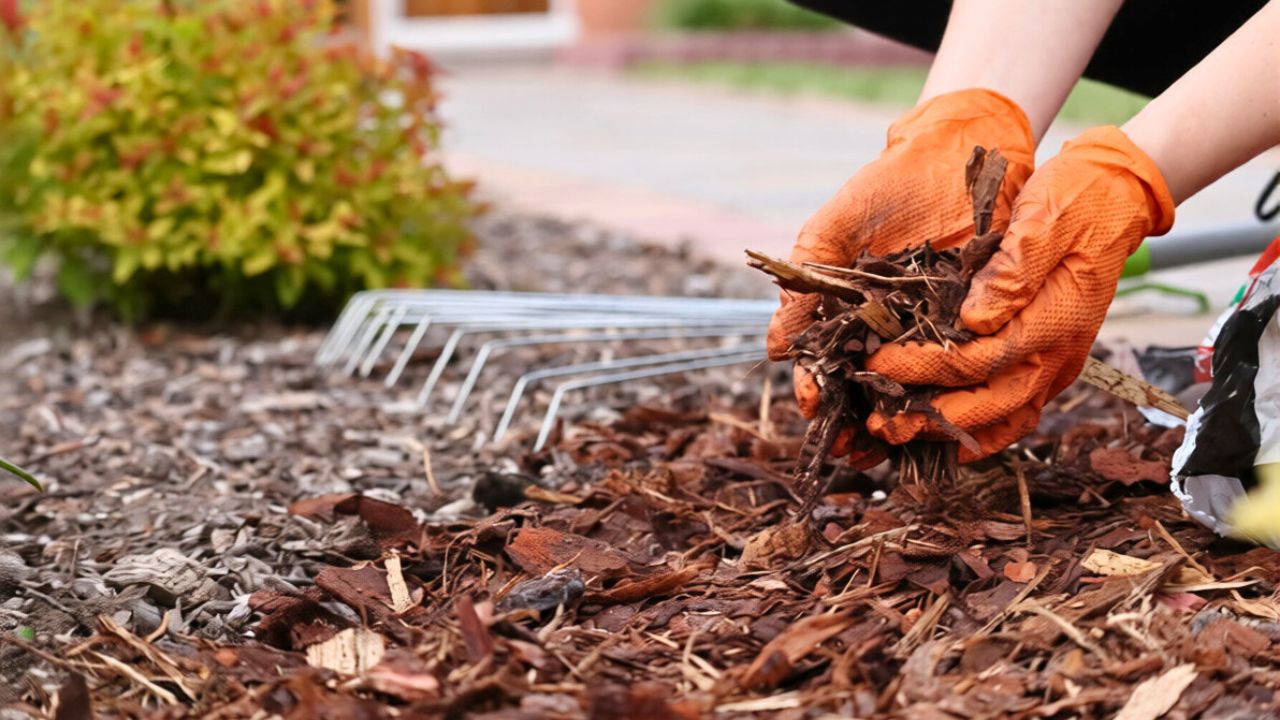
What I changed after mulch kept washing into the walkway
Photo credit: JarizPJ/Shutterstock.com
When mulch keeps sliding across a front walk after every storm, the problem is rarely just cosmetic. Repeated washouts usually expose deeper issues with slope, edging and even the type of mulch in the bed. Homeowners who fix those fundamentals often find that the same rain that once scattered bark now quietly drains away.
In one typical case, a front foundation bed sat slightly higher than the concrete path, with loose bark piled against a shallow plastic border. After a season of heavy rain, the owner stopped simply raking mulch back and instead reworked the bed around water flow, edging and materials. The result was a cleaner walkway, less maintenance and a planting area that finally behaved during storms.
Start by reading the water
Professionals tend to treat runaway mulch as a drainage problem first and a cosmetic problem second. One contractor described how mulch that moves every time it rains usually indicates an underlying site issue that lets water build speed and carry material away, rather than a minor product choice.
Before changing anything, the homeowner in this case watched how water moved along the house, downspouts and path. That matched the advice from a discussion where one commenter urged a gardener to pull back rock and check what sat underneath, then bring in an actual gutter specialist if runoff from the roof was overwhelming the bed. The same thread suggested that if water is pooling near the foundation, the priority should be redirecting it rather than just swapping ground cover.
Once the owner saw a clear channel where roof runoff shot across the bed toward the walk, the project shifted from raking to redesign. The goal became slowing water, giving it a defined path and blocking mulch from that path entirely.
Cut a real edge and add structure
One of the simplest changes was also one of the most effective. Instead of relying on a flimsy plastic strip, the homeowner cut a deeper trench between the bed and the walkway, similar to the sharp edge recommended in guidance that tells gardeners to use an edging tool to create a defined lip around beds before mulching. That crisp cut helps stop both turf from creeping in and mulch from sliding out.
A similar principle appears in advice from a home and garden group where a contributor told readers to buy an edging tool, then run it along the sidewalk or dig a V-shaped cut with a flat spade. That small vertical drop gives mulch a pocket to sit in and keeps it from skating across smooth concrete.
For a more permanent barrier, the homeowner looked at metal and rubber options rather than another plastic strip. Steel edging products that are described as weather resistant and rust resistant, such as the VEVOR Steel Landscape Edging that is pre-rusted at the edge, offer a thin but rigid wall that can hold mulch in place without drawing much attention. These metal strips can be tapped into a shallow trench so only a narrow top edge shows at the surface.
Along the front of the bed, where the worst washout happened, the owner chose a flexible border that also looked like mulch. A recycled rubber product marketed as Permanent Mulch, which is described as eliminating trimming, weeding and re-mulching while looking remarkably like natural wood, provided a low, continuous curb that visually blended with the bed. That kind of rubber edging can be pinned in place to form a subtle dam along the walkway.
Hard edging was only part of the solution. A video from Sep featuring Andy of Sarano Landscape Design shows how a designer can combine edging with small retaining features to keep material from migrating. In that clip, Andy from Sarano Landscape Design explains that a shallow terrace or stone border can break a slope into smaller segments, which slows water and gives mulch a better chance to stay put.
Taking a similar cue, the homeowner added a single row of stone along the lower edge of the bed. The stones sat just behind the rubber border, which created a double line of defense: the stones disrupted water flow inside the bed, and the rubber stopped any remaining bark from reaching the walkway.
Community gardeners often reach for brick in the same way. In one conversation from Aug, a member described adding black plastic edging, then suggested that others add some brick on its side along the front of a bed to keep mulch from escaping. In a related comment, another gardener recommended using the same bricks to create a low wall that visually ties the bed to nearby hardscape. Those ideas align with the decision to use stone as both a functional and aesthetic edge.
In the case study bed, the owner did not want a tall wall, so bricks or stones were kept to a single course. The key was continuity. Gaps in any barrier quickly become outlets for mulch, so pieces were set tight together with only small weep spaces for water.
Choose mulch that stays put
Material choice turned out to be just as influential as edging. Bark nuggets are widely known for floating across sidewalks, and one guide on flower beds points out that these large chunks are especially prone to drifting during storms. Shredded hardwood and similar fibrous mulches tend to knit together, which makes them less likely to move.
The homeowner replaced loose bark with a medium shredded hardwood that interlocked once it settled. That move echoes advice from a how-to guide that notes shredded hardwood bark and even rubber mulch usually hold better on slopes than chunky wood chips.
Another resource aimed at Australian gardeners stresses that choosing the right type of mulch significantly reduces the chances of floating or washing away in rain. Dense, heavier products that mat together are less likely to be picked up by fast-moving water.
Depth also changed. Instead of piling mulch high against the house, the owner spread a consistent layer about 5 to 7 centimeters deep, which lines up with recommendations that warn against thick, fluffy layers that act like rafts. One practical guide lists steps such as marking a line around the bed, starting to dig a shallow trench and then spreading mulch in an even layer so it is less likely to lift during irrigation or storms.
Plant living borders and ground cover
Edging and mulch choice solved most of the washout, but plants finished the job. Along the front of the bed, the homeowner installed a tight row of low perennials similar to liriope, an idea that mirrors advice from a home garden group where a commenter described lining beds along sidewalks with liriope to hold mulch back.
Dense planting along the edge works like a living fence. Roots stabilize soil, and foliage catches stray pieces before they reach the walk. Over time, that green border can become more effective than any plastic strip.
Further inside the bed, low spreading plants filled bare soil so there was less exposed area for water to scour. One professional gardener, Valenzuela, has encouraged homeowners to consider dense ground cover where washout is a recurring problem, explaining that a mat of foliage can lock mulch in place during heavy rains.
In the case study, the owner chose a mix of creeping thyme and small shrubs, but the principle would apply equally well to options like Candytuft, which a gardener in the Aug discussion praised as a neat border that frames beds and softens hard edges. The plants were spaced closely enough that, once mature, they would shade soil and reduce the need for deep mulch altogether.
Stabilizers and adhesives as a last layer
For some homeowners, especially where gravel or small stone is used, chemical or polymer stabilizers provide an extra safeguard. A designer in Jun described using a gravel landscape glue and fielded a wave of questions about how it locked loose rock into a more solid surface while still allowing drainage. Products like that can be sprayed over dry material to create a crust that resists washout.
Like Fix It Homestead’s content? Be sure to follow us.
Here’s more from us:
- I made Joanna Gaines’s Friendsgiving casserole and here is what I would keep
- Pump Shotguns That Jam the Moment You Actually Need Them
- The First 5 Things Guests Notice About Your Living Room at Christmas
- What Caliber Works Best for Groundhogs, Armadillos, and Other Digging Pests?
- Rifles worth keeping by the back door on any rural property
*This article was developed with AI-powered tools and has been carefully reviewed by our editors.