Neighbor Tried to Break Into His Apartment at 3 A.M. — Then Destroyed Doors While Yelling in the Hallway
Photo credit: Oscar C./Shutterstock.com
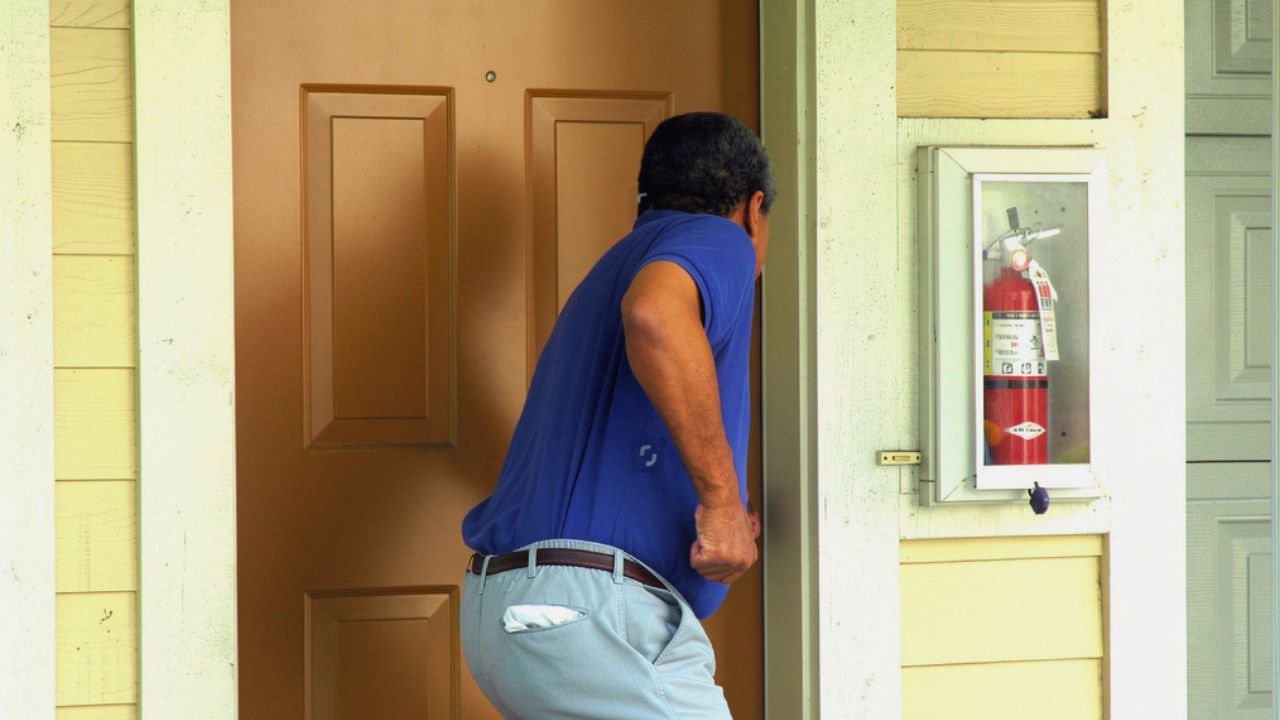
A tenant says he was asleep in his apartment around 3 a.m. when someone started trying to get inside.
At first, it might have sounded like a drunk neighbor at the wrong door. Apartment buildings are full of weird noises late at night. People come home from bars, argue in hallways, drop keys, slam doors, and sometimes knock on the wrong unit.
But this did not stay at the level of an awkward mistake.
He explained in a Reddit post that his neighbor tried to break into his apartment and threatened him. The situation escalated enough that doors in the building were damaged, and the tenant was left trying to figure out what he could do legally and practically to protect himself.
The fear in that kind of moment is hard to overstate. It is the middle of the night. You are inside your own home. Someone is outside the door, not just knocking or calling your name, but trying to force their way in.
That changes the whole feeling of the apartment.
A locked door is supposed to mean there is a barrier between you and whatever is happening outside. When someone starts attacking that barrier, every second feels longer. You are listening for the sound of the lock, the frame, the hinge, the next impact. You are trying to decide whether to call police, where to stand, whether to hide, whether to yell, and whether the person outside knows exactly who is inside.
The poster said the neighbor also threatened him, which made it more than property damage. This was not only a man breaking things in a hallway. It was a person trying to get to him while making him feel personally targeted.
That is where the legal-advice side of the story came in.
He wanted to know what could be done after the attempted break-in and damage. Could he force the landlord to do something? Could he break the lease? Could the neighbor be removed? Was this something that should be handled through police, management, or both?
Those are the questions people start asking after the immediate danger passes. During the incident, the only priority is getting through it safely. Afterward, the practical panic hits: What if he comes back? What if the door is weakened? What if the landlord shrugs? What if police treat it like a neighbor dispute?
In apartment living, you do not always have the option to simply avoid someone. A dangerous or unstable neighbor may share your hallway, stairs, parking lot, mail area, laundry room, or entryway. If that person has already tried to get into your unit at 3 a.m., every normal part of coming home becomes more stressful.
The damage to the doors mattered too. A damaged door is not just a repair issue. It is a safety issue. If the front door to the unit or building was damaged, the tenant needed it fixed fast. If the landlord delayed, he could be left living behind a compromised lock or frame while worrying about another incident.
Commenters generally pushed him to document everything and keep pressure on both police and the landlord. In situations like this, a paper trail matters. Police reports, photos of damage, emails to management, repair requests, incident numbers, and written descriptions can all help show that this was not a vague complaint about a loud neighbor.
It was an attempted forced entry.
The post did not turn into a neat story where the neighbor was instantly removed and everything went back to normal. Most of these situations do not resolve that cleanly. But the central issue was clear: someone tried to break into his apartment in the middle of the night and threatened him, and now he needed the building and the authorities to treat it like the serious safety issue it was.
A person should not have to wait until a neighbor actually gets through the door before everyone agrees there is a problem.
Commenters mostly told him to treat the incident seriously and keep everything documented. Many said he should make sure there was a police report, get the report number, and follow up if the neighbor continued making threats.
Several people said he should notify the landlord or property manager in writing, not just by phone. They recommended sending photos of the damage, describing the attempted break-in, and demanding immediate repairs to any damaged door or lock.
A lot of commenters focused on safety. They suggested asking about a transfer to another unit, installing extra security where allowed, and avoiding direct contact with the neighbor.
Others said that if the landlord did not repair the door quickly or ignored the danger, the tenant might need to look into local tenant laws or contact a tenants’ rights organization.
The strongest advice was simple: do not let this get minimized as ordinary neighbor drama. A 3 a.m. attempt to force entry is a safety threat, and it needs a police record, written landlord notice, and a plan in case the neighbor comes back.