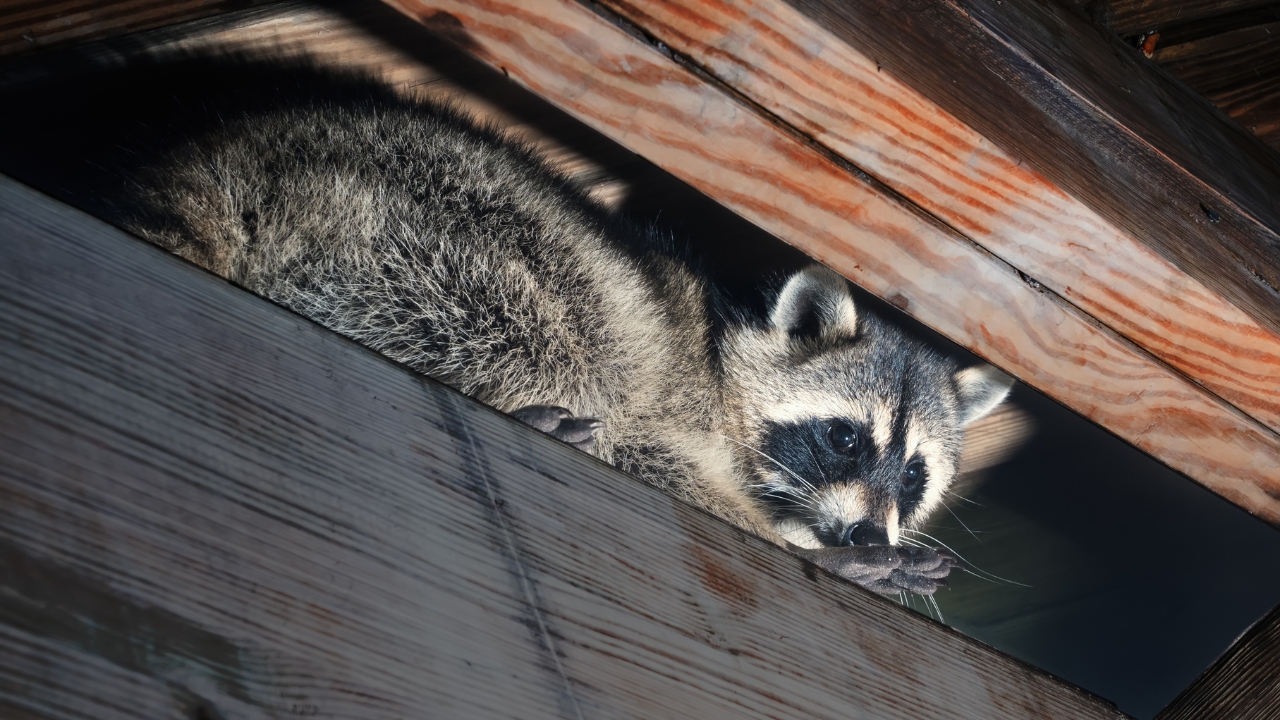
Homeowner Says a Raccoon Tore Into the Roof and Attic Vents — Now They’re Trying to Get It Out Without Making Things Worse
Photo credit: IrinaK/Shutterstock.com
There are house problems that start quietly, and then there are house problems that announce themselves by ripping a hole in the roof. One homeowner found themselves in the second category after realizing a raccoon had made its way into the attic and had already started damaging the outside of the house.
The homeowner shared the situation in a Reddit post on r/homeowners, explaining that the animal had ripped a hole in the side of the roof and torn up the outside attic vents. They did not want to poison it, but they also did not know how to get it out safely. The original Reddit post is here: https://www.reddit.com/r/homeowners/comments/1ibvpds/i_have_a_raccoon_in_my_attic/
That is a stressful spot for any homeowner. A raccoon is not the same as hearing a squirrel skitter across the roof once in a while. Once it gets inside an attic, the problem becomes more than noise. It can mean roof damage, vent damage, insulation mess, droppings, urine, chewed materials, and the possibility of babies hidden somewhere above the ceiling.
The roof damage was the first obvious problem. The homeowner said the raccoon had already ripped into the side of the roof, which meant there was an open entry point into the attic. That is not something a homeowner can leave alone for long. An opening in the roofline can let in more animals, rain, insects, and moisture. If it is patched too soon, though, the raccoon can be trapped inside or separated from its young.
That is part of what makes raccoon removal so tricky. If the animal is a mother with babies in the attic, simply sealing the hole can make things worse. A trapped raccoon may claw, chew, and tear at the structure trying to get back in or out. If babies are left behind, the smell and cleanup problem can become awful fast. What looks like a simple “close the hole” repair can turn into a much bigger mess if the timing is wrong.
The homeowner seemed to understand that poisoning was not the answer, but they were clearly at the point where the situation needed action. It is one thing to feel bad for an animal. It is another thing to watch that animal damage the roof and attic while you try to figure out a humane way to remove it.
Several commenters urged them to call a wildlife exclusion company rather than trying to handle it alone. That kind of company does more than set a trap and leave. A good one will figure out how the animal got in, remove it or encourage it to leave, check for babies, repair or coordinate repair of the entry point, install exclusion materials, and sometimes handle attic cleanup if droppings or insulation damage are present.
That cleanup part matters. Raccoons can create serious attic contamination. They may use one area as a latrine, and their droppings can carry roundworm eggs. Commenters also brought up other disease risks, including distemper and rabies. That does not mean every raccoon in an attic is a medical emergency, but it does mean homeowners should be careful about climbing up there, touching droppings, or stirring up contaminated dust.
The financial side came up, too. One commenter shared a story about someone who had raccoons in the attic and ended up needing insulation, sheetrock, ceilings, and paint replaced after the animals were removed. In that example, the cost was reportedly around $60,000, though insurance covered much of it. That number may not reflect every attic raccoon job, but it shows why homeowners should not ignore the problem once animals are inside the house.
Other commenters shared cheaper approaches, including traps, deterrent smells, ammonia-soaked rags, mothballs, and sealing entry points once the raccoon leaves at night. But even the do-it-yourself advice usually came with warnings. A trapped raccoon can be aggressive. Local laws may restrict trapping and relocating wildlife. Sealing an entry point without checking for young can create a new problem. And climbing around an attic with animal waste is not something every homeowner should take lightly.
For this homeowner, the immediate issue was getting the raccoon out without poisoning it and without turning roof damage into a full attic remediation job. The longer the animal stayed, the more chance there was for shredded vents, contaminated insulation, torn ductwork, or water getting through the damaged roofline.
Commenters mostly pushed the homeowner toward professional help. Several recommended calling animal control first, even if only to get referrals for licensed wildlife removal companies. Others specifically suggested a humane wildlife exclusion company that could remove the animal, find the entry point, repair the damage, and make sure it could not get back in.
A number of users warned that the raccoon might be pregnant or already have babies in the attic. They said that matters because sealing the opening too soon could separate the mother from her young or cause her to rip her way back through the roof.
Several commenters also focused on cleanup and health risks. They warned the homeowner to be careful around droppings and contaminated insulation, especially because raccoon waste can carry parasites. Others said insurance may be worth checking if the damage becomes extensive.
There were plenty of DIY suggestions in the thread, but the strongest practical advice was clear: do not just patch the hole and hope the raccoon disappears. Get the animal out, check for babies, clean up any contamination, and then close every entry point so the attic does not become a repeat problem.