Homeowner Says the Whole House Became a Nightmare After Closing — Then the Bad Flip Problems Started Piling Up
Photo credit: Fix It Homestead
A newly bought house can test your patience pretty quickly. One week, it is a small repair. The next, it is a strange sound, a surprise leak, a bad smell, or something the previous owner clearly patched instead of fixing. Most homeowners expect a few of those moments after closing.
But one homeowner said their house problems kept stacking up so fast that they started feeling like they had bought the worst house on earth.
They shared the situation in a Reddit post on r/homeowners, explaining that they had purchased what appeared to be a remodeled home, only to realize after closing that the house had a long list of issues hiding under the updates. The original Reddit post is here: https://www.reddit.com/r/homeowners/comments/1hic937/i_feel_like_we_bought_the_worst_house_on_earth/
According to the homeowner, the house had looked promising at first. It had been renovated, which usually makes buyers feel like some of the hard work has already been done. Newer finishes can create a lot of confidence during showings. Fresh paint, updated rooms, newer fixtures, and cleaner surfaces can make a house look like it has been brought back to life.
But after closing, the homeowner started finding problems that made the renovation feel less reassuring. The house had issues that suggested the updates may have been more surface-level than solid. That is one of the biggest risks with a bad flip. The house may photograph well, but the important work behind the walls, under the floors, in the attic, and around the foundation may still be questionable.
The homeowner’s frustration seemed to come from the sheer amount of things going wrong. One problem is stressful. A few problems are annoying. But when every repair uncovers another repair, the house stops feeling like a home and starts feeling like a money pit with a front door.
That kind of situation wears people down. It is not only the repair cost. It is the constant mental load. Every new discovery makes you wonder what else is hiding. Every contractor visit can lead to another estimate. Every project starts with the hope that this will finally be the last major issue, only to reveal another corner that was done poorly.
Bad flips are especially frustrating because buyers often pay a premium for the appearance of a finished home. They are not buying a fixer-upper at fixer-upper pricing. They are paying for a house that looks like someone already handled the work. When the work turns out to be sloppy, incomplete, or cosmetic, the buyer can feel trapped paying both the higher purchase price and the real repair costs afterward.
The post also showed how hard it can be to know what is normal homeowner regret and what is a legitimate bad-house situation. Almost every house has problems, even good houses. But when the buyer feels like the renovation covered up deeper issues, that is a different kind of frustration. It creates distrust toward the seller, the inspector, and sometimes even the buyer’s own judgment.
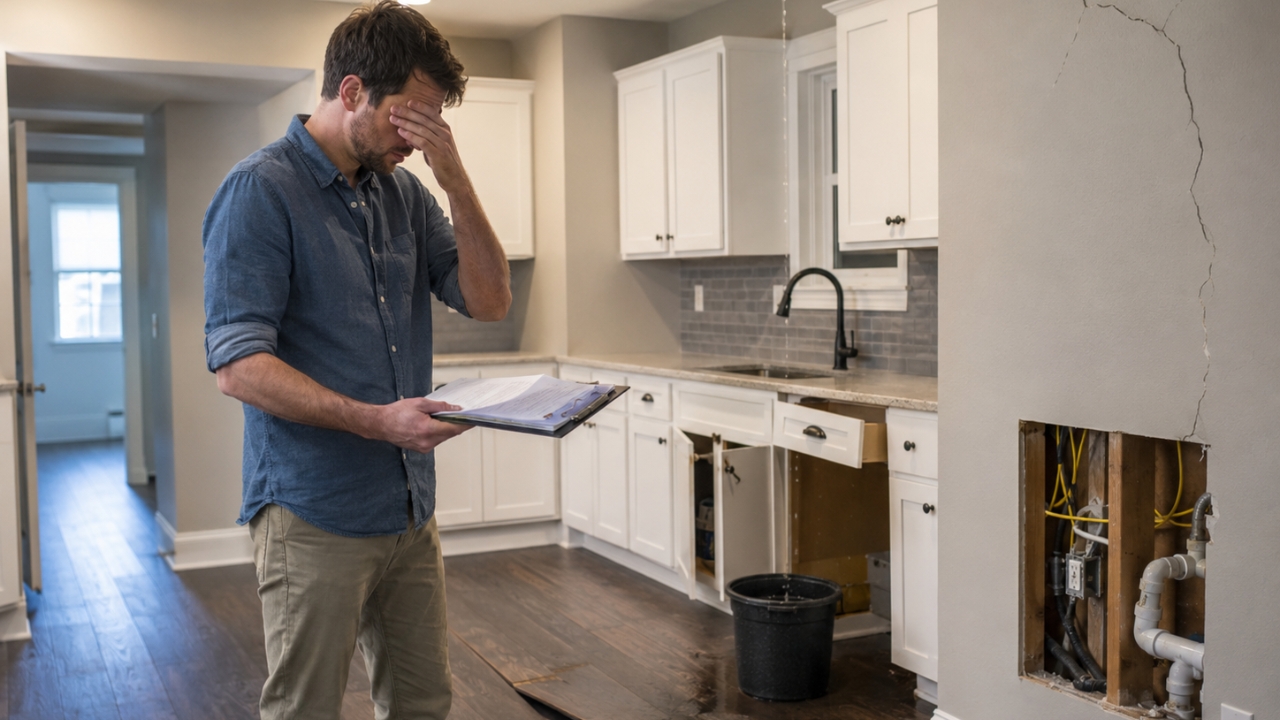
A remodeled house can hide a lot. New flooring can cover old subfloor problems. Fresh paint can hide stains until moisture returns. New drywall can conceal plumbing or electrical shortcuts. Updated bathrooms can still have bad venting, leaks, or poor waterproofing behind tile. A cleaned-up basement can still have drainage issues. A pretty kitchen can still have questionable wiring, cheap materials, or poor installation.
That does not mean every flipped house is bad. Some are renovated well by people who care about the work and pull the right permits. But a house that is renovated mostly to sell can tempt bad shortcuts. The goal becomes making the house look done long enough to close, not necessarily making it strong enough to age well.
For this homeowner, the emotional side was obvious. They were tired. Patience was running out. That is a real part of homeownership that does not always get talked about. A house can become discouraging when it feels like every spare dollar, weekend, and ounce of energy is going into fixing things someone else should have handled correctly.
The practical path in a situation like this usually starts with triage. Not every problem can be fixed at once. Safety issues come first: electrical hazards, active leaks, mold, structural concerns, pests, gas issues, and anything that could damage the house further. Then come systems that affect daily life, like plumbing, HVAC, drainage, and major appliances. Cosmetic annoyances may have to wait, even if they are frustrating.
Documentation matters too. If there is any chance the seller concealed problems or failed to disclose known defects, the homeowner needs photos, inspection reports, repair invoices, contractor opinions, and any evidence that the issue existed before closing. But legal recourse can be hard if there is no proof the seller knew. Feeling deceived and proving deception are two very different things.
This kind of story is also a warning for future buyers. A flipped house needs more scrutiny, not less. Ask for permits. Ask who did the work. Look beyond the finishes. Bring specialists if something feels off. Pay close attention to drainage, roof age, electrical panels, attic ventilation, plumbing, foundation, crawlspace, and signs of patched damage. A house can look updated and still be full of old problems underneath.
For this homeowner, the outcome was not one clean repair or one simple dispute. It was the slow realization that the house they bought might demand far more money, patience, and work than they expected. That is a hard place to be, especially when the house was supposed to feel like a fresh start.
Commenters gave the homeowner a mix of sympathy and practical advice. Several said that many buyers go through a rough adjustment period after closing, especially when the house starts revealing problems all at once. But others agreed that flipped homes can be risky because cosmetic updates often make deeper issues harder to spot.
A number of commenters encouraged the homeowner to prioritize repairs instead of trying to fix everything immediately. Safety problems, active water damage, electrical concerns, structural issues, and anything that could worsen quickly should come before cosmetic projects.
Several users suggested gathering documentation in case the homeowner later decided to explore legal options. That meant saving the inspection report, seller disclosures, photos, repair estimates, and written opinions from contractors who could explain whether problems appeared old or recently covered up.
Others warned future buyers to be careful with renovated homes that look too clean but lack permit records or clear details about the work. The strongest advice was to slow down during the buying process, ask uncomfortable questions, and remember that new paint does not prove a house was fixed correctly.