Homeowner Says the Contractor Tore Out the Wrong Wall — Then Still Wanted the Final Payment Before Fixing It
Photo credit: Fixithomestead.com
Hiring a contractor already takes a certain amount of trust.
A homeowner is letting someone into the house, handing over money, and hoping the finished project looks better than the mess it creates along the way.
But for one homeowner, the project went sideways in a way that felt almost unbelievable.
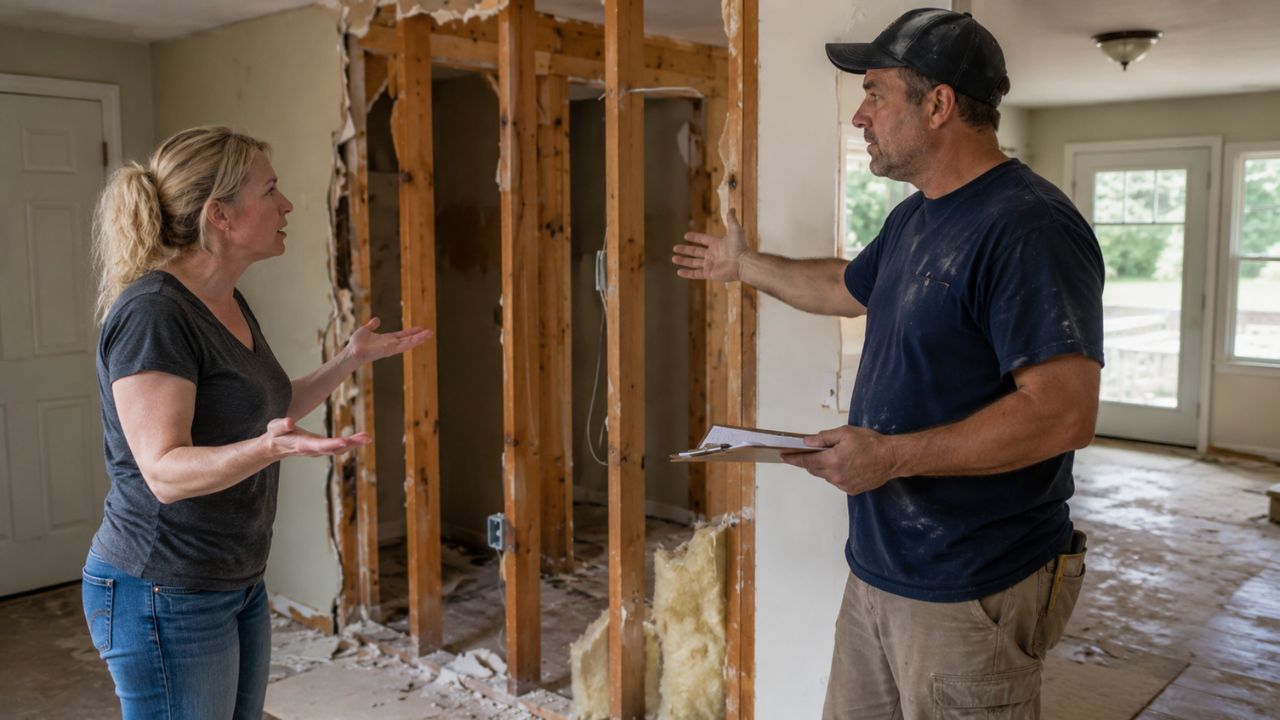
According to the homeowner, the contractor tore out the wrong wall.
Then, instead of immediately making the mistake right, the contractor still expected final payment before the issue was fixed.
That changed the whole tone of the job.
What should have been a normal home improvement project turned into a fight over responsibility, payment, and whether the contractor could be trusted to finish the work properly.
The demolition mistake created a bigger problem
A wrong wall is not a small detail.
When a contractor removes the wrong section of a home, the damage can affect framing, drywall, electrical lines, plumbing, trim, paint, flooring, insulation, and sometimes structural elements. Even if the wall is not load-bearing, repairing it can take time, materials, and more labor.
The homeowner was left with a problem they did not ask for.
Instead of paying for the agreed-upon project, they were now dealing with extra damage created during the job.
And because the contractor was the one who made the mistake, the homeowner expected the correction to be handled before final payment became a serious conversation.
That expectation did not seem unreasonable.
If someone damages part of the house during work, most homeowners would want that damage fixed before handing over the last check.
The contractor still wanted to be paid
The payment demand made the situation feel worse.
From the contractor’s side, they may have believed they had completed enough of the work to justify being paid. They may have viewed the wall mistake as something that could be corrected later, or they may have wanted the homeowner to trust them to come back.
But from the homeowner’s side, final payment was leverage.
Once a homeowner pays the remaining balance, getting a contractor to return can become much harder. That is especially true if the relationship has already gone sour.
The homeowner was not just being difficult about money. They were trying to protect themselves from being stuck with an unfinished repair and no meaningful way to force the contractor back.
That is why final-payment disputes get so tense.
The contractor wants to be paid for the work. The homeowner wants proof that the work, including any damage caused along the way, is actually finished.
The mistake raised questions about the whole job
Once a contractor tears out the wrong wall, the homeowner may start questioning everything else.
Was the scope of work clear? Did the contractor understand the plans? Were there written instructions? Did anyone mark the work area? Were permits needed? Was the person doing the demolition supervised? Did the contractor carry insurance?
A single major mistake can make the rest of the project feel unstable.
If the wrong wall came out, what else might have been missed?
That is the mental spiral homeowners fall into when a job goes wrong. They are not only looking at the visible damage. They are wondering whether there are hidden problems behind the walls, under the floor, or inside the work that will not show up until later.
Commenters focused on documentation
When contractor disputes turn into payment fights, people usually warn homeowners to document everything immediately.
Photos of the wrong wall matter. Written messages matter. The contract matters. The original estimate, scope of work, payment schedule, and any change orders matter too.
If the homeowner agreed to pay when the job was complete, then the question becomes whether the job can really be considered complete while the contractor’s mistake is still sitting there.
Commenters also tend to caution homeowners not to rely on verbal promises once trust has been damaged. If the contractor says they will fix it later, the homeowner needs that in writing, with clear details about what will be repaired, when it will be done, and who will pay for the materials and labor.
Depending on the cost of the damage, the homeowner may also need to look into the contractor’s insurance, licensing board, bond, or small claims options.
The homeowner had to balance firmness with risk
Holding back final payment can be a smart way to protect yourself, but it can also escalate the dispute.
A contractor may threaten to walk off the job, send the balance to collections, or file a lien depending on the state and the contract. That does not mean the homeowner should simply pay and hope for the best, but it does mean they need to handle the situation carefully.
The homeowner’s strongest position would usually come from being calm, specific, and documented.
Not “I’m not paying because I’m mad.”
More like: “The agreed work is not complete because the wrong wall was removed, and final payment will be made after the damage is repaired according to the agreement.”
That kind of wording matters because it keeps the dispute focused on completion, not emotion.
The real issue was trust
The torn-out wall was the visible problem.
But the deeper issue was trust.
A homeowner can forgive a mistake faster when the contractor takes responsibility immediately. A clear apology, a written repair plan, and a willingness to fix the damage before requesting final payment can keep a bad situation from becoming a battle.
But when the contractor still wants the last check before fixing the mistake, the homeowner is left wondering whether payment is the only thing keeping the repair on the schedule.
That is what made the situation feel so risky.
The homeowner was not just deciding whether to pay a bill.
They were deciding whether to give up their leverage before the contractor fixed damage that should not have happened in the first place.
Like Fix It Homestead’s content? Be sure to follow us.