First-Time Homeowner Finds a Hidden Drainage Pipe Dumping Water Into the Yard — Then the Neighbor Refuses to Redirect It
Photo credit: Fixithomestead.com
A first home comes with enough surprises already.
There are rooms to paint, repairs to prioritize, boxes to unpack, and a growing list of things nobody warns you about until you are the one responsible for the property.
But one first-time homeowner found a problem that was more than a normal new-house headache.
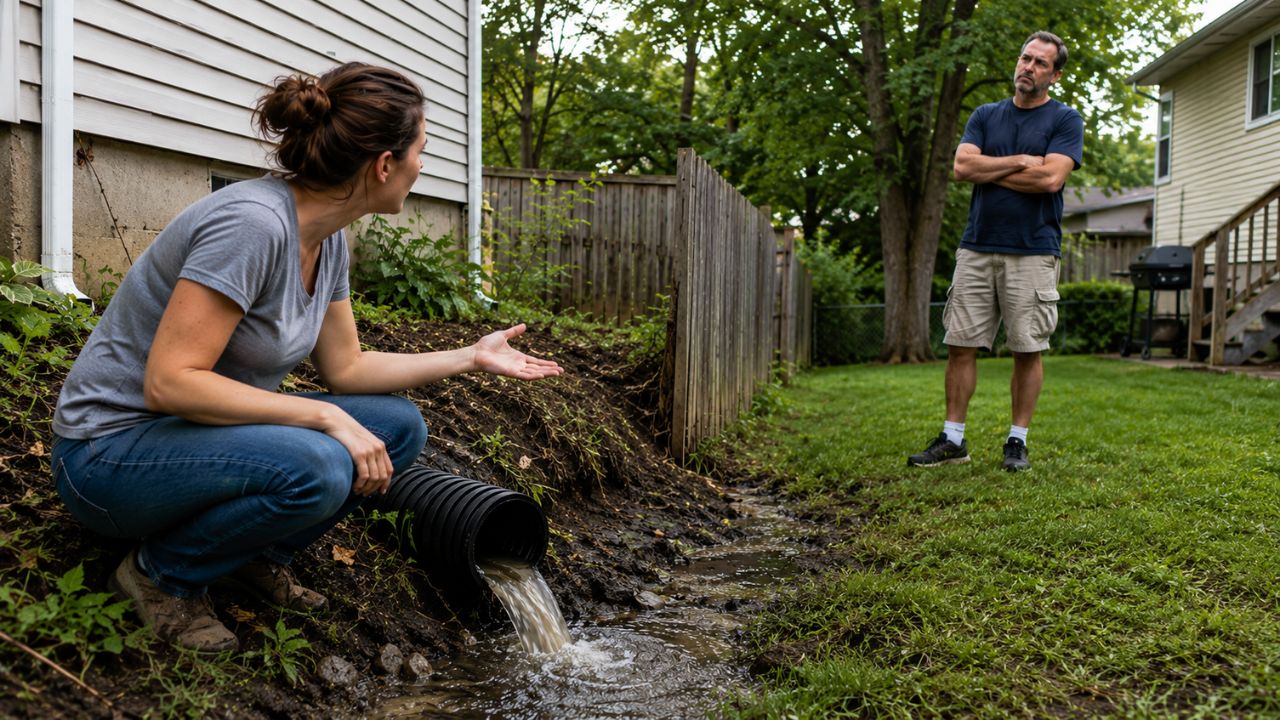
After noticing part of the yard staying wet, they discovered a hidden drainage pipe dumping water onto their property.
And the pipe did not appear to be coming from their own house.
It was coming from the neighbor’s side.
That turned a soggy yard into a much bigger question: why was someone else’s water being directed onto their land?
The yard problem did not make sense at first
At first, it may have looked like ordinary drainage trouble.
Maybe the grass stayed muddy after rain. Maybe one section of the yard never dried out. Maybe the homeowner assumed the soil was just heavy, the grading was poor, or the gutters needed work.
Those are the kinds of things new homeowners often expect to deal with.
But a hidden pipe changes the situation.
A yard that holds rainwater is one problem. A neighbor’s drainage system actively sending water into that yard is another.
Once the homeowner realized water was being discharged from next door, the issue stopped feeling like a natural low spot and started feeling like someone else’s problem had been quietly moved onto their property.
Drainage disputes can get ugly fast
Water does not respect property lines.
That is why drainage problems between neighbors can become so heated.
If one person changes the slope of their yard, installs a pipe, extends a downspout, builds a patio, adds gravel, puts in a French drain, or redirects runoff, the water has to go somewhere. Sometimes it ends up exactly where the neighbor does not want it.
For this homeowner, the frustration was obvious.
They were the one left dealing with the wet ground, muddy grass, possible erosion, and long-term damage. The neighbor may have solved their own drainage issue, but the result was now landing in someone else’s yard.
And because the pipe was hidden, the homeowner may not have realized what was happening until the damage had already started.
The neighbor did not want to redirect it
The homeowner approached the neighbor, hoping the situation could be corrected.
But instead of agreeing to redirect the drainage, the neighbor refused.
That response made everything worse.
From the homeowner’s side, the request was simple: stop sending water onto my property.
From the neighbor’s side, redirecting the pipe may have meant money, digging, hiring a contractor, changing landscaping, or admitting the setup was wrong in the first place.
That is often where these disputes stall.
The person creating the water problem does not want to pay to fix it. The person receiving the water does not want to keep absorbing the damage. And the longer it continues, the more bitter the conflict becomes.
The hidden pipe raised bigger questions
The pipe itself was only part of the issue.
The homeowner also had to wonder how long it had been there.
Did the previous owner know about it? Was it disclosed during the sale? Was it installed before the homeowner bought the property, or did the neighbor add it afterward? Was it permitted? Did it violate local drainage rules? Was it tied to gutters, a sump pump, a French drain, or something else?
Those details matter because they can determine whether the homeowner is dealing with a neighbor disagreement, a seller disclosure problem, a code issue, or all three.
A hidden drainage pipe can also affect future plans for the yard. The homeowner may not want to build a fence, garden, shed, patio, or play area in a section that keeps getting soaked by water they do not control.
And if the water sits near the foundation, the stakes get even higher.
A soggy yard is annoying. Water near the house can become expensive.
Commenters focused on proof and local rules
In situations like this, people usually warn homeowners to document everything before the dispute becomes a shouting match.
Photos of the pipe, videos of water flowing during rain, dates, weather conditions, and any messages with the neighbor could all matter.
Commenters also tend to point homeowners toward local code enforcement, stormwater rules, drainage ordinances, or a real estate attorney if the issue cannot be resolved peacefully.
The important thing is proving that the neighbor is actively directing water onto the property, not just that rain naturally flows downhill.
That distinction can matter.
If water naturally moves across land during storms, the rules may be different than if someone installs a pipe and concentrates the flow directly into a neighbor’s yard.
The homeowner was left with someone else’s runoff
What made the situation so frustrating was how unfair it felt.
The homeowner did not create the water problem. They did not install the pipe. They did not agree to receive the runoff. But they were the one standing in the muddy yard, trying to figure out what to do next.
For a first-time homeowner, that can be especially overwhelming.
Every repair feels expensive. Every neighbor conversation feels delicate. Every hidden problem makes the house feel a little less settled.
And now, instead of simply learning how to maintain their own property, the homeowner had to deal with a neighbor who refused to redirect water away from it.
A hidden drainage pipe may not look dramatic at first.
But when it quietly turns one person’s yard into the dumping ground for someone else’s runoff, it can become the kind of property dispute that does not dry up on its own.
Like Fix It Homestead’s content? Be sure to follow us.