Landowner Finds a Neighbor’s Water Line Buried Through the Pasture — Then Gets Told to Pay for the Relocation
Photo credit: Fix it Homestead
A rural pasture can look wide open until someone discovers what is hidden underneath it.
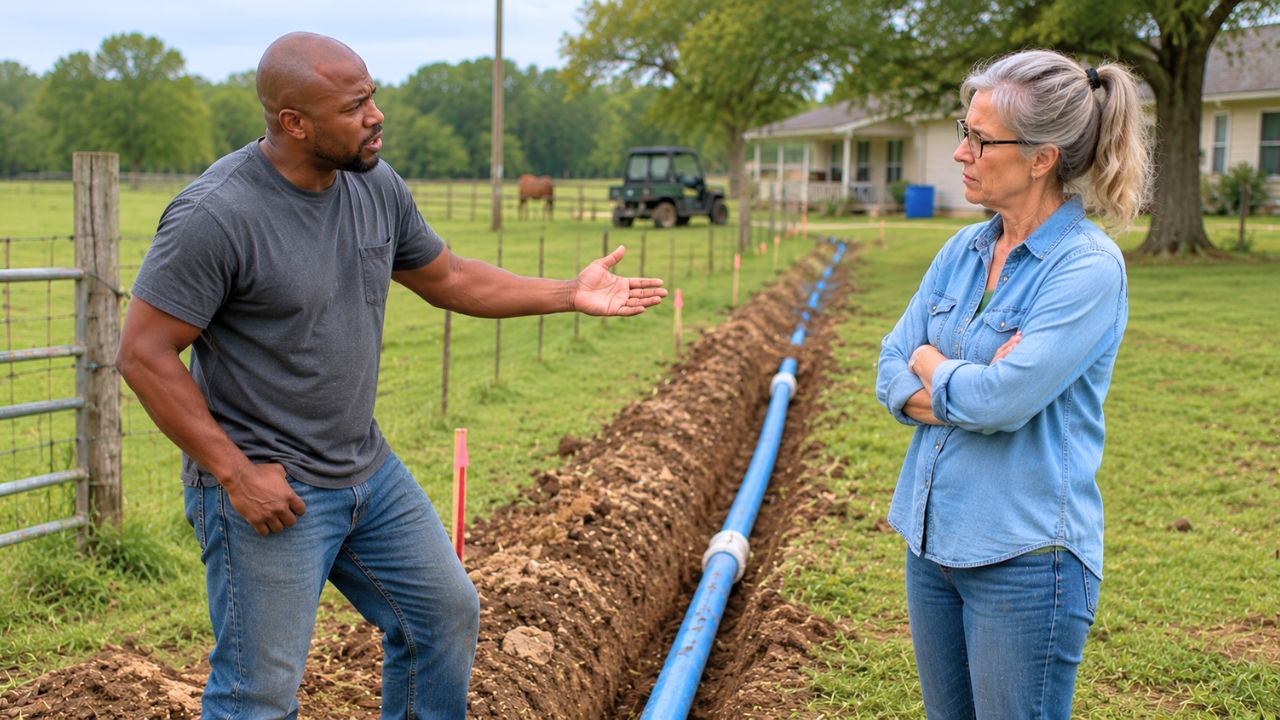
For one landowner, the problem started when they found out a neighbor’s water line was buried through their pasture. It was not something they had installed. It was not something they remembered agreeing to. And once they realized where it ran, the situation raised an uncomfortable question.
Why was someone else’s water infrastructure crossing their land?
That question became even more frustrating when the neighbor did not simply offer to move it.
Instead, the landowner was told they may need to pay for the relocation.
That is when the buried pipe stopped feeling like a minor rural inconvenience and started feeling like a property-rights fight.
The line may have been there for years
Rural properties often come with old arrangements that are hard to untangle.
A previous owner may have let a neighbor run a water line across the land. A family member may have given permission casually. A neighbor may have installed it years earlier and assumed nobody would ever object. Sometimes the pipe is so old that neither current owner knows exactly when it was placed there.
But old does not always mean legal.
That was the landowner’s issue.
The water line may have been sitting underground for a long time, but that did not automatically explain whether the neighbor had a recorded easement, written permission, or any enforceable right to keep it there.
And if the landowner wanted to use the pasture differently, the buried line could become a real obstacle.
A hidden water line can limit how land is used
At first glance, a buried line might not seem like a huge deal.
It is underground. It is not blocking a driveway. It is not as visible as a fence or shed sitting over the property line.
But hidden utilities can still control the land above them.
The landowner may need to avoid digging in that area. They may not be able to build a barn, install posts, run fencing, plant trees, grade the land, put in a pond, or use heavy equipment without worrying about damaging the line.
If the pipe breaks, the neighbor may need access to repair it. If it leaks, the landowner could be left with mud, erosion, livestock concerns, or damage to the pasture. If the landowner sells later, the line could become something that has to be disclosed or explained.
So while the pipe may be invisible most days, its presence can still affect the property in very real ways.
The relocation cost became the sticking point
The neighbor’s position appeared to be that moving the water line would cost money, and the landowner should be responsible for that cost if they wanted it gone.
That is where the situation became especially irritating.
From the neighbor’s side, the line may have been working fine for years. They may have felt the landowner was creating a new expense by objecting to something that had not caused a visible problem before.
But from the landowner’s side, the logic was backwards.
If the line belonged to the neighbor and crossed land the neighbor did not own, why should the landowner pay to move it?
The landowner had not created the problem. They had simply discovered it.
And once they knew about it, they could not easily ignore the fact that part of their pasture was being used for someone else’s water system.
The paperwork mattered more than the neighbor’s opinion
In a dispute like this, the most important question is usually not whether the pipe is inconvenient to move.
The important question is whether the neighbor has a legal right to keep it there.
That means checking the deed, survey, title records, utility easements, county records, and any old agreements attached to the property.
If there is a recorded easement, the landowner may have to respect certain access rights, though the exact terms would still matter. The easement may limit where the line can be, how repairs happen, and what the neighbor is allowed to do.
If there is no easement or written permission, the neighbor’s claim becomes much weaker.
That is why the landowner needed more than a neighborly explanation. They needed proof.
Not “it has always been there.”
Not “the previous owner said it was fine.”
Not “moving it would be expensive.”
Actual documentation.
Commenters usually warn landowners not to guess
When hidden utility issues come up, people often tell landowners to slow down and gather records before taking action.
That means locating the line, marking it, photographing the area, saving messages from the neighbor, and checking every closing document for references to easements or utility rights.
It may also mean calling the county, a surveyor, a real estate attorney, or a utility-locating service to understand exactly where the line runs and what rules apply.
Commenters also tend to warn against cutting, digging up, or damaging a line just because it appears unauthorized. Even if the landowner is right about the property issue, damaging a water line could create a new dispute.
The smarter move is to confirm the facts first, then put the objection in writing.
The real problem was being asked to pay for someone else’s setup
What made the situation so frustrating was not just the buried pipe.
It was the expectation that the landowner should pay to fix a problem they did not create.
The neighbor benefited from the line. The line served the neighbor’s property. The line crossed the landowner’s pasture. And yet the landowner was the one being told that moving it might be their expense.
That is a hard argument for any property owner to accept.
A buried water line may seem less dramatic than a fence or driveway crossing the boundary, but the issue is the same at the core.
Someone else is using part of the property.
And once the landowner discovered that use, they had to decide whether to let it continue, demand proof that it was allowed, or push for the line to be moved.
In the end, the fight was not really about a pipe.
It was about whether a neighbor could keep relying on someone else’s land — and then expect that landowner to pay when the arrangement finally got questioned.
Like Fix It Homestead’s content? Be sure to follow us.