Homeowner Finds Out the Shared Driveway Was Never Actually Shared — Then the Neighbor Blocks the Only Access Point
Photo credit: Fix It Homestead
When someone buys a house with a long driveway, they usually assume the access situation has already been sorted out.
After all, the driveway is there. The house is there. People have been using it. Cars have been coming and going. Nobody expects the most basic part of living on the property — getting in and out — to turn into the first major problem.
But that is exactly the kind of headache one homeowner ran into after discovering that the driveway they believed was shared may not have been legally shared at all.
At first, it seemed like a normal rural or semi-rural setup. Two properties. One driveway or access lane. Maybe both homes had used it for years without much trouble.
Then the homeowner learned that the arrangement was not as clear as everyone had treated it.
The driveway was not officially shared.
And once the neighbor realized that, the access point became a weapon.
The driveway had been treated like common access
Shared driveways can be deceptively casual.
Sometimes they are clearly recorded in deeds and easements. Sometimes they are written into surveys. Sometimes everyone knows exactly who owns what, who maintains what, and who has the right to pass through.
Other times, the setup is held together by nothing more than habit.
One owner lets another owner use a lane. A previous family allows access across a corner of the land. Nobody complains for years. Then a property sells, a disagreement starts, or a new neighbor decides they do not want the old arrangement anymore.
That is when “we have always used it” suddenly becomes a very shaky foundation.
For this homeowner, the driveway had been used like an access route. But when the legal details came into question, the neighbor’s position changed.
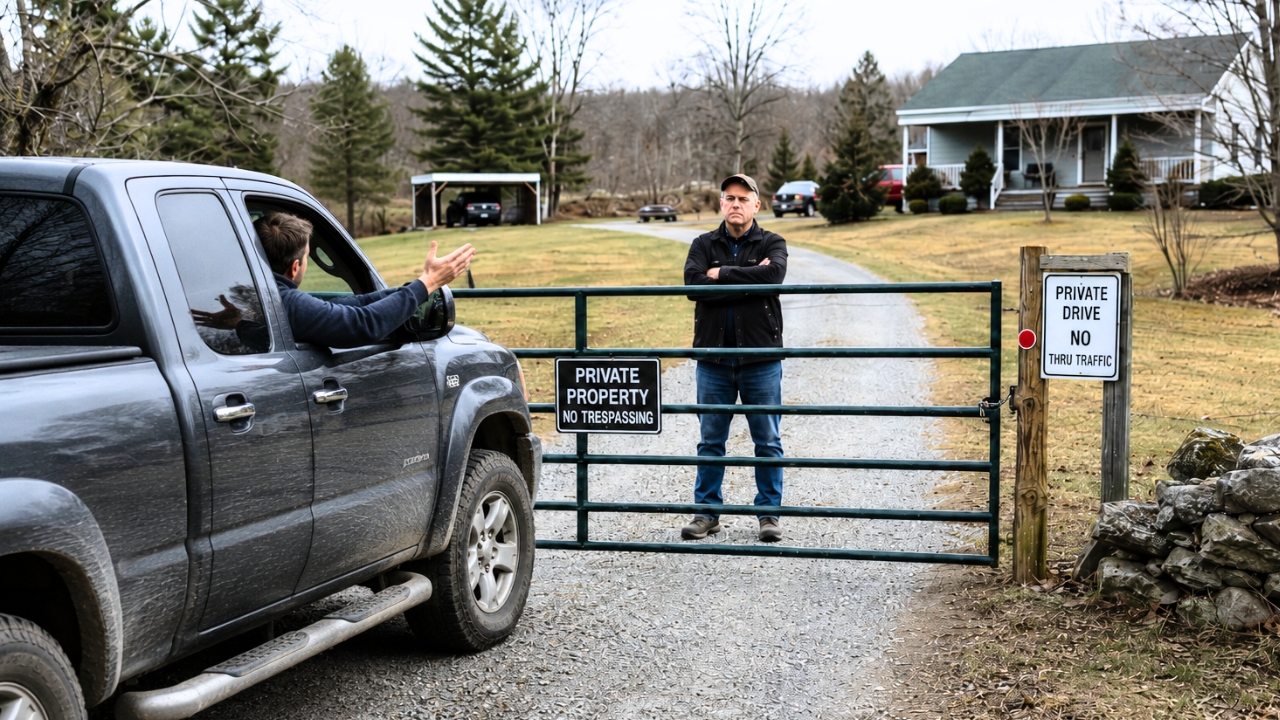
Instead of treating it like something both properties depended on, the neighbor blocked the access point.
Losing access changed everything
A blocked driveway is not a small inconvenience.
It can affect work, school, deliveries, emergency vehicles, trash pickup, repairs, visitors, and daily life. If there is no other practical way onto the property, it can make the home feel almost trapped.
That is what makes driveway disputes so intense.
A neighbor may think they are just controlling their own land. The homeowner on the other side may feel like their entire property has been cut off.
And if the house was sold with the expectation that the driveway was usable, the buyer may start wondering why nobody caught the issue before closing.
Was there an easement? Was it missing from the deed? Did the seller assume the access was legal because they had used it for years? Did the title company miss something? Did the survey show a problem that nobody explained clearly?
Those questions matter because a home without reliable access is a very different purchase than a home with a normal driveway.
The neighbor’s leverage came from confusion
The frustrating part was not just that the driveway was blocked. It was that the confusion itself gave the neighbor power.
If the homeowner could not quickly point to a recorded easement or clear access right, the neighbor could act as if they had the final say.
That is a scary position for any property owner.
A driveway is not like a flower bed or a fence decoration. It is the way people reach the home. When a neighbor controls that path, every disagreement can feel bigger.
Even a temporary blockage can send a message: your access depends on my permission.
For the homeowner, that was the issue they had to solve. They needed to know whether the driveway was truly private, whether there was a legal right of access, or whether some other route had to be created.
None of those answers are cheap or simple.
Commenters focused on easements and closing documents
In situations like this, the first advice is usually to pull every document from the purchase.
The deed. The title policy. The survey. The closing documents. Any recorded easements. Any maps showing access. Any old agreements attached to the property records.
People often warn homeowners not to rely on what the seller said casually during the sale. A seller may call something a “shared driveway” because that is how it has always functioned, even if the legal paperwork says something different.
Commenters also usually point out that access disputes can become legal issues fast, especially if the driveway is the only realistic way to reach the property.
If emergency vehicles cannot get in, if the home is landlocked, or if the buyer was misled about access, the problem may involve more than just an angry neighbor.
It may involve the seller, title company, surveyor, attorney, or county records.
The bigger lesson was that access needs to be proven
The homeowner’s situation was stressful because it touched one of the most basic assumptions people make when buying a house.
They assume they can get to it.
But in rural areas, older neighborhoods, and properties with informal access lanes, that assumption can be dangerous.
A driveway may look established. It may be gravelled, gated, maintained, and used every day. It may even be the only driveway anyone has ever known for the property.
But if the right to use it is not documented, the next neighbor dispute can turn ordinary access into a fight.
For this homeowner, the discovery came too late to avoid the stress. They already owned the property. They already depended on the driveway. And then the neighbor blocked the only access point.
That is what made the problem feel so serious.
It was not just a dispute over a strip of gravel.
It was a fight over whether the homeowner could freely reach the place they had just bought.