Homeowner Says a Bad Flip Hid Rot Behind New Cabinets — Then the Repair Quote Starts Climbing Fast
Photo credit: Fix It Homestead
New cabinets can make a kitchen look like the best part of the house.
They photograph well. They make a listing look clean. They give buyers the feeling that at least one expensive room has already been handled. For a homeowner walking through a freshly updated property, it is easy to see new cabinets and think, good, that is one less project.
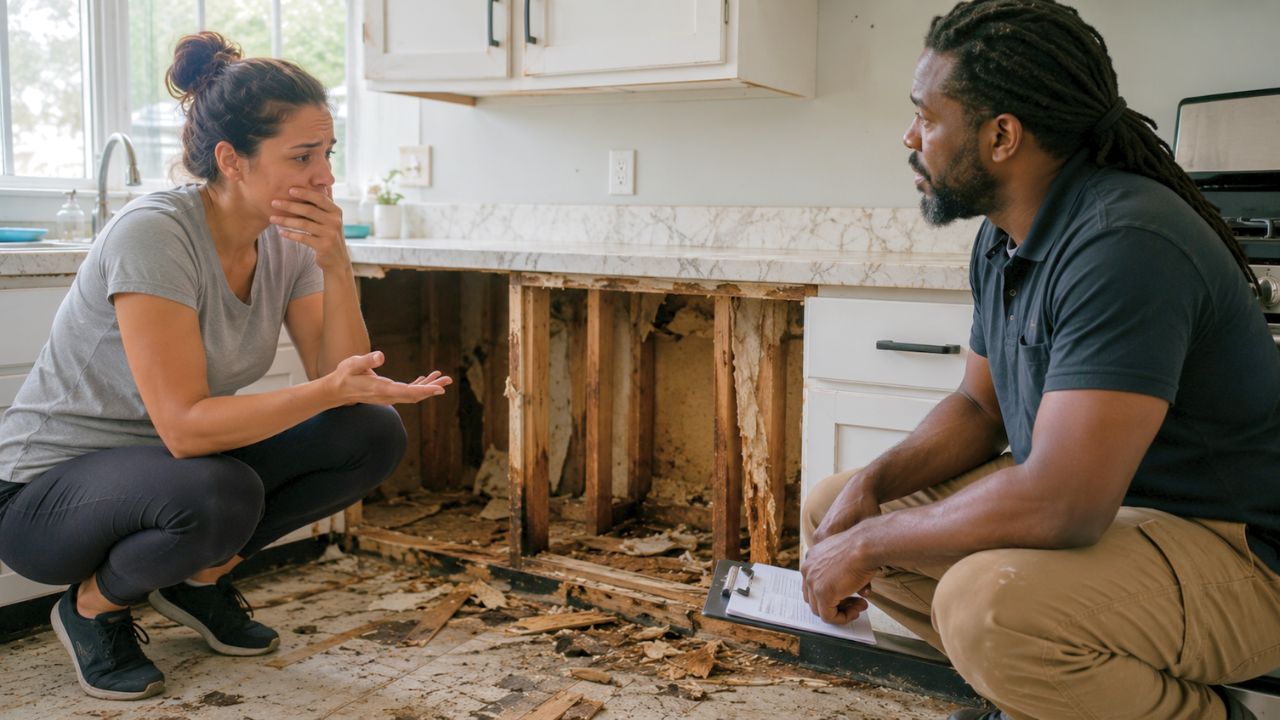
But one homeowner’s confidence faded after they found rot hidden behind those new cabinets.
What had looked like an updated kitchen suddenly started feeling like a bad flip.
And once the damaged area was opened up, the repair quote began climbing fast.
The kitchen looked better than it was
A bad flip can be hard to spot at first because the visible updates are designed to grab attention.
Fresh cabinets. New hardware. Modern countertops. Clean paint. Updated flooring. Maybe new light fixtures and a bright backsplash.
From the outside, it can look like someone took an older home and made it move-in ready.
But cosmetic updates do not fix water damage, rot, bad framing, hidden leaks, or neglected repairs behind the walls.
That was the problem for the homeowner.
The cabinets looked new, but what was behind them told a different story.
Finding rot behind new kitchen work raises an immediate question: did the person who installed the cabinets know what they were covering?
The hidden damage changed the whole project
Rot is not like a scuffed wall or a crooked cabinet pull.
Rot usually means moisture was present long enough to damage the material. That moisture may have come from a sink leak, dishwasher leak, exterior wall issue, roof problem, window leak, plumbing failure, or old water damage that was never properly repaired.
Once rot is found, the homeowner has to figure out two things at the same time.
First, how far does the damage go?
Second, what caused it?
Replacing a piece of damaged material may not solve anything if the leak or moisture source is still active. That is why the repair quote can grow so quickly.
What starts as “remove the cabinets and replace a section of wall” can become plumbing work, mold cleanup, framing repairs, cabinet removal, countertop removal, drywall replacement, flooring repair, and repainting.
The homeowner may have thought they bought a house with a finished kitchen.
Instead, the kitchen became the place where the old problems were hiding.
The bad flip concern made it feel worse
Not every hidden problem is a cover-up.
Older houses can surprise everyone. Sellers do not always know what is behind cabinets or walls. Sometimes damage is discovered only after normal use or repairs begin.
But when a home has clearly been flipped or cosmetically updated, buyers tend to look at hidden damage differently.
If someone recently installed new cabinets directly over rotted material, it feels less like an accident and more like a shortcut.
The homeowner may have wondered whether the flipper focused on making the kitchen look new without fixing what actually mattered underneath.
That kind of discovery can make a buyer question every update in the house.
If the cabinets hid rot, what about the bathroom vanity? The new flooring? The fresh paint? The trim? The basement? The roof patch?
One hidden problem can make the entire home feel suspect.
The quote started climbing because the damage was not isolated
Repair costs often grow when contractors start opening things up.
The first visible area may be only the edge of the problem. Once cabinets are removed, the homeowner may find more damaged drywall, soft studs, wet insulation, mold, damaged subfloor, or evidence that water traveled farther than expected.
That is why the quote can change so dramatically.
The contractor is not only pricing what can be seen. They are pricing what must be removed, replaced, dried, cleaned, rebuilt, and put back together.
For a new homeowner, that can feel brutal.
They already paid for the house. They may have stretched their budget to buy it. They may have believed the updated kitchen helped justify the price. Now the same kitchen is becoming a repair bill.
Commenters focused on proving what was known
When buyers discover hidden damage after closing, people usually bring the conversation back to documentation.
The homeowner would need photos of the new cabinets, photos of the rot, inspection reports, seller disclosures, listing descriptions, and any contractor opinions about how old the damage appears to be.
If the home was sold as renovated, the wording in the listing may matter. If the seller or flipper claimed certain work was done, permits may matter. If the cabinets were recently installed, invoices or permit records may help show when the work happened.
Commenters also tend to warn homeowners not to assume they can easily prove fraud just because the damage feels obvious.
The key issue is usually knowledge.
Did the seller know about the rot? Did they hide it? Did they fail to disclose a known water issue? Did the inspection miss something that should have been visible?
Those are hard questions, but they are worth asking when the repair bill starts moving from annoying to serious.
The homeowner had to find the source before rebuilding
The worst mistake would be repairing the visible rot without solving the moisture problem.
Before putting cabinets back, the homeowner would need to understand where the water came from. That could mean checking plumbing, exterior siding, flashing, windows, roof lines, appliance connections, and the wall cavity itself.
Otherwise, the new repair could end up hiding the same problem all over again.
That is one of the most frustrating parts of bad-flip discoveries.
The homeowner is not just paying to make the room look nice again. They are paying to undo work that may have made the house look better while leaving the real damage untouched.
The updated kitchen became a warning sign
The whole situation changed how the homeowner saw the house.
At first, the kitchen may have been one of the reasons they liked it. New cabinets can make a house feel cared for, modern, and less risky.
But once rot appeared behind them, those cabinets looked less like an upgrade and more like a cover.
That is what made the repair quote feel so painful.
The homeowner was not paying for an optional remodel. They were paying to find out what the remodel may have hidden.
And when a bad flip hides rot behind something as expensive as new cabinets, the new owner is left with one ugly question:
How much of the house was actually fixed, and how much was simply covered up long enough to sell?
Like Fix It Homestead’s content? Be sure to follow us.