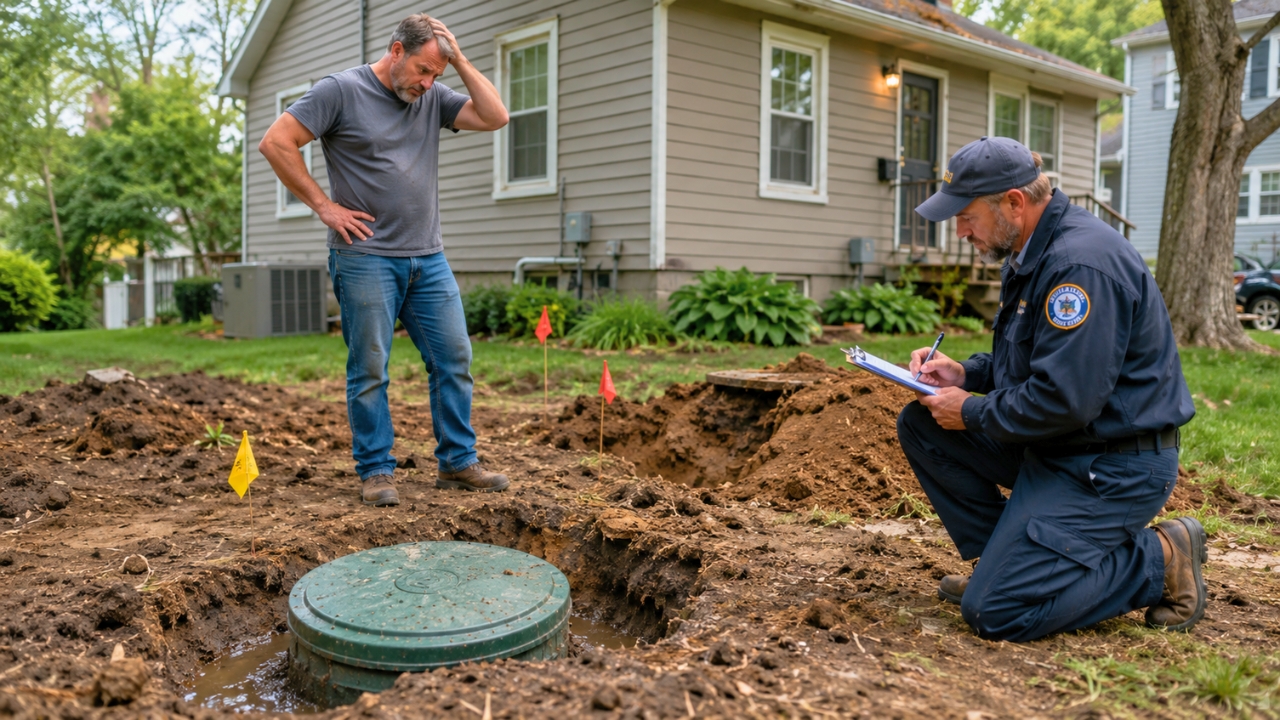
Buyer Finds Out the Septic System Was Never Permitted — Then the County Inspection Turns Into a Bigger Problem
Photo credit: Fix it homestead
A working septic system can make a rural home feel ready to go.
The toilets flush. The drains run. The yard looks normal. Nothing smells strange during the showing. For many buyers, that is enough to assume the system is probably fine, especially if the seller does not raise any red flags.
But one buyer learned that a septic system can seem functional and still create a major problem.
After buying the property, they found out the septic system was never properly permitted.
Then the county inspection made the situation even worse.
What first looked like a paperwork issue suddenly became a much bigger question about whether the system was legal, safe, and acceptable for the home at all.
The septic system had been treated like it belonged there
In rural areas, septic systems can be out of sight and out of mind.
Unless there is a backup, odor, wet spot, or inspection requirement, homeowners may go years without thinking much about what is buried underground. A buyer may assume that if a house has been lived in, the septic system must have been approved at some point.
That assumption can be dangerous.
A septic system that was never permitted may have been installed without proper review, without required setbacks, without correct soil testing, or without approval from the county or health department.
It may still appear to work for a while.
But once officials get involved, the question is not just whether it flushes today.
The question is whether it should have been installed that way in the first place.
The buyer found the problem after closing
The timing made the discovery especially painful.
If the permit issue had been found before closing, the buyer could have paused the deal, requested records, demanded repairs, negotiated credits, or walked away.
After closing, the leverage changed.
Now the buyer owned the property. The septic system was their problem. And any county inspection, correction order, replacement requirement, or repair bill would land on them first.
That is what makes unpermitted systems so stressful. The buyer may feel like they inherited a problem that should have been resolved long before the sale.
They may also wonder why nobody caught it.
Did the seller know? Did the listing mention the system accurately? Did the inspector check permits? Did the title work miss anything? Were county records incomplete, or was the system simply never approved?
Those questions matter, but they do not stop the county from wanting the issue fixed.
The county inspection raised the stakes
A county inspection can turn uncertainty into a concrete problem.
The inspector may look at where the tank is located, where the drain field sits, how close it is to wells, property lines, structures, water sources, or neighboring land. They may check whether the system matches the size of the house, whether it was installed correctly, and whether it meets current standards.
If the system was never permitted, the buyer may be facing more than a missing form.
They could be told the septic system needs repairs, redesign, replacement, soil evaluation, engineering work, or a new permit process. In some cases, a system that seemed fine may not be allowed to remain as-is.
That is when the problem gets expensive.
A septic replacement is not a small weekend project. It can involve excavation, permits, inspections, design work, contractors, landscaping damage, and a bill large enough to make a new homeowner feel sick.
The seller’s disclosure became a major question
Once the buyer learned the system was unpermitted, the seller’s disclosure likely became the first document they wanted to reread.
Did the seller say the septic was permitted? Did they claim it was in good working order? Did they mark “unknown”? Did they disclose prior issues? Did they provide inspection or pumping records? Did they know when it was installed?
A seller may not know every detail about an old septic system, especially if it was installed before they owned the home. But if they knew it was unpermitted and failed to disclose that, the buyer may have a much stronger reason to question the sale.
Proving that can be difficult.
The buyer may need county records, contractor invoices, old permits, previous listings, neighbor statements, pumping records, or messages showing the seller had knowledge of the issue.
The buyer had to separate paperwork from physical failure
An unpermitted septic system is serious, but the exact level of danger depends on what the inspection finds.
Sometimes the system may be functioning but undocumented, and the path forward may involve inspections, paperwork, and corrections. Other times, the missing permit is the first sign that the system was installed in a way that never would have passed approval.
That is why the buyer needed a clear explanation from the county and a qualified septic professional.
What exactly failed? Was the tank wrong? Was the drain field too close to something? Was the soil unsuitable? Was the system too small for the house? Was it installed without records but otherwise functioning? Is replacement mandatory, or can it be brought into compliance?
Those details make a huge difference.
Without them, the buyer is just staring at the phrase “unpermitted septic” and imagining the worst.
Commenters focused on records and responsibility
When septic permit problems come up, people usually tell buyers to gather every record available.
County health department records, permit files, inspection notes, septic pumping receipts, seller disclosures, home inspection documents, and any communication from the sale can all matter.
Commenters also often recommend getting independent quotes before agreeing to a major replacement. Septic work is expensive, and the buyer needs to know whether the county is requiring a full replacement or whether there are smaller compliance steps available.
At the same time, they usually warn against ignoring the issue.
A septic system touches health, safety, property value, and future resale. If the county has flagged it, the buyer may not be able to pretend it is just an old paperwork problem.
The “working system” no longer felt reassuring
The most frustrating part was that the buyer may have thought the system was fine because nothing obvious seemed wrong.
That is the trap.
A septic system can function right up until it fails inspection, violates county requirements, or creates a problem the homeowner cannot sell around later.
For the buyer, the discovery changed the whole property.
What had seemed like a normal rural home now came with a buried question mark. The county was involved. The paperwork was missing. The inspection raised concerns. And the cost to fix it could be much larger than anyone expected.
In the end, the buyer was not just dealing with a septic system.
They were dealing with the possibility that one of the most important parts of the property had never been legally approved at all.
And once the county inspection turned that possibility into a real problem, the buyer had to figure out whether the issue was merely expensive — or whether it should have stopped the sale before they ever signed.
Like Fix It Homestead’s content? Be sure to follow us.