Homeowner Finds a Neighbor’s Shed Built Over the Survey Line — Then the Neighbor Says Moving It Would Ruin the Yard
Photo credit: Fix it homestead
A shed can seem like a small thing until a survey shows it is sitting where it does not belong.
For one homeowner, the problem started with what should have been a straightforward boundary check. Maybe they were planning a fence. Maybe they were thinking about landscaping. Maybe they simply wanted to know exactly where their property ended before making changes.
Then the survey came back.
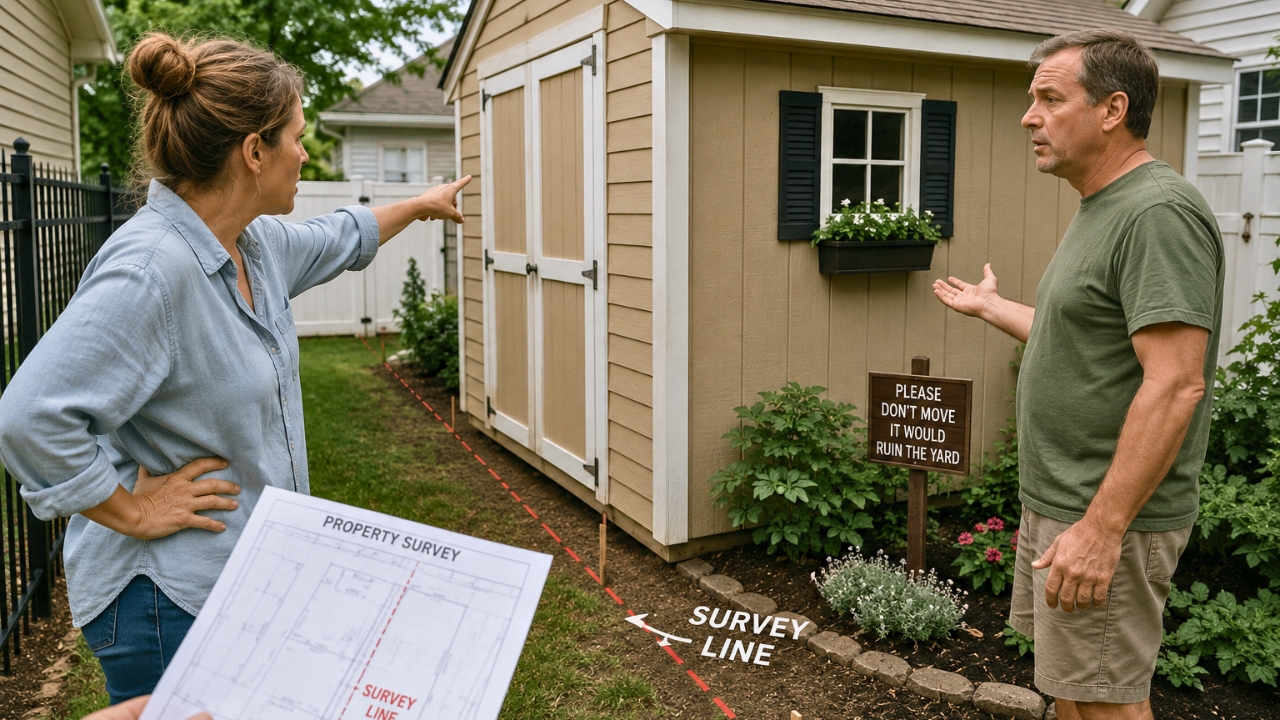
The neighbor’s shed appeared to be built over the property line.
That was frustrating enough on its own. But when the homeowner brought it up, the neighbor did not rush to correct the mistake.
Instead, the neighbor reportedly argued that moving the shed would ruin the yard.
For the homeowner, that answer did not solve anything. It only made the boundary problem feel more unreasonable.
The shed had probably been treated like it belonged there
Encroachments can sit unnoticed for years.
A shed gets placed near a boundary. A fence or tree line makes the lot look larger than it is. A previous owner says nothing. The neighbor mows around it, stores tools inside it, and slowly the structure starts to feel permanent.
Then a new survey changes the entire conversation.
That seems to be what happened here.
The shed may have looked ordinary from the neighbor’s side. To them, it was part of the yard. Maybe they had built landscaping around it. Maybe it was tucked into a corner. Maybe they had never questioned whether the location was exact.
But to the homeowner, the survey showed something different.
Part of their land was being occupied by a structure they did not own.
“It would ruin the yard” was not the homeowner’s problem
The neighbor’s argument may have been emotionally understandable.
Moving a shed can leave ruts. It can tear up grass. It can damage landscaping. It can require equipment, labor, new leveling blocks, or a new pad. If the shed has been there for years, the surrounding yard may be shaped around it.
But the homeowner still had an obvious question.
Why should the neighbor’s landscaping matter more than the legal boundary?
If the shed was built over the line, the inconvenience of moving it did not erase the encroachment. The neighbor may not want their yard disturbed, but the homeowner did not want their property occupied.
That is what made the response so aggravating. The neighbor seemed to treat the correction as an unfair burden on them, while ignoring that the current setup already burdened the homeowner.
A shed over the line can create bigger issues later
A misplaced shed is not just a visual problem.
It can affect fences, landscaping, drainage, access, resale, insurance, and future improvements. If the homeowner wants to build their own fence, the shed may block the proper line. If they sell the property, a buyer or title company may flag the encroachment. If the neighbor sells, the next owner may assume the shed location is acceptable.
There is also the question of maintenance.
Who is allowed to walk around the shed if part of it sits on the homeowner’s land? What happens if the shed roof drains onto the homeowner’s yard? What happens if it collapses, attracts pests, or damages a fence? What if the neighbor wants to repair or replace it in the same spot?
Those questions are exactly why property owners do not like unresolved encroachments.
A shed may be small compared with a house, but it still makes a claim on the land beneath it.
The homeowner needed to document the issue clearly
Once the survey showed the shed crossing the line, the homeowner had to be careful.
A casual conversation might not be enough, especially if the neighbor was already resisting. The homeowner likely needed photos, the survey, notes about the shed’s location, and written communication showing that they objected to the encroachment.
That matters because silence can create confusion.
If the homeowner allows the shed to remain without saying anything, the neighbor may later argue that the location was accepted. Even if that argument does not win, it can make the dispute harder and more expensive.
A clear written objection does not have to be hostile. It can simply say that the survey shows the shed crossing the property line, the homeowner does not consent to that use, and the parties need to resolve it.
But the homeowner needed to get the issue out of the realm of vague neighbor talk and into a documented record.
Commenters focused on not accepting excuses
When property-line shed disputes come up, people usually tell homeowners not to let the neighbor’s inconvenience become the deciding factor.
The neighbor may be upset. Moving the shed may be costly. The yard may get torn up. But none of that changes where the boundary is.
Commenters also tend to recommend checking local rules before taking action. Depending on the location, there may be setback requirements, shed permits, zoning rules, or building-code issues that make the shed’s placement even more problematic.
If the shed was built without a permit or too close to the line, the neighbor may have more than one problem.
The homeowner may need a surveyor, code office, attorney, or title company to help determine the cleanest way to resolve it.
The real issue was control of the boundary
What made the situation so frustrating was that the neighbor framed the problem around their yard.
But the homeowner was focused on something more basic.
The property line.
A neighbor’s shed does not get to stay on someone else’s land just because moving it would disturb grass, landscaping, or a convenient setup. Those things may explain why the neighbor does not want to move it, but they do not explain why the homeowner should lose use of their property.
That is the heart of the dispute.
The shed may look harmless. It may have been there for years. It may be annoying to relocate.
But once the survey shows it crosses the line, the homeowner has to decide whether they are willing to live with someone else’s structure sitting partly on their land.
And if the neighbor’s best argument is that moving it would ruin the yard, the homeowner may reasonably wonder why their own property rights are the thing being treated as negotiable.
Like Fix It Homestead’s content? Be sure to follow us.