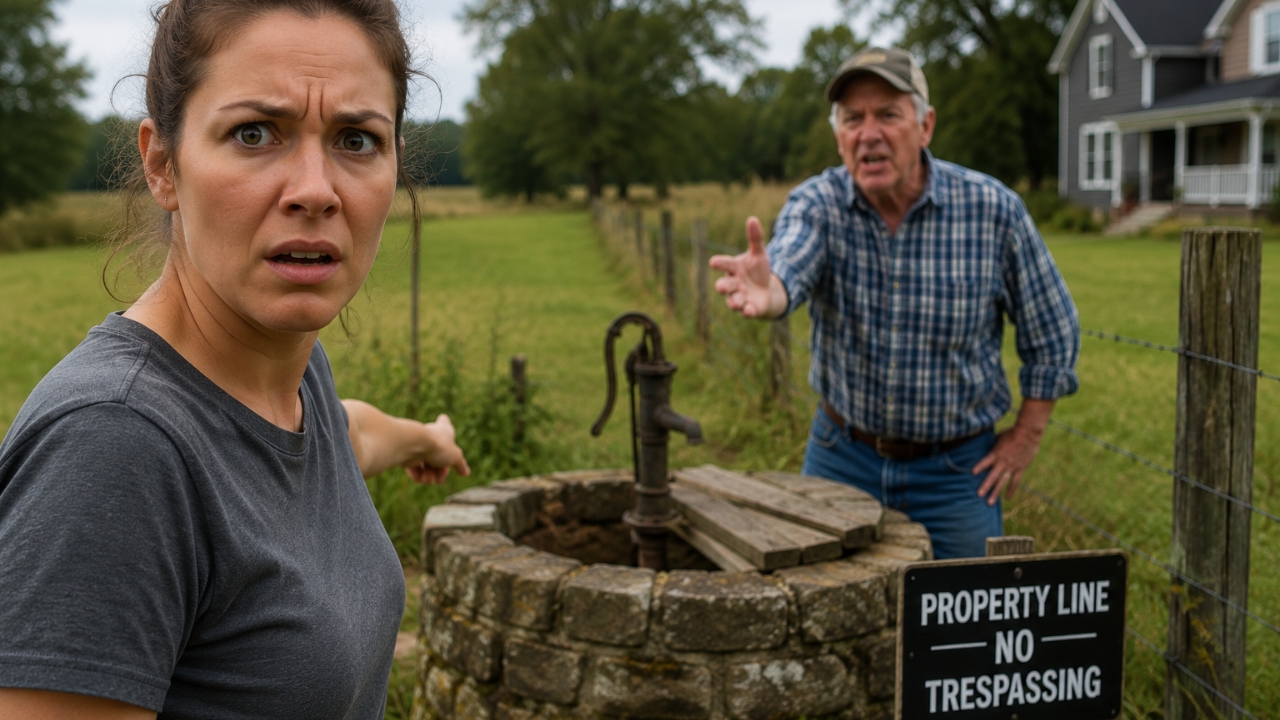
Rural Buyer Finds an Old Well on the Property Line — Then the Neighbor Claims They Still Have Rights to Use It
Photo credit: Fix it homestead
An old well can seem like a bonus on rural property.
Even if it is not the main water source, buyers may see it as useful history, a backup option, or simply one more feature that comes with the land. In the country, anything tied to water tends to matter.
But one rural buyer found out that an old well near the property line can bring more questions than comfort.
After buying the property, they discovered an old well sitting close to the boundary. That alone was enough to deserve a closer look.
Then the neighbor claimed they still had rights to use it.
Suddenly, the buyer was not just looking at an old well. They were looking at a possible shared water dispute.
The well’s location made everything complicated
A well near a property line can create problems fast.
If it is clearly on one parcel, ownership may seem simple. But if it sits close to the boundary, or if both properties have used it at some point, the situation can become less obvious.
The buyer may have assumed the well came with the land they purchased. After all, if it was on their side of the survey, why would anyone else have a claim to it?
But rural properties often come with old arrangements that are not obvious during a showing.
A previous owner may have let the neighbor use the well. Families may have shared it informally for years. A handshake deal may have turned into a habit. A pipe may run underground to the neighbor’s home or pasture. There may even be an old agreement buried in property records that nobody mentioned clearly during the sale.
That is what made the neighbor’s claim so concerning.
The buyer needed to know whether the neighbor actually had legal rights or was simply relying on history.
“We still have rights” needed proof
The neighbor’s claim may have sounded confident.
Maybe they said their family had always used the well. Maybe they said the previous owner promised access. Maybe they said it was shared before the property was sold. Maybe they had a pipe, pump, or electrical setup connected to it.
But confidence is not the same as documentation.
If the neighbor truly had rights to use the well, there should usually be some kind of recorded easement, written agreement, deed language, water-rights arrangement, or other legal document explaining what those rights are.
Without that, the buyer had every reason to question the claim.
A well is not like borrowing a tool from a neighbor. It is a water source. It can affect property value, maintenance responsibilities, liability, access, repairs, and future use of the land.
If someone else can use it, the buyer needs to know exactly how and why.
The buyer may have inherited more than they realized
The old well could create practical problems even if it is not currently the buyer’s main water source.
Who maintains it?
Who pays for repairs?
Who pays for electricity if a pump is involved?
Who is responsible if the well fails?
Who has the right to access the land around it?
Can the neighbor drive onto the property to service it? Can they run new lines? Can they replace equipment? Can they increase use?
Those questions matter because shared wells can become expensive and stressful when expectations are not written down.
One person may think the well is a casual backup. Another may depend on it for livestock, irrigation, or household water. One person may want to cap it, repair it, or fence around it. The other may see that as cutting off access.
That is why the buyer could not treat the neighbor’s claim lightly.
The seller’s disclosure became important
Once the neighbor asserted rights to the well, the buyer likely had to go back through the closing documents.
Was the well disclosed? Was shared use mentioned? Did the seller say anything about water rights, easements, old agreements, or neighbor access? Was there a survey note? Did the title report show anything?
If the seller knew the neighbor used the well and failed to tell the buyer, that could feel like a major omission.
A buyer needs to know whether a feature on the property is fully theirs or tied to someone else’s use. That is especially true when the feature involves water.
The buyer may also wonder whether the neighbor had been using the well recently or whether they only raised the issue after the sale because they were worried access would disappear under a new owner.
Either way, the discovery changed the buyer’s understanding of what they had purchased.
Commenters focused on records, not memories
When rural water disputes come up, people usually tell buyers to start with paperwork.
The deed. The title policy. The survey. County records. Well permits. Any recorded easements. Any old agreements attached to either property.
If the neighbor claims they have rights, the buyer should ask them to provide the document that proves it.
Not a story from a previous owner.
Not “everyone around here knows.”
Not “we have used it for years.”
Actual paperwork.
Commenters also tend to recommend having the well inspected before making decisions. The buyer needs to know whether it is safe, functional, properly capped, connected to any lines, or creating liability.
An old well can be useful, but it can also be dangerous or expensive if neglected.
The real issue was control of a water source
For the buyer, the well was more than an old rural feature.
It represented control.
If the well was on their property, they expected to decide what happened to it. They expected to know who could access it, who could use it, and who would be responsible if something went wrong.
The neighbor’s claim complicated all of that.
Maybe the neighbor had a legitimate right. Maybe they did not. But the buyer could not responsibly ignore the question.
Because when a rural buyer finds an old well on the property line and a neighbor says they still have rights to use it, the issue is not just where the well sits.
It is whether the buyer truly owns the water access they thought came with the land.
Like Fix It Homestead’s content? Be sure to follow us.