Homeowner Finds a Private Power Line Buried Through the Yard — Then the Utility Company Says It Is Not Their Problem
Photo credit: Fix it homestead
A buried power line is not the kind of surprise any homeowner wants to find in the yard.
Most people expect underground utilities to be clearly documented, properly installed, and handled by the company that provides the service. If a line is crossing a property, the homeowner naturally assumes someone official knows about it.
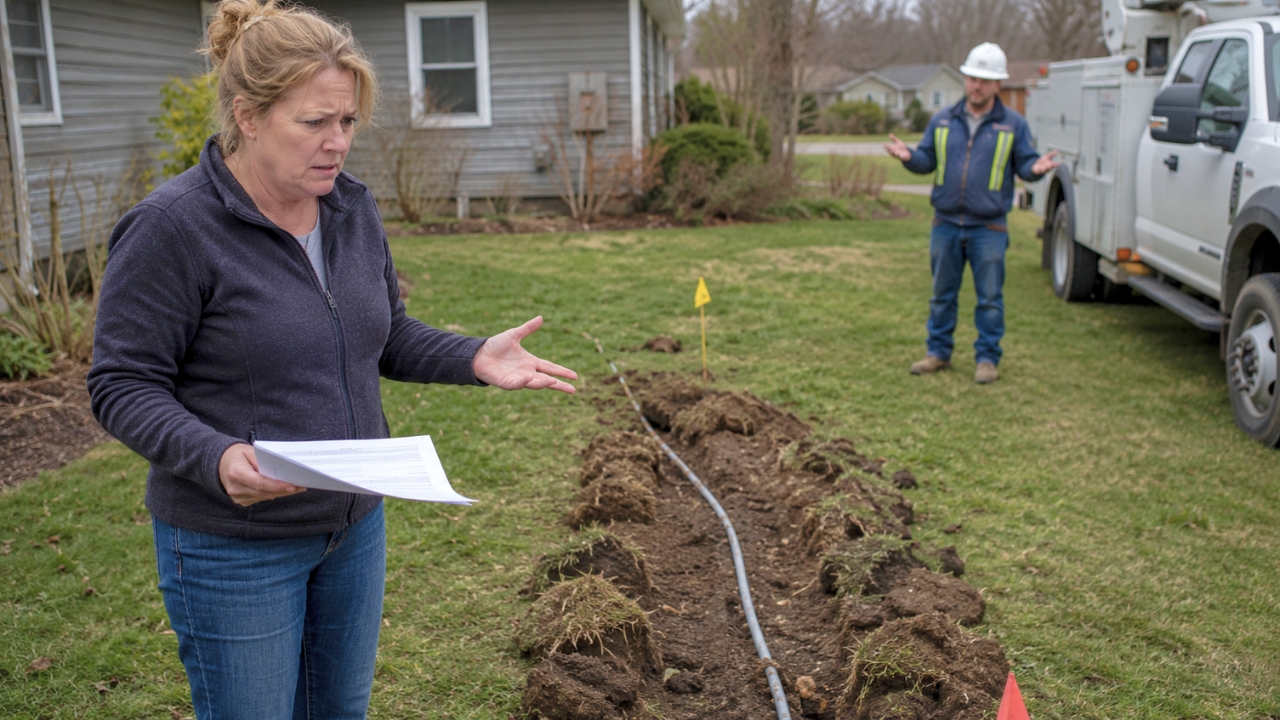
But one homeowner ran into a much messier situation after discovering a private power line buried through their yard.
At first, it seemed like the utility company would be the obvious place to turn.
Then the utility company said it was not their problem.
That answer left the homeowner stuck with a dangerous and confusing question: if the power line is not the utility company’s responsibility, whose is it?
The line was not supposed to be a mystery
Buried electrical lines can affect almost everything a homeowner wants to do outside.
Digging fence posts, planting trees, grading the yard, installing a shed, adding a driveway, trenching irrigation, or doing drainage work can all become risky if an electrical line is hiding underground.
That is why these lines need to be located and understood.
The homeowner was not just dealing with an inconvenience. They were dealing with something that could be dangerous if it was damaged.
A private power line crossing the yard raised immediate concerns about safety, ownership, and future use of the property.
If the line served another building, a neighbor, a shop, a well pump, or an old structure, the homeowner needed to know who installed it, who maintained it, and who had the right to leave it there.
The utility company’s answer made the problem worse
Most homeowners would expect the power company to have clear answers about electrical service.
But private lines are often different.
The utility company may own and maintain service up to a certain point, such as the meter or transformer. After that, the line may be considered the responsibility of the property owner, customer, or whoever installed the private service.
That distinction can be shocking when a line is buried somewhere it does not seem to belong.
The homeowner may have thought they were reporting a utility issue. Instead, they were told the line fell outside the company’s responsibility.
That did not make the line disappear.
It only meant the homeowner had to figure out the problem without the easy answer they expected.
The biggest question was who benefited from the line
A buried private power line usually serves something.
That became the key issue.
Was it feeding a neighbor’s outbuilding? Was it connected to an old barn, pump, gate, light pole, or detached garage? Did it serve a structure that used to be part of the same property before the land was divided? Was it abandoned but still live? Was it installed by a previous owner without proper records?
Those questions mattered because the person benefiting from the line may not be the person whose yard it crossed.
If the line served the homeowner’s own property, the situation might be an internal repair and documentation problem.
But if it served someone else, the homeowner had a bigger concern.
Why was another person’s private electrical line buried through their land?
The yard became harder to use
Even if the line was working safely, its location could still limit the property.
The homeowner could not casually dig where they wanted. Any future project would require extra caution. If the line needed repair, someone might need to trench through the yard. If it failed, the homeowner could be pulled into a dispute over access and responsibility.
And if the homeowner ever sold the property, the buried line could become a disclosure issue.
A buyer may ask whether there is an easement. A title company may want clarification. A contractor may refuse to dig without knowing exactly where the line runs. An insurance company may care if the installation was unpermitted or unsafe.
A hidden line is not harmless just because it is underground.
It can quietly control what happens above it.
The paperwork became the only way forward
Once the utility company backed away, the homeowner needed records.
Was the line shown on a survey? Was there a recorded easement? Was there a permit? Was it disclosed during the sale? Did any previous owner grant permission? Was the line installed before the property was split? Did the county or electrical inspector have any record of it?
Those documents could change everything.
If there was a legal easement, the homeowner might have to allow the line to remain, though the exact terms would matter. If there was no easement and the line served someone else, the homeowner may have grounds to demand relocation or formal resolution.
But without paperwork, everyone was working from assumptions.
And assumptions are a terrible way to handle buried electricity.
Commenters focused on safety first
When homeowners discover underground power lines, people usually warn them not to dig, cut, move, or expose anything casually.
The first priority is safety.
The homeowner would likely need a utility locate, a licensed electrician, and written confirmation of whether the line is live, what it serves, and who is responsible for it.
Commenters also tend to recommend documenting everything in writing: the discovery, the utility company’s response, photos of the area, any locate markings, and any communication with neighbors or previous owners.
If the line crosses the property without permission, the homeowner may need a real estate attorney or local permitting office to help sort out the responsibility.
The real issue was being left with a dangerous unknown
What made the situation so frustrating was that nobody seemed eager to own the problem.
The line was in the homeowner’s yard. The utility company said it was not theirs. The homeowner still needed to know whether it was legal, safe, active, and allowed to stay.
That is a bad place for any property owner to be.
A buried power line is not like an old fence post or a forgotten drain pipe. It carries risk. It limits projects. It raises liability questions. And if it belongs to someone else, it means another person’s electrical setup may be quietly occupying land the homeowner thought they controlled.
In the end, the homeowner was not just trying to solve a utility mystery.
They were trying to find out why a private power line was buried through their yard — and why the people who should have had answers were suddenly saying it was not their problem.
Like Fix It Homestead’s content? Be sure to follow us.