New Homeowner Finds the Neighbor’s Downspout and Sump Pump Both Drain Directly Onto the Property — Then the Neighbor Says the City Already Approved the Drainage Setup
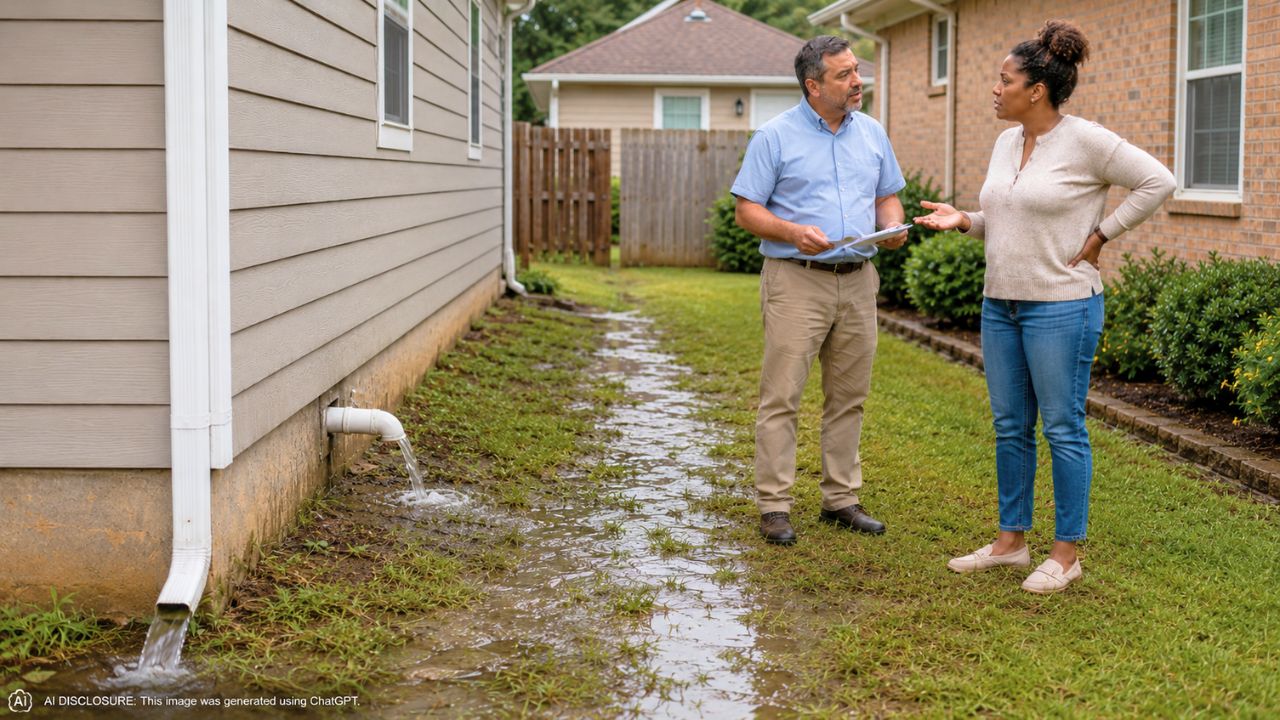
Photo credit: AI-generated image created using ChatGPT. Illustrative only.
It started the way a lot of drainage problems do: a yard that just never seemed to dry out. Five years after moving in, one homeowner realized the “standing water” wasn’t random bad luck—it was being delivered right to the property line from next door. The neighbor’s downspout had been routed into underground tubing that emptied at the fence, and the neighbor’s sump pump hose also discharged at the boundary.
In the original post, the homeowner laid out what happened next: an uphill neighbor who watered heavily, a soggy side yard that felt like it was turning into a swamp, and the kind of slow-building frustration that pushes people from “maybe it’ll improve” to “I have to do something.” Now the neighbor is redoing their landscaping again—and the homeowner is bracing for round two, especially after being told the drainage setup was already “approved.”
The first clue wasn’t a puddle—it was where the water was coming from
The homeowner tracked the problem down to three sources. First was the downspout: it had been funneled into underground tubing that popped out right at the fence line. Second was the sump pump hose, also aimed at the property line. Third was the neighbor’s irrigation—an in-ground system that, from the homeowner’s perspective, soaked the already uphill yard and kept the water pressure coming.
That combination is what makes these disputes so bitter. It’s not just rainwater. It’s “managed” water—captured, redirected, pumped, and sprayed—ending up somewhere it doesn’t belong.
A polite ask turned into a hard no
Before moving dirt, the homeowner tried the neighbor route: explaining the standing water issue and asking them to water less. The response was simple—they declined.
That’s the moment a lot of homeowners recognize they’re on their own. When the other property won’t change, the choices narrow quickly: live with it, spend money, or start documenting and escalating. This homeowner picked the practical route first—fix the drainage on their side and stop the water from spreading across the yard.
They built a workaround—and the neighbor “lost it”
To keep the water away from the house and prevent the yard from staying saturated, the homeowner raised the side yard “a few inches” closer to the home. They also installed a retaining wall about a foot tall near the property line and backed it with plastic. Along their side of the fence, they ran plastic vertically in the ground about a foot deep, essentially creating a barrier.
Then came the shaping: they raised and landscaped that strip and added a small berm on their side of the fence. The result was a controlled route. Instead of spreading into the yard, the water was forced along the fence line, directed to the back of the lot, and allowed to flow into a normally dry creek bed.
It worked—but it wasn’t quiet. When the neighbors realized what was happening, the homeowner wrote that they “lost it,” an argument followed, and threats were made. The neighbor leaned on the idea of seniority—“we were here first”—and threatened to call the city. The homeowner admitted it got heated on both sides and said mean things too, which is often what happens when people feel cornered over property damage risks.
Instead of waiting for a complaint, the homeowner called the city first
At that point, the homeowner did something that probably saved them months of anxiety: they contacted the city themselves and asked for a review of the landscaping changes, specifically so they could correct anything that violated code. The city cleared them.
That doesn’t magically fix the neighbor relationship, but it changes the power dynamic. A threatened call to enforcement hits differently when you’ve already opened the door, shown your work, and gotten a thumbs-up. Even so, the homeowner wasn’t treating it like a victory lap. It sounded more like exhaustion—“I got so sick of it”—and a need to make the issue stop escalating.
Eventually, things calmed down. The homeowner said they “made up and are on good terms” now, which makes the next development more tense: the neighbors just announced they’re re-landscaping the front, side, and back yards.
The fear isn’t a new garden bed—it’s a return of the wetland
The homeowner’s worry isn’t about aesthetics. It’s about hydrology. Landscaping changes can quietly undo years of trial-and-error water control—new grading, buried drains, redirected downspouts, or even just higher soil levels that change how water sheets across the ground.
And when a sump pump is part of the mix, it’s not seasonal. In many homes, a pump can run long after storms end, pushing water out in steady cycles. If that discharge point is close to a property line, it can keep soil saturated and make it hard to grow grass, maintain fencing, or avoid muddy paths and pest problems that love wet ground.
The homeowner’s system currently funnels water along the fence line to the back where it can dissipate into a dry creek bed. If the neighbors’ new landscaping pushes more flow toward that boundary—or interferes with the homeowner’s berm and barrier approach—the standing water could come back fast.
What people urged: document first, and don’t wait for damage
In the post, the homeowner asked what they can do now to be prepared: “take pictures and review the city codes? Anything else?” That question reflects a common lesson in neighbor-versus-water problems: once the ground is saturated and structures start shifting, everyone suddenly wants “proof,” but the best proof is what you gathered before the next change.
The practical mindset that tends to show up in these discussions is simple—treat it like a before-and-after project, not a personal feud. Photos of current grading, fence line conditions, discharge points, and any existing pooling areas create a baseline. Keeping communication calm and in writing, even if the relationship feels “good” at the moment, also helps if the conversation later turns into “we never said that” or “the city already approved it.”
And that “approved” claim is exactly what makes homeowners nervous. Approval can mean different things depending on where you live: it might mean nothing more than a prior complaint was closed, or it might mean a permitted installation. Either way, the homeowner already learned that getting the city involved early can be better than waiting for a surprise enforcement visit after a neighbor complaint.
For now, they’re trying to stay ahead of it—hoping the new work doesn’t redirect water back onto their property, but preparing as if it might. Because once you’ve had a yard that holds water for days, you don’t forget the smell, the mud, the mosquito season, or the creeping fear that it’s working its way toward the foundation.