New Homeowner Finds the Neighbor’s Sump Pump Has Been Draining Directly Into the Yard for Years — Then the Neighbor Says It Has Nowhere Else to Go
Photo credit: AI-generated image created using ChatGPT. Illustrative only.
It started as one of those annoying “wet yard” mysteries that new homeowners tend to notice after the excitement of move-in wears off. One patch stays soggy. The ground feels soft underfoot. After a heavy rain, water seems to gather in the same place and hang around longer than it should.
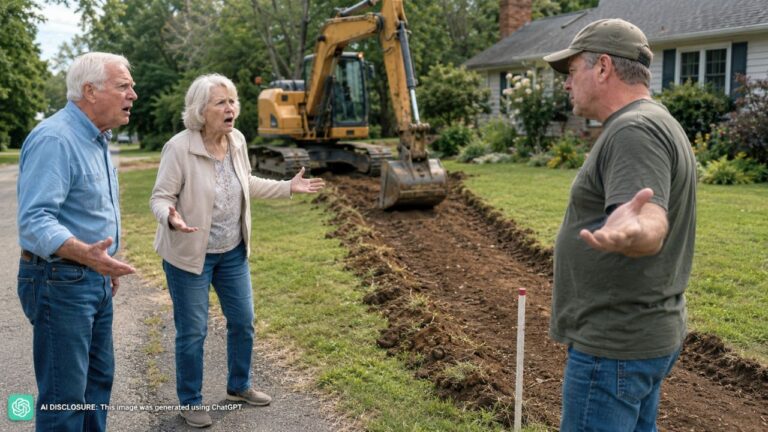
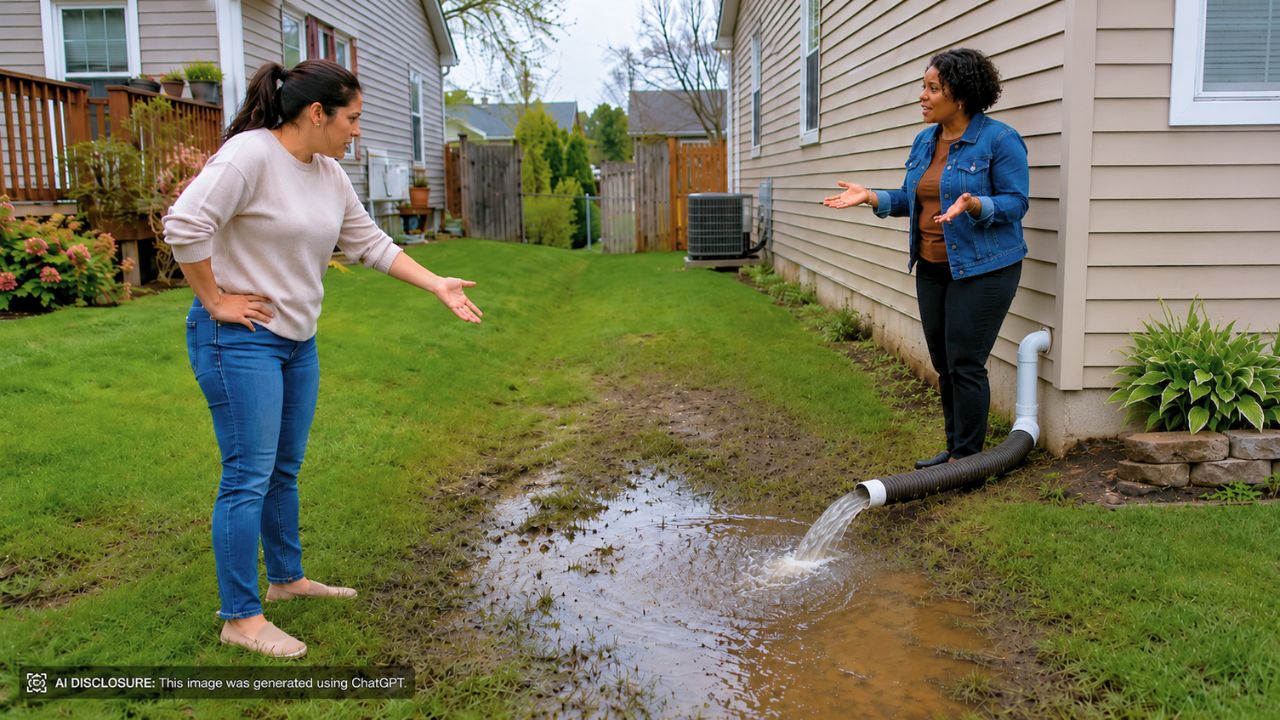
Then the homeowner traced it back to the source: the neighbor’s sump pump discharge, running straight into their yard. In the original post, the homeowner said the neighbor’s setup has been draining that way for years, and it’s now flooding their property.
The moment it clicked: this wasn’t “just drainage”
When a yard holds water, people usually blame the obvious stuff first—grading, clay soil, that low corner by the fence. But sump pump water has a tell: it’s not just there after storms. It can show up in steady bursts, especially during wet seasons, because it’s literally groundwater being pumped out of a basement or crawlspace.
The homeowner described a direct discharge into their yard, not a shared swale or a vague “it kind of runs that direction” problem. That’s when it stops being an annoyance and starts feeling like someone else’s house system is using your property as the overflow bucket.
And the longer it’s been happening, the more baked-in the damage can become. Saturated soil doesn’t just look ugly; it can kill grass, encourage mosquitoes, and keep the ground soft around fences or shed foundations. If it’s close enough to the home, it can even worsen moisture around the structure.
They tried the neighbor route first—more than once
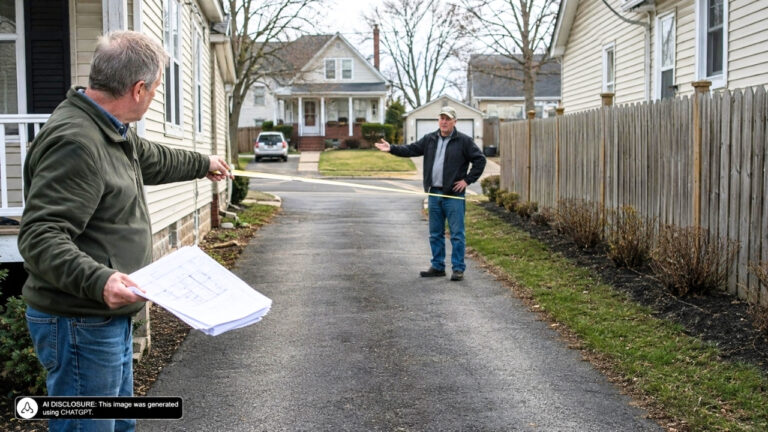
Instead of going straight to authorities, the homeowner did what most people hope will work: asked the neighbor, directly, multiple times. They even offered to help dig, which is about as neighborly as it gets when the issue involves trenching and pipes.
The response they got wasn’t an argument, but it wasn’t action either. The neighbor had “all excuses,” including being too busy. The homeowner’s frustration wasn’t just about water—it was about being forced into a waiting game while their own yard took the hit.
This is the part that wears people down. It’s hard to keep the conversation friendly when the problem repeats every rain, and every ask turns into another delay. Meanwhile, the wet spot doesn’t pause out of courtesy.
The DIY detour: rerouting it back—only to still get flooded
Eventually, the homeowner took matters into their own hands and manually rerouted the discharge back into the neighbor’s yard. It’s the kind of fix you do when you’re tired of stepping around a swampy area and you just need the water to stop showing up on your side.
But even after that, the homeowner said it still floods. That detail is important, because it suggests the problem isn’t only the direction of the sump line. If the yards are graded toward the homeowner’s side, or if there’s a low spot on the property line, water can still migrate back over—especially if the volume is high and the soil is already saturated.
It also hints at how long-term water issues stack. Once a section of yard becomes chronically wet, it can turn into the path of least resistance. Water flows where it has flowed before. A quick reroute can reduce the direct blast, but it won’t necessarily undo the landscape’s new “default” drainage pattern.
When “just call the city” feels like a relationship grenade
With the neighbor stalling, the homeowner contacted the city and learned a code violation could be issued. But they were torn about it, saying it was unclear whether that would “stir the pot.”
That’s the real trap of neighbor water disputes: you can be completely justified and still pay a social price. People don’t forget who called enforcement, even when enforcement was the only lever left. And if you’re living next to each other for years, the stakes aren’t theoretical—you still have to share a property line after the paperwork is done.
At the same time, the homeowner is already living with the consequences of doing nothing. Flooding isn’t polite. It doesn’t stop because the neighbor is busy. If anything, the longer it continues, the more likely it becomes that repairs turn from “annoying yard work” into “why is this corner always sinking?”
The practical reactions: document first, then escalate
Even when a post doesn’t include a long comment thread, this kind of story tends to pull the same practical instincts out of other homeowners: get proof, get it in writing, and don’t rely on handshake promises when water is crossing a boundary.
In situations like this, neighbors often urge steps that create a clean timeline—photos of standing water, short videos showing the discharge, notes on dates and rainfall, and copies of any messages where rerouting was requested. The point isn’t to “build a case” for drama’s sake. It’s to avoid the circular argument later: “It’s not my pump,” “It’s always been like that,” “It only happens when it rains,” “It’s your grading.”
People also tend to mention the value of keeping interactions calm and simple. Not because the neighbor deserves unlimited patience, but because if the city does get involved, it helps when you can show you tried to resolve it directly and reasonably before escalating.
Why sump discharge fights don’t stay small
What makes these disputes so sticky is that sump pumps exist for a reason: the neighbor’s house needs to move water away from its foundation. If the neighbor believes there’s “nowhere else for it to go,” they may feel cornered—and cornered people don’t always cooperate.
But “nowhere else” usually means “nowhere else that’s easy.” A proper discharge route can involve extending the line to the street (where allowed), tying into an approved storm system (where available and legal), or grading and routing toward a drainage feature on the neighbor’s own property. Even when those options cost money or effort, they’re still fundamentally part of owning a water-management system.
On the receiving end, it’s hard to ignore the imbalance: one property protects its basement by exporting water, and the other property pays for it with mud, flooding, and an unusable yard. That’s why the homeowner’s worry about escalation sits right next to a bigger worry—how long they can live with this without something else getting worse.
For now, the homeowner is stuck in the most aggravating stage: they’ve asked nicely, offered labor, tried a workaround, and still have flooding. The next move—formal enforcement—might fix the drainage, but it could also turn a quiet neighbor relationship into a cold one. And when the ground is already soaked, waiting for “someday” to arrive starts feeling like its own kind of risk.