New Homeowner Finds the Neighbor Has Been Treating Part of the Lot as Their Own Yard — Then the Neighbor Says They Will File for Adverse Possession If Asked to Leave
Photo credit: AI-generated image created using ChatGPT. Illustrative only.
It started the way a lot of neighbor problems start: a few offhand remarks that sounded like personal opinion more than a real claim. A new homeowner said that about three months after moving in, the next-door neighbor began commenting on the fence line between their yards—little digs about how the fence “wasn’t in the right place” and vague references to a previous owner who supposedly agreed to move it.
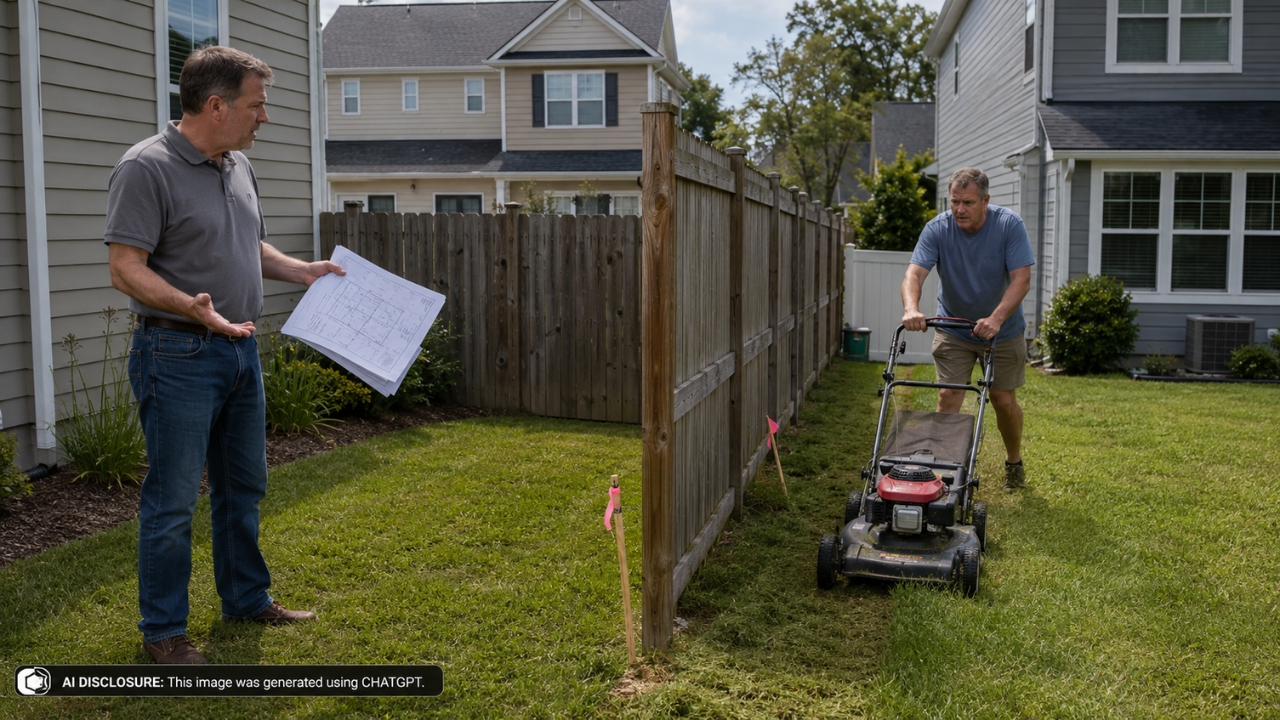
Then it got physical. The homeowner shared details in the original post, describing the moment they pulled in and found the neighbor mowing about three feet into what they believed was their yard—like it was the most normal thing in the world.
The first sign was easy to brush off
At first, the comments were the kind you can shrug away. Lots of long-term neighbors have strong opinions about who owns what, especially when a fence has been in place “forever” and everyone has gotten used to a certain look.
The homeowner didn’t make much of it in the beginning, which is understandable. Moving into a house comes with a thousand little tasks—unpacking, learning the quirks of the property, figuring out trash day—and it’s easy to file fence talk under “neighborhood chatter.”
But the neighbor kept at it, repeating that the fence line was wrong and implying a change was coming sooner or later. That kind of slow pressure is what makes property-line disputes feel so unsettling: it’s not one big blowup, it’s a drip of insistence that doesn’t match your paperwork.
Seeing the neighbor mow into the yard changed everything
The tone shifted the day the homeowner came home and saw the neighbor mowing several feet past the fence line. This wasn’t just someone grumbling from their porch. It was someone treating a strip of land like it was already theirs.
When the homeowner asked what he was doing, the neighbor didn’t hedge. He told them that section belonged to his property and that the fence had been placed incorrectly “years ago.”
That’s the moment the dispute stops being abstract. Mowing is maintenance, and maintenance is a form of possession in the real world. It’s also a message to anyone watching: this is my space, I’m the one taking care of it.
Paperwork vs. “everybody knows”
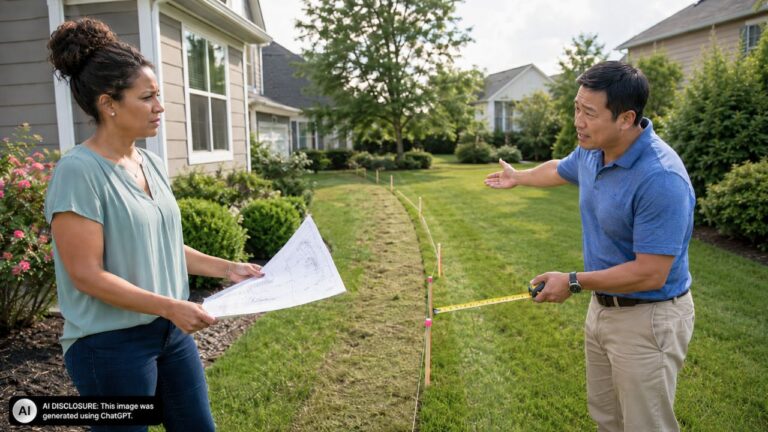
The homeowner responded the way most cautious buyers would: they pulled out the property survey from when they bought the house. According to them, the survey clearly shows the fence line exactly where it sits now.
Instead of backing down, the neighbor dismissed the survey and claimed those documents were wrong. He countered with something that’s hard to argue with in the moment but doesn’t hold up well under scrutiny: he insisted “everyone on the street knows” the boundary is different.
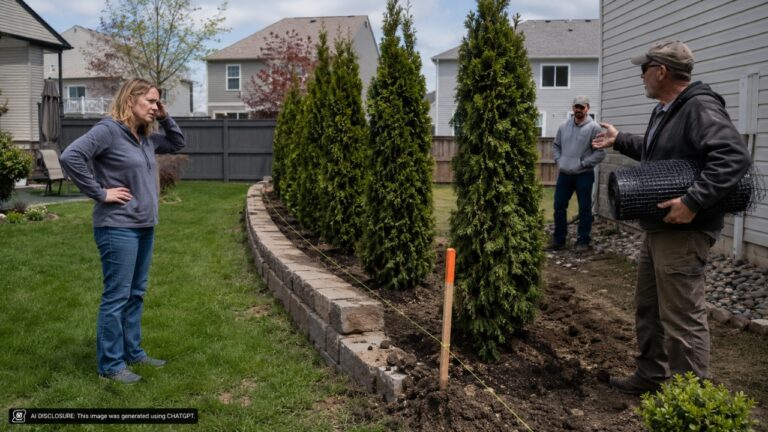
That’s where the pressure ramps up. The neighbor continued making comments about the homeowner “using his land,” and he kept saying the fence would have to be moved eventually. Even when no one is yelling, that kind of repeated claim can start to feel like someone is trying to wear you out until you give in.
The uncomfortable part wasn’t the fence—it was the watchfulness
Property disputes don’t stay on paper. They become a daily experience, especially when yards are small and you can’t avoid crossing paths.
The homeowner described how uncomfortable it’s become because every time they’re outside, the neighbor stares at the fence “like he’s measuring it.” That image lands with anyone who has dealt with a boundary-obsessed neighbor: the lingering looks, the feeling of being monitored, the sense that a casual weekend in your own yard has turned into a standoff.
And the strip in question isn’t huge—about three feet. But that’s the point. Small slices of land can cause outsized tension because they’re easy to treat as “no big deal” until they aren’t. Three feet can affect where you plant, where you place a shed, how you access a side gate, or whether a future fence replacement becomes a fight.
Why homeowners get nervous when a neighbor “acts like it’s theirs”
Even without anyone filing paperwork, a neighbor repeatedly maintaining and using a piece of land can feel like the start of something bigger. When someone mows into your yard and talks like the boundary is already decided, it puts you in a defensive position: do you confront, document, ignore, or escalate?
In many places, people have heard of adverse possession—where long-term, open use of land can potentially turn into a legal claim under specific rules. Homeowners don’t need to be legal experts to feel the threat in the neighbor’s behavior. When a person insists the survey is wrong and “everyone knows” a different boundary, it sounds less like a misunderstanding and more like an attempt to rewrite reality through repetition.
That’s why these disputes can start to affect everything else. You begin thinking about cameras, about whether to say something every single time, about whether a friendly wave will be misread as permission. The yard stops feeling like a refuge and starts feeling like contested space.
Reactions leaned toward proof, documentation, and not playing along
While the homeowner’s post focused on what the neighbor has said and done so far, the practical instinct in disputes like this is always the same: don’t let the pattern become normal. When someone starts maintaining your land as if it’s theirs, the fear is that silence will be framed later as agreement.
Homeowners reading stories like this typically zero in on hard proof—surveys, recorded property descriptions, and the kind of documentation that holds up when opinions don’t. They also tend to emphasize creating a clear record of what’s happening, because fence-line arguments often come down to “who said what” and “who used what” when memories get convenient.
Just as important, people tend to advise against informal deals that aren’t written down. A neighbor referencing a prior owner’s supposed agreement is a classic move in these conflicts, and it puts the new owner in a tricky spot: you weren’t there, you didn’t agree, and you still have to live next door after you say no.
For this homeowner, the stress isn’t only about defending a few feet of grass. It’s about stopping an unwanted routine—mowing, commenting, staring—that keeps pushing the boundary line from “where it is” to “where he says it should be.”
The hard part is that nothing is fully broken, so there’s nothing obvious to fix. It’s just a neighbor steadily acting like a portion of the yard is already his, and a new homeowner trying to keep their footing without turning every Saturday outside into an argument over three feet of lawn.