New Homeowner Has a Septic Inspection Done and Finds Three Lateral Lines Running Fifteen Feet Into the Neighbor’s Yard — Then the Neighbor Says the County Approved the Design Decades Ago and the New Owner Has No Grounds to Demand a Fix
Photo credit: AI-generated image created using ChatGPT. Illustrative only.
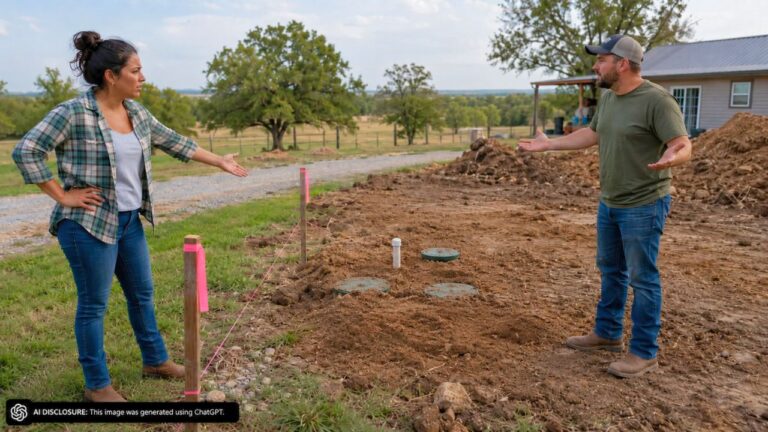
Buying a rural property comes with a certain kind of peace—until you learn one of the most important parts of your home isn’t actually on your land. That’s what happened to a homeowner in Page County, Virginia, after digging into old septic paperwork and realizing the drain field they depend on appears to be sitting across the line on a neighbor’s farm.
In the source post, the homeowner explains that the original county application from around 1988 shows the drain field located on their property. But the real-world installation doesn’t match the paper. And when they turned to the neighbor to make things official—an easement for inspection, maintenance, and repair—the answer was a flat no.
The moment the paperwork stopped matching the dirt
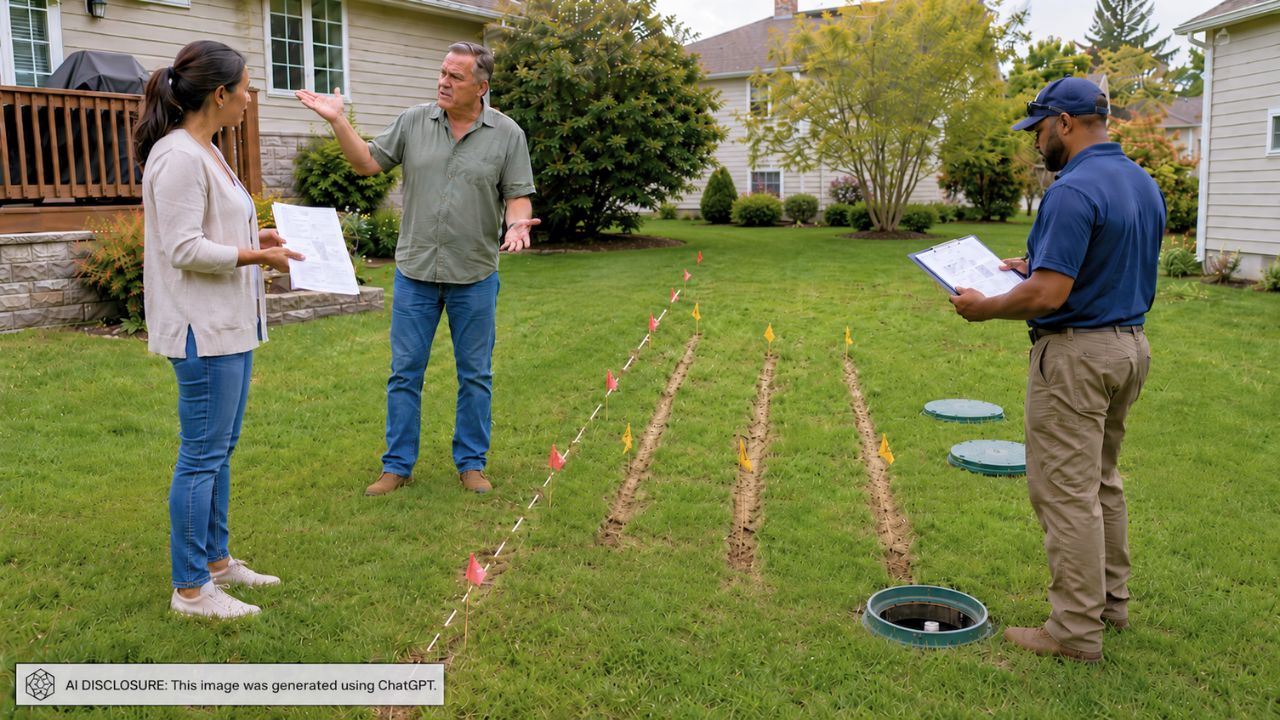
This wasn’t a case of “the line is a little off.” The homeowner says they discovered the drain field isn’t on their property at all. It’s on the neighbor’s farm, which immediately turns a normal maintenance item into a permission problem.
Septic systems aren’t like a shed you can ignore. If a lateral line clogs, if the field gets saturated, if a tank needs work, you need access—sometimes quickly. Without it, even a simple service call becomes a negotiation.
What made it extra maddening was that the homeowner had documents that should have prevented this. The original installation application indicated the drain field was supposed to be on their land. But the system in the ground appears to have been built somewhere else.
An old inspection report made it even weirder
When the homeowner pulled county records, they found an inspection report from around 1988. According to what they were told, the county inspector approved the inspection and said the system was installed as designed.
That’s where the story starts to feel like a trap that was set decades ago. If the county signed off, the homeowner wonders, how did a drain field end up on the wrong parcel? And if it was truly “as designed,” why does the design paperwork point to a different location?
The homeowner’s suspicion is blunt: the county bears some fault for passing the inspection without specifying the actual location of the drain field. In a rural area, it’s easy to imagine how an inspection could become more of a check-the-box visit, especially if no one was enforcing exact measurements back then.
Surveys said one thing—reality said another
To make it even more confusing, the homeowner says recent surveys show the drain field on their property, even though that “is not the case” on the ground. In other words: the map says it’s yours, but your neighbor’s land is where the system actually sits.
They traced part of the issue to a human detail that happens more often than people like to admit. Someone told the surveyor the drain field was on the homeowner’s property “according to the original design.” The survey reflected what it was told, not necessarily what was physically located.
Now the homeowner is trying to unwind that mistake by requesting a more detailed survey tied to the last one done in 2015. That’s not just for clarity—it’s for leverage. When you’re dealing with a neighbor who won’t sign anything, the only tool you have is documentation that can survive an argument.
The neighbor didn’t want an easement—at all
The heart of the conflict isn’t whether the homeowner wants to be friendly. It’s whether the homeowner can legally maintain the system that serves their home.
The neighbor is unwilling to grant an easement for inspection, maintenance, and repair. That’s the kind of refusal that turns into a long-term pressure point: every future septic issue becomes a potential trespass dispute, and every attempt to fix it risks turning into a fight at the property line.
It also changes how you live day-to-day. A homeowner who knows their drain field is on someone else’s property starts thinking differently about water use, guest visits, laundry loads, even whether to schedule a tank pump-out—because what happens if the service company needs to follow the lines and the neighbor says no?
Why “the county approved it” doesn’t end the stress
The homeowner’s instinct is understandable: if the county approved the installation, shouldn’t that mean the homeowner is protected? But approvals don’t magically create access rights, and they don’t always guarantee the installation was placed where it was supposed to be.
The homeowner also believes someone misled the surveyor about the location. That detail matters because it hints at how these problems get passed forward. If a survey indicates everything is contained within the parcel, buyers don’t ask hard questions. Sellers don’t volunteer headaches. And nobody learns the truth until a repair, a new survey, or a neighbor dispute forces the issue into daylight.
Even without getting deep into legal theory, the practical bind is obvious: a septic drain field is not a “nice to have.” If you can’t access it, you can’t properly own the home the way most people understand ownership.
What homeowners latched onto: proof, boundaries, and leverage
In stories like this, the most common reaction from other homeowners is to stop talking and start collecting. The homeowner has already taken the first steps people typically recommend: pulling original county records, comparing application paperwork to inspection notes, and ordering more detailed survey work.
That documentation-first approach is the only thing that keeps the dispute from turning into pure he-said-she-said. If the drain field truly crosses the line, the homeowner will want a survey that doesn’t rely on assumptions, plus any county file notes that indicate where the inspector believed the field was installed.
People also tend to focus on the neighbor angle: once a neighbor refuses an easement, friendly conversations can turn into “don’t step one foot over here,” and that’s when even routine maintenance becomes risky. It’s not hard to picture how quickly this turns into someone watching for service trucks, questioning where they park, or accusing a contractor of trespass.
For now, the homeowner is doing what a lot of rural property owners end up doing when the ground and the paperwork disagree: building a paper trail strong enough to force a decision. Because if the drain field stays where it is, they need legal access. And if access can’t be secured, the alternative starts looking grim—relocating a drain field isn’t a casual weekend project, and it’s not something you want to do under neighbor pressure.
The unsettling part is how ordinary the beginning sounds: an old application, an old inspection, and a survey that seemed fine. Then you find out the system that makes your house livable might be sitting on land you don’t control. Once you learn that, it’s hard to un-know it—and even harder to pretend it won’t matter the next time the septic system needs attention.