Buyer Closes on a Wooded Lot and Finds Half the Trees Along the Back Line Were Cleared Before Closing — Then the Seller Claims All the Felled Timber Was on the Neighbor’s Side of the Survey Line
Photo credit: AI-generated image created using ChatGPT. Illustrative only.
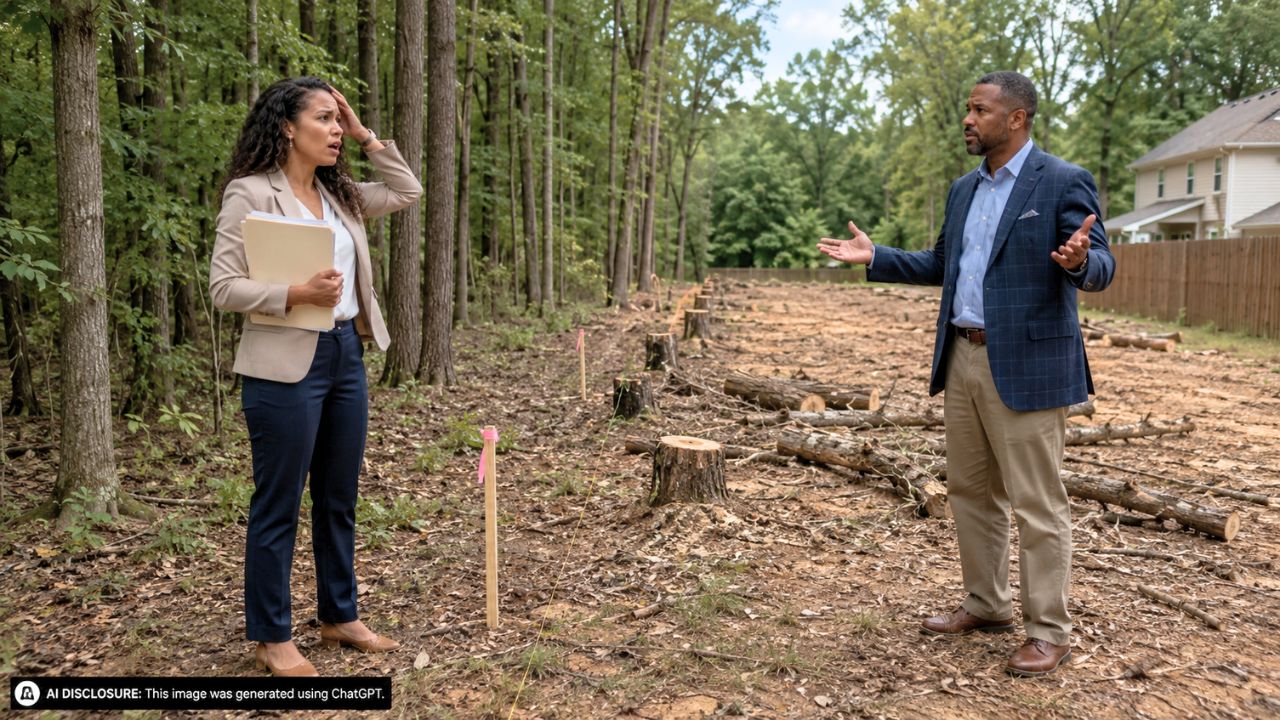
They thought they were buying privacy: a wooded back line, a mature screen of pines, the kind of natural buffer that makes a lot feel bigger than it is. Then closing came and went, and what should’ve been a quiet boundary of trees suddenly looked like a fresh-cut work zone—stumps, gaps, and a weird emptiness you don’t notice until the “before” is gone.
That’s the kind of gut-drop behind the discussion that’s been making the rounds among homeowners who’ve dealt with property lines the hard way. In the source post, the homeowner didn’t just lose trees—they came home to find a fence partially down, plus yard items moved like someone had been “working” in their space without permission.
The “wooded buffer” vanished, and then the yard looked disturbed
The homeowner described a tree cut down right on the property line, with most of it sitting on their side. It wasn’t a dying snag or a storm-damaged hazard, either. They called it a 45-year-old healthy pine, about 30 feet tall, and “beautiful.”
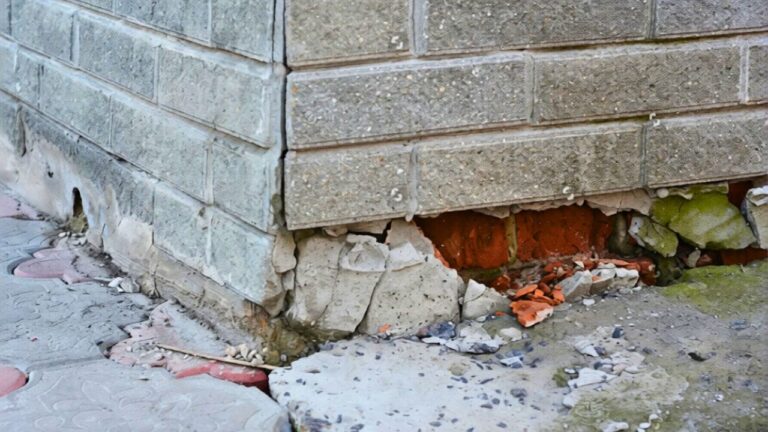
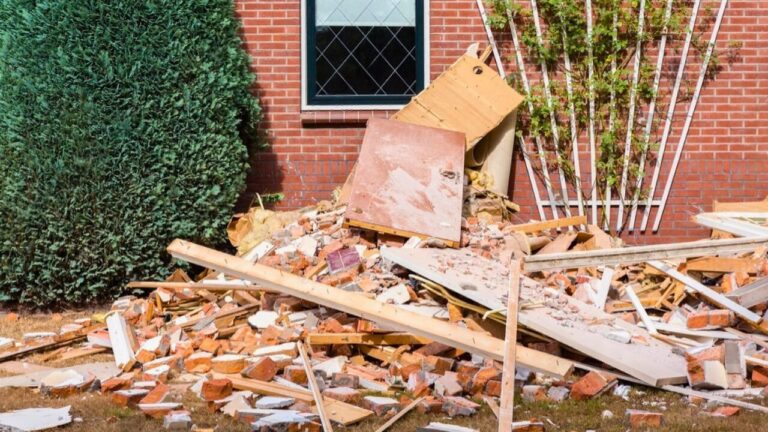
But the tree wasn’t the only thing that changed. When they got home, part of their fence was down. Two birdhouses and a bird bath had been removed and set in the middle of the yard—like someone needed them out of the way and didn’t bother putting anything back.
That detail matters because it shifts the story from “a neighbor cut a tree” to “someone entered the property, moved personal items, and left damage behind.” Even if the tree had been a misunderstanding, the fence and yard décor make it feel like a takeover.
A neighbor’s explanation turned into a moving target
When the homeowner confronted the neighbor—asking who authorized the tree removal—the first response was a denial: he claimed he didn’t know. Then it changed. He said he did know.
The reason given for cutting down the pine was almost petty in its simplicity: he didn’t want pine needles landing on his rocks. For anyone who’s lived with pines, that’s not exactly shocking as a complaint. What’s shocking is treating it as a permission slip to remove a mature tree that isn’t fully yours.
That’s where these boundary disputes get ugly fast: one person sees “annoying yard mess,” the other sees “you just erased a decades-old piece of my property.” And once the trunk is on the ground, there’s no undo button.
When the boundary line is the whole argument
The headline version of this kind of fight is always the same: the buyer swears the clearing crossed the line; the other side swears it didn’t. In the source post, the homeowner believed the tree sat on the property line and that the majority of it was on their property.
That “majority” detail is exactly what neighbors latch onto when blame starts getting passed around. If the neighbor wants to claim everything happened on “their side,” it becomes a game of inches—where the stump sat, where the trunk leaned, which side the fence is actually on, and whether the tree was treated as shared.
And this is why so many lot buyers find themselves obsessing over surveys after the fact. A wooded back line looks obvious until chainsaws and cleanup crews show up. Then everybody suddenly has a different memory of where “the line” is.
The damage wasn’t just emotional—there were repairs staring them in the face
Losing a mature pine is one thing. Coming home to a damaged fence is another. Fences are functional, not decorative—especially if you’ve got pets, kids, or simply don’t want a neighbor wandering into your yard whenever something bothers them.
The birdhouses and bird bath being moved into the middle of the yard reads like a calling card: someone was comfortable enough on the property to treat it like their worksite. Homeowners who’ve been through this will tell you that’s the part that keeps you up at night, because it suggests the next “fix” could happen the same way.
The homeowner said they were in shock, which tracks. These disputes aren’t loud at first. They’re quiet and surreal—like you walked into a version of your property where the rules don’t apply.
They filed a police report, but the next steps get complicated fast
The homeowner filed a police report and asked what options they have for recourse. That’s often the first move people make when the line between “neighbor issue” and “property damage” gets crossed.
But even with a report, these cases can become a grind. Tree disputes turn into documentation disputes: what was the tree worth, where exactly was it rooted, and who hired or operated the equipment. And if the neighbor admits to cutting it but tries to justify it as “on my side,” the fight can shift from “did you do it” to “did you have the right.”
The fence adds another layer because it’s tangible damage with a practical cost and an immediate need to repair. A downed section can’t sit for weeks while people argue about who owns a stump.
Homeowners zeroed in on proof, not shouting matches
In conversations like this, the most common reaction from other homeowners isn’t “go yell at them again.” It’s “document everything.” People tend to focus on photos of the stump and fence, any pre-cut images of the tree, property surveys, and anything that shows where the line really sits.
There’s also a practical reason for that mindset: once you start repairing a fence or cleaning up debris, you can accidentally erase the very evidence you need. Homeowners who’ve been burned by disputes like this often advise taking pictures immediately, saving receipts for any repairs, and keeping communication in writing so the story doesn’t keep changing.
And yes—many people also start thinking about cameras after something like this. Not because it solves what already happened, but because it changes what’s possible the next time someone decides your yard is their “problem” to fix.
The hardest part of this kind of mess is that it feels personal, but it plays out in paperwork: boundaries, ownership, responsibility for repairs, and what counts as lawful trimming versus outright removal. For the homeowner in the source post, it started with a single pine and ended with a fence on the ground and yard items displaced—clear signs that the real problem wasn’t needles on rocks. It was a neighbor who felt entitled to make permanent changes on someone else’s side of the line.