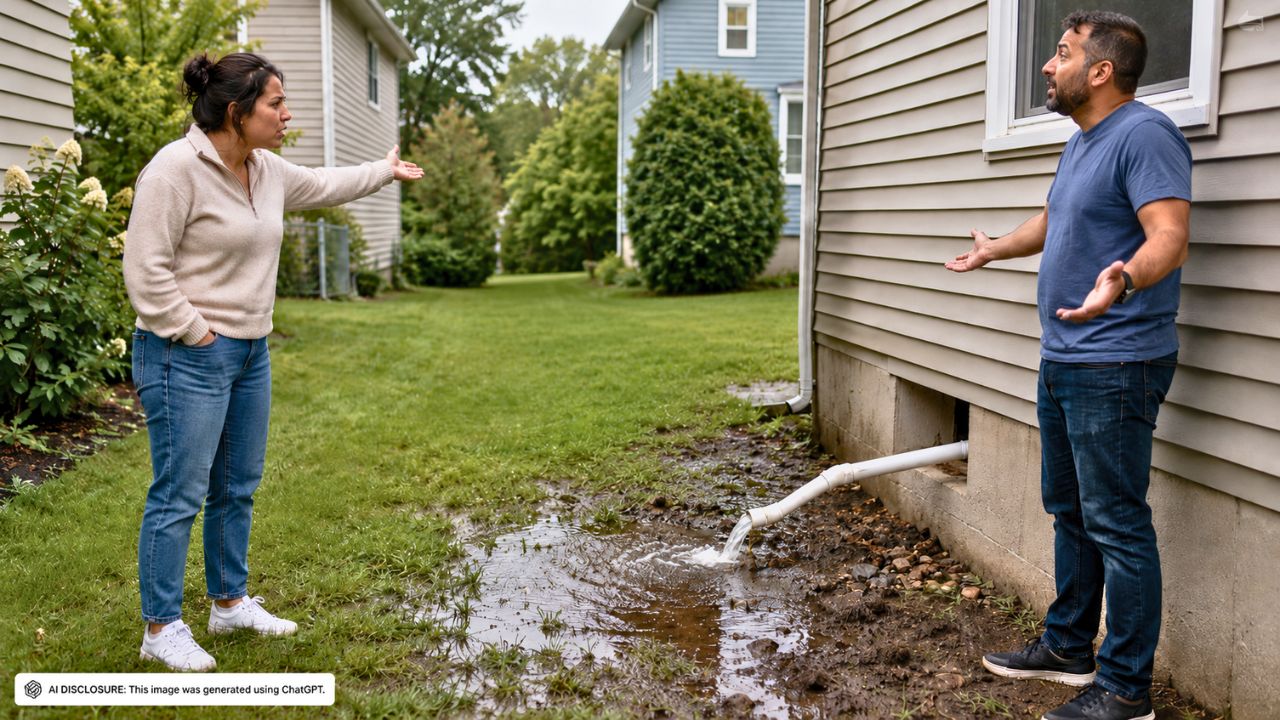
New Homeowner Finds the Neighbor’s Sump Pump Discharge Line Has Been Draining Directly Onto the Property for Years — Then the Neighbor Says It Is the Only Way to Keep Their Basement Dry and Calls the Practice Standard
Photo credit: AI-generated image created using ChatGPT. Illustrative only.
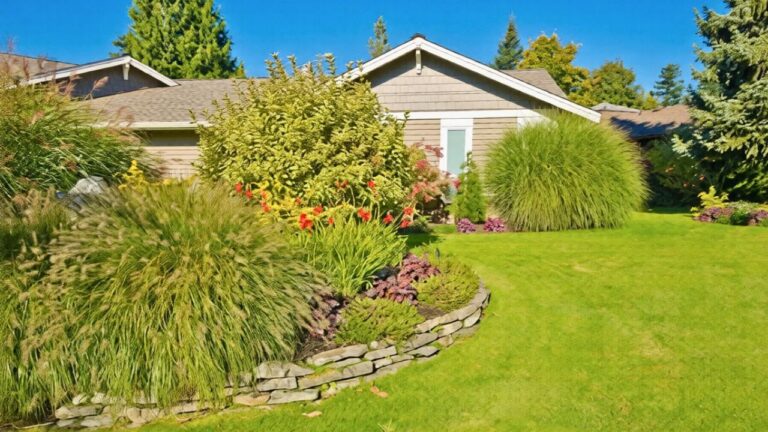
It starts like a minor yard annoyance: one corner that never dries out, a strip of grass that won’t grow right, a muddy rut that keeps coming back no matter how many bags of seed you throw at it.
Then you trace it uphill and realize the “mystery wet spot” isn’t a mystery at all. It’s a discharge line—your neighbor’s sump pump—sending basement water straight onto your property. That’s the dilemma described in the source post, and for a new homeowner, it’s the kind of discovery that makes you question everything about what you just bought.
The first sign was easy to brush off
New homeowners expect a learning curve. Every house has quirks, and the yard often takes a season to understand—where the shade sits, how the soil drains, which spots stay soggy after a storm.
But the problem here wasn’t just “post-storm runoff” or a low spot that naturally collects water. It was the kind of wetness that lingers, spreads, and starts to change how you use the property. Once the ground stays saturated, you stop walking there. You stop storing anything nearby. You start watching for mosquitoes.
And then you notice the pattern: the wet area lines up with where the neighbor’s system would logically dump water—away from their foundation, away from their basement, away from their responsibility.
“It’s the only way to keep our basement dry”
This is where the neighborly conversation gets tense fast. The neighbor’s sump pump exists for a reason: to remove water from their basement and prevent indoor flooding. They may even feel like they’re doing what any homeowner would do to protect the structure.
But in the homeowner’s telling, the neighbor frames it as normal—standard practice, the only workable option, basically a shrug that says, “What do you want us to do?” That’s a hard thing to hear when you’re the one living with the swampy mess.
There’s also an implied history baked into it. If the discharge line has been draining that way for years, it didn’t start with the new owner. It’s just that the new owner is the first one to push back, or the first one who can’t ignore the damage.
When “just water” starts wrecking a yard
People hear “sump pump discharge” and think it’s a small stream, no big deal. But water doesn’t have to be dramatic to be destructive. A steady flow aimed in the same direction, day after day, can turn a usable yard into a soggy, unusable zone.
The source material spells out the practical consequences: landscaping can be ruined, and when soil stays too saturated, it can compromise the integrity of structures like decks and patios. That’s not cosmetic. That’s repair money. That’s a long-term headache that can show up later as settling, shifting, or rot.
Even if the problem stays “outside,” it can ripple into everything else. Mud gets tracked into the house. Standing water attracts pests. A yard that doesn’t dry out becomes a maintenance treadmill, and you’re the one paying for it while the neighbor’s basement stays comfortably dry.
Where liability gets messy, and where it doesn’t
One of the trickiest parts of drainage disputes is that not all water is treated the same. If your street grade or natural slope sends stormwater toward you after a big rain, that can be considered a natural condition—annoying, but not automatically your neighbor’s fault.
But the source material draws a clear line between water that moves naturally and water that gets redirected because someone installed something. If a neighbor’s specific action directly results in damage—like putting a pool too close to the property line and causing flooding—you may have legal recourse, especially if you can show you warned them.
A sump pump is even more direct than a grading issue. It’s a mechanical system meant to remove water from one place, and the homeowner operating it generally has a responsibility to make sure it drains properly. “Properly” doesn’t mean “onto the neighbor’s yard because it’s convenient.”
And that’s the core tension: one homeowner’s basement solution can become the other homeowner’s yard problem. It feels unfair because it is unfair, at least on a common-sense level.
Neighbors focused on proof before confrontation
In these disputes, the smart move is usually to slow down and document. Not because you want a fight, but because memories get fuzzy the moment someone feels accused.
The source material points to the value of evidence—like emails showing concerns were raised in advance. That’s the kind of detail that matters when you’re trying to move from “my yard is wet” to “this discharge line is causing damage.”
Homeowners reading stories like this tend to think in a practical sequence: confirm where the water is coming from, capture what’s happening over time, and communicate in a way that creates a record. If the issue escalates to mediation, code enforcement, or a legal consult, the person with clear notes and clear photos usually has an easier time being taken seriously.
The other reason people emphasize documentation is simple: if you’re newly moved in, you don’t want your first big neighbor interaction to be a shouting match over mud. You want it to be a calm, boring paper trail that says, “Here’s what’s happening, here’s what it’s doing, and here’s what needs to change.”
The most frustrating part: fixing it without owning it
There’s a particular kind of homeowner rage that comes from being forced to solve a problem you didn’t create. A new owner can feel trapped between protecting their property and not wanting to bankroll a neighbor’s drainage redesign.
The neighbor may genuinely believe they have no other option. They may also just not want to pay for a better one. Either way, the “standard practice” argument doesn’t help the person whose yard is absorbing the output.
The uncomfortable reality is that the water has to go somewhere. If the neighbor stops pumping it onto the adjacent property, they’ll need a different discharge plan that keeps their basement dry without damaging someone else’s land. That can be straightforward, or it can be complicated, depending on the layout and local rules—but the burden shouldn’t default to the neighbor downhill.
For a new homeowner, this is one of those early lessons you never forget: the house you bought includes the land, and the land includes everything your neighbors have been quietly doing for years. Sometimes you don’t find out until you’re standing in a muddy patch that shouldn’t exist, realizing the fix might start with a difficult conversation next door.