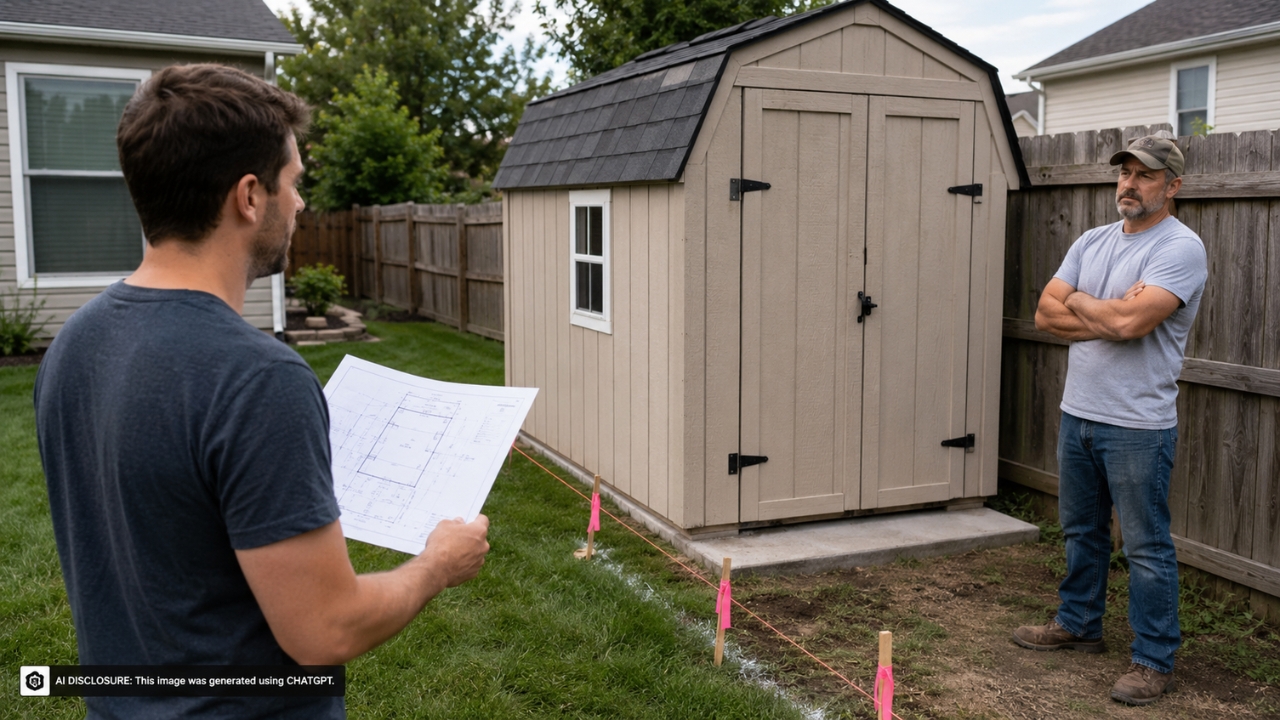
New Homeowner Finds the Neighbor’s Storage Shed Built Three Feet Onto the Property — Then the Neighbor Says the Shed Is “Basically” on the Line
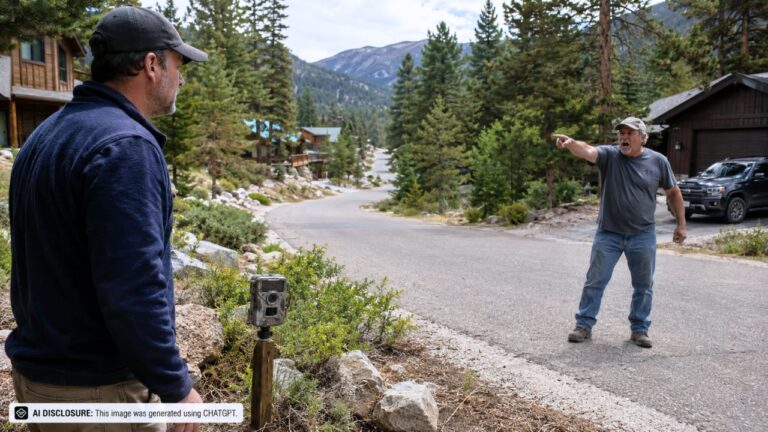
Photo credit: AI-generated image created using ChatGPT. Illustrative only.
The backyard already came with a “plan” baked into it: a concrete pad sitting where the previous owner once kept a shed. When the new homeowner bought the place in 2018, the neighbors even pointed it out like it was part of the property’s normal history. So when it came time to add storage, rebuilding a shed on the same pad felt like the easiest, most sensible choice.
Then a survey for a future fence turned that simple project into a slow-burn property line headache. In the original post, the homeowner explained that the pad—and the newly built shed sitting on it—crosses the property line by about 10 inches. The neighbors said they didn’t care. But the homeowner couldn’t stop thinking about what happens later, when “fine with it” turns into a title question, a lender requirement, or a buyer walking away.
The shed wasn’t the surprise—the survey was
This wasn’t a case of someone sneaking a building up overnight or trying to grab extra yard. The shed went up where a shed had apparently been for years, on a concrete pad that looked permanent and “established.” To a normal person, that reads like: this is where the shed goes.
The trouble is that concrete doesn’t prove boundaries—paper does. The homeowner ordered a survey for fence planning, expecting to confirm corners and move on. Instead, the lines came back and the pad was over by roughly 10 inches, which meant the new shed wasn’t just close. It was technically sitting on the neighbor’s land.
When the neighbor shrugs, it can feel like permission
In neighbor-to-neighbor life, the reaction sounds like the best possible outcome: the neighbors said they don’t care. That matters in day-to-day living because it lowers the temperature. No angry notes. No threats. No calls to anyone. Just a casual, “It’s fine.”
But “fine” isn’t a document, and it isn’t transferable. The homeowner’s worry wasn’t about this week or this year—it was about the moment the home gets sold, or refinanced, or inherited, or when a new person moves in next door and decides 10 inches is suddenly a big deal.
It’s also the kind of detail that can come out at the worst time. A fence gets laid out. A new neighbor wants to landscape. A title company asks about encroachments. A buyer’s inspector takes photos. Problems like this don’t always explode immediately; they just sit there, waiting for the next transaction to force everyone to look closely.
The fence plan turned into a paperwork problem
The homeowner’s original goal was a fence—something normal, practical, and pretty common after moving in. But fences are boundary projects by nature, and they have a way of uncovering every small mismatch between “how it’s always been” and “what the deed says.”
Once the homeowner learned the shed was over the line, the questions got specific and stressful: Will this make selling harder? Do the neighbors need to sign something? What kind of “something” would even help—an agreement, a license, an easement?
The homeowner also wondered whether the shed’s long history in the same spot mattered. The prior owner apparently had a shed there for many years, and the current shed was simply replacing it on the existing pad. That history made the homeowner wonder if the encroachment could fall under adverse possession—especially since the home is in Ohio, where the rules can be technical and fact-dependent.
Old concrete pads can hide old boundary mistakes
A concrete pad feels official. It’s heavy, expensive to remove, and usually placed with some confidence. But plenty of pads get poured using rough measurements, old stakes, or assumptions based on where grass lines and shrubs have always been.
That’s how small encroachments happen without anyone acting maliciously. Ten inches is easy to miss if the “boundary” was treated as an invisible strip somewhere beyond a fence that isn’t there, or if the prior neighbors were relaxed about it. Over time, the pad becomes part of the yard’s story: the shed spot, the mower turnaround, the place you stack firewood.
The problem is that small encroachments are still encroachments. And because a shed is a structure—something that can affect access, liability, and future improvements—it tends to matter more than, say, a garden bed that can be moved in an afternoon.
Commenters pushed one theme: get it in writing
Even with neighbors saying they don’t care, the homeowner’s instinct to plan ahead is the same one many experienced homeowners have after they’ve watched “friendly understandings” evaporate during a sale. When the stakes change—money, appraisals, closings—people get serious fast.
In these kinds of discussions, the practical chorus is usually consistent: friendly is good, but friendly plus paperwork is better. The goal isn’t to turn the relationship into a courtroom drama. It’s to keep the relationship from ever needing one.
People also tend to focus on what future parties care about. A buyer doesn’t have the neighbor history. A lender doesn’t care that everyone gets along. A title process often wants clarity, not handshakes. And the next-door neighbor might not always be the same person who shrugged today.
The quiet risk is waiting for the wrong moment
The homeowner is living with a shed that functions perfectly and neighbors who, right now, are unbothered. That’s the weird tension of property-line problems: the day-to-day experience can feel completely normal, right up until it suddenly isn’t.
If the homeowner does nothing, the shed may sit there for years without a single complaint. Or it might become a sticking point the moment the homeowner lists the house, applies for a loan, or finally builds that fence. Ten inches doesn’t sound like much, but it’s enough to create a question that has to be answered, not ignored.
For now, the shed is standing where the old shed stood, on the pad everyone assumed was in the right place. The homeowner’s real project isn’t carpentry anymore—it’s making sure that a small slice of concrete doesn’t turn into a big surprise later, when “we don’t care” isn’t the only opinion that matters.