Homeowner’s New Survey Shows the Neighbor’s Fence Is Two Feet Onto the Property — Then the Neighbor Claims “Squatter’s Rights” and Calls the Survey “Just an Estimate”
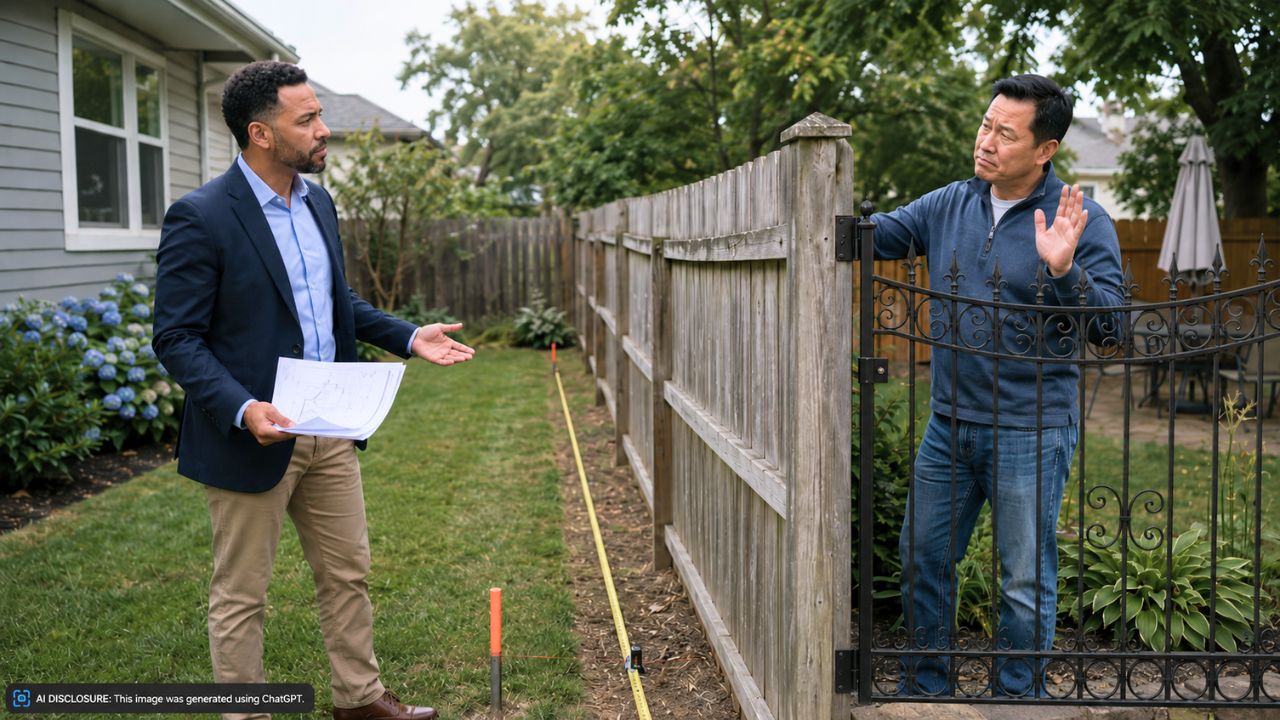
Photo credit: AI-generated image created using ChatGPT. Illustrative only.
It started as a routine step that a lot of homeowners put off until they absolutely have to: getting a property survey. The homeowner wasn’t hunting for a fight—just handling “unrelated reasons”—until the paperwork pointed to something that’s hard to unsee.
According to the original post, the survey showed the neighbor’s fence wasn’t sitting on the line like everyone assumed. It was about two feet inside the homeowner’s property, a quiet land grab that had apparently been there for years.
The fence was already there, so it felt “normal”
The homeowner moved in three years ago, and the fence was already part of the landscape. That’s how these things slip by—when a structure is in place, it becomes the default boundary in your mind, even if you never saw it installed.
The fence itself had been up about five years total. Long enough to feel permanent, long enough for people to stop thinking about it. But the survey didn’t care what felt permanent; it drew the line where the property line actually was.
Two feet might not sound like much, but in a yard it can mean the difference between where you can plant, where you can build, and where you can even walk without feeling like you’re trespassing on your own land.
One conversation turned into “squatter’s rights”
When the homeowner approached the neighbor, they didn’t come in swinging. They brought the survey and asked for the fence to be moved to the actual line.
The neighbor’s response wasn’t “Let me look into it.” It was a flat claim: the fence had been there for five years, so it was his now through “squatter’s rights.” When the homeowner pushed back, the neighbor dismissed the survey as “just estimates” and said the fence was staying.
That’s the moment this stopped being a simple “Hey, can we fix this?” and became a dispute with real stakes. A fence is a physical object, but it’s also a statement: this is mine, not yours.
The paper trail began, and so did the bills
With the neighbor refusing to budge, the homeowner contacted a lawyer. The first formal step was a demand letter, giving the neighbor 30 days to move the fence.
Instead of backing down, the neighbor doubled down. He responded that he was claiming adverse possession—essentially trying to turn the fence’s placement into a legal path to ownership of that strip of land.
The homeowner’s lawyer said that in their state adverse possession requires 10 years, and the fence had only been there for five. Another letter went out with that information. It didn’t end things; it sharpened them.
What stings in stories like this is how fast the costs rack up. The homeowner says their lawyer believes they’ll win, but “it’s costing me thousands in legal fees.” Even when you’re right, defending “right” can be expensive.
The neighbor hired a lawyer and tried to stretch the timeline
The neighbor brought in his own attorney, and the argument shifted from “five years is enough” to a more tactical position: the previous owner’s time should count toward the 10-year requirement.
The homeowner’s lawyer disagreed, telling them it doesn’t work that way “since I’m the one contesting it now.” And that’s where this kind of boundary fight gets exhausting—because it becomes less about the fence and more about technicalities, dates, and how the law treats continuous use over multiple owners.
Meanwhile, the fence is still there. It’s not like a broken appliance you can unplug while you fight over who should pay. It’s a hard border you see every day, and it’s sitting where the homeowner now knows it shouldn’t be.
And that daily reminder has practical ripple effects. Two feet can affect where you mow, where you place a shed, how you run sprinklers, where kids play, and whether you feel comfortable improving the yard at all while a dispute is live.
The weirdest part: the friendly wave
The homeowner describes the neighbor acting like nothing is happening—waving and behaving like they’re still on good terms. That can be the most unnerving part of a property-line fight: the disconnect between the social surface and the legal aggression underneath it.
It’s one thing when a neighbor is openly hostile. At least then the tension matches the reality. But when someone is trying to keep a piece of your land and still smiles across the driveway, it can make you feel like you’re the unreasonable one for insisting the line matters.
The homeowner’s frustration comes through clearly: the audacity of taking property, dismissing official documentation, and then playing friendly neighbor.
What readers tended to focus on: proof, timelines, and staying careful
In fence-and-boundary stories, the most common practical reaction is usually some variation of: document everything and don’t rely on verbal agreements. This homeowner already did the big thing—getting a survey—and then backed it up with an attorney’s letters.
Another theme people often latch onto in disputes like this is the danger of letting time pass once you know there’s an encroachment. Whether or not the neighbor’s legal theory holds water, the longer a structure sits unchallenged, the more complicated these battles can get emotionally and financially.
And then there’s the reality check many homeowners learn the hard way: being “in the right” doesn’t automatically make a problem cheap or quick. When two lawyers start trading letters, you can end up spending real money just to get back what you already owned on paper.
For now, the homeowner is stuck in the worst middle ground—watching a fence sit two feet inside their boundary while the legal process grinds forward. The neighbor keeps waving like it’s nothing, and the homeowner keeps paying to prove that a line isn’t an “estimate” when it’s the line that defines your home.
Like Fix It Homestead’s content? Be sure to follow us.