New Homeowner’s Neighbor Gets His Own Survey and Starts Building a Six-Foot Fence Inside Their Shared Driveway — Then Refuses to Sell Back the Strip and Blocks the Entrance With a Wooden Barrier
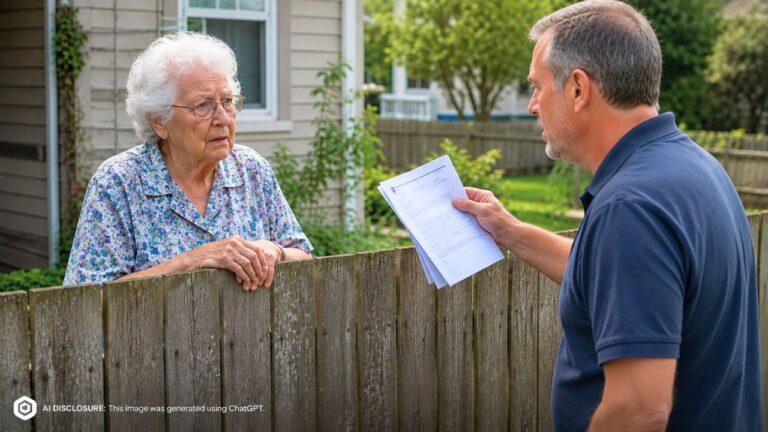
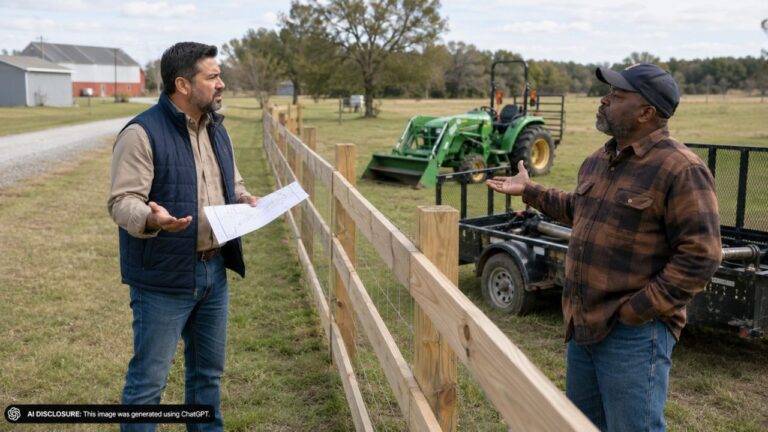
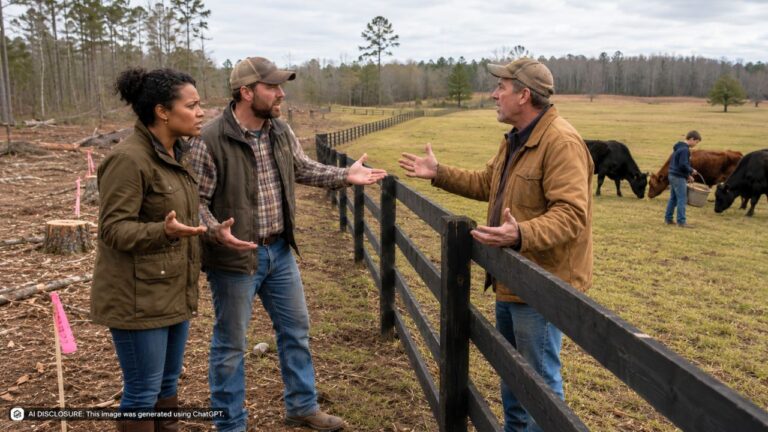
Photo credit: AI-generated image created using ChatGPT. Illustrative only.
The new homeowners thought they’d already gotten through the stressful part—closing, moving in, learning the quirks of a place they hoped to settle into. Two years later, the real surprise landed in the worst possible spot: the driveway. Their neighbor, described as “nothing but problems,” had a survey done and claimed he owned a couple of feet into what they’d always treated as the shared approach to their home. The homeowner laid it out in the original post, asking for help after the neighbor moved from paperwork to physical barriers.
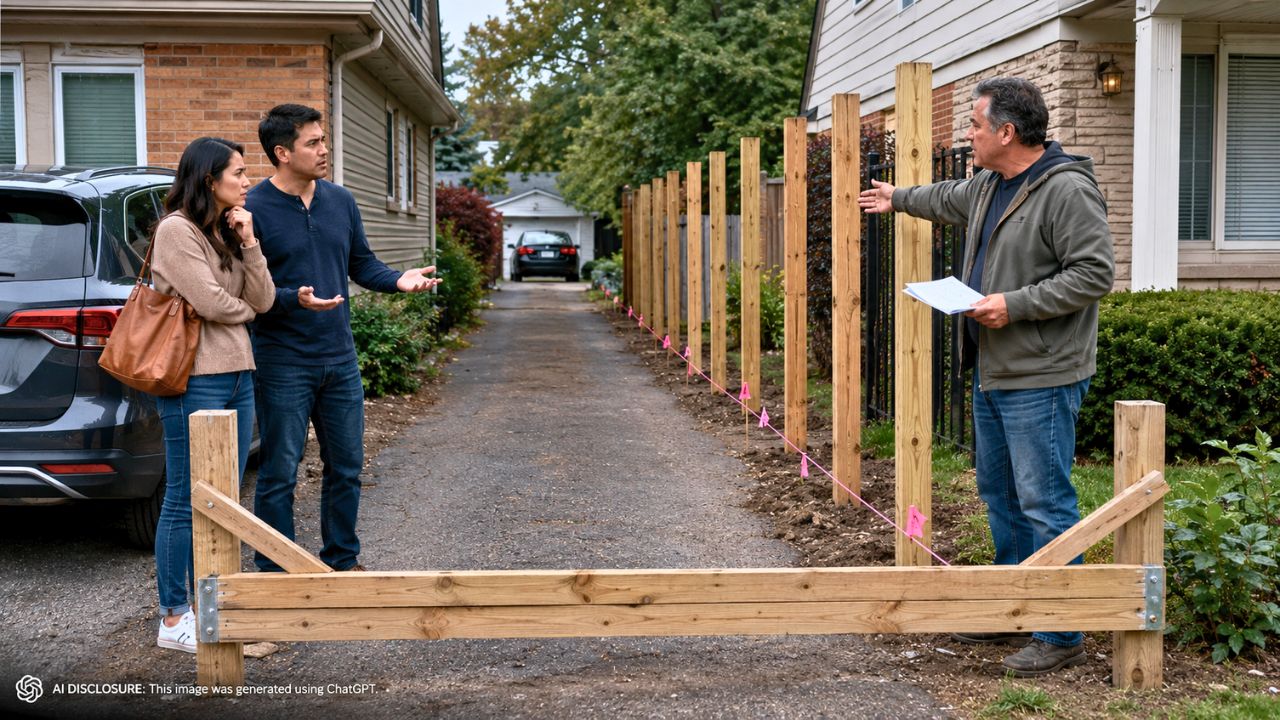
It wasn’t just a line on a map. The neighbor was planning to put up a six-foot fence “in my driveway,” the homeowner wrote, turning a narrow strip of land into an immediate access problem. When they asked if they could buy that slice back, the neighbor said no. And then he escalated again—by building a wooden blockade at the start of the driveway so they couldn’t drive on what he said was “his land.”
The day the driveway stopped feeling like theirs
Property line disputes usually simmer until someone puts a stake in the ground—literally. In this case, the homeowner’s first real alarm wasn’t a letter or a conversation, but the threat of a fence right where their car needs to go.
A driveway is one of those things you don’t think about until it’s threatened. It’s daily life: work, groceries, emergency access, friends pulling in, deliveries finding your door. The idea of a tall fence cutting into that space isn’t just annoying; it’s a practical problem that can immediately change how you use your own home.
The homeowner said they bought the house two years ago and only recently found out the neighbor “owns a couple feet into the driveway and property line.” They don’t mention any previous dispute about the boundary during the purchase—just that the neighbor has been a headache, and now he has a survey to back up his claim.
When a survey becomes a weapon
The neighbor didn’t just talk about his survey—he used it as leverage. First came the plan: a six-foot fence. Then came the homeowner’s attempt to de-escalate by offering to purchase the strip of land. The answer was a flat no.
That refusal matters because it removes the easiest “adult solution” homeowners usually reach for. If both sides can agree on a price and a simple conveyance, a small sliver of land can sometimes be resolved without years of hostility. But in this case, the neighbor wasn’t interested in a deal.
What made it worse is the homeowner’s financial bind. They said they don’t have the money to get their own survey done. And without their own survey, they’re stuck reacting to a document they haven’t verified, while the neighbor moves ahead with construction plans that could permanently change access to the property.
The wooden barrier that turned it into a daily fight
The homeowner described the next move as even more aggressive: “He even went so far as to make a wooden thing blocking the first couple feet of the entrance to our driveway so we weren’t driving on ‘his land.’” That’s the moment the dispute stops being theoretical.
A barrier at the driveway entrance isn’t just a message. It changes your morning. It forces you to decide whether to scrape around it, park elsewhere, risk contact with the neighbor, or potentially damage your vehicle trying to squeeze past. It also adds a safety angle—if an emergency vehicle needs access, any obstruction can become more than a nuisance.
And there’s a psychological pressure to it. A fence “someday” is a looming threat. A physical blockade in the driveway is a confrontation you have to deal with immediately, right in front of your house, where everyone can see it and where you can’t avoid it without changing your life.
Why the acreage doesn’t make this feel any smaller
One detail jumped out: the neighbor owns four acres, and the homeowners have six. In other words, this isn’t a case of two tiny suburban lots where every inch is precious. The homeowner also noted that the two houses were built right next to each other despite the larger land sizes.
That’s part of what makes the driveway strip sting. If you’re surrounded by acreage, you’d expect breathing room, not a pinch point where the path to your home can be narrowed on a technicality. But rural and semi-rural properties can be weird like that—old lanes, informal drive paths, and long-standing “everybody uses it” habits that don’t always match the deed.
It also underlines how personal these disputes can get. When someone with plenty of space chooses to press hard on a couple of feet, it reads less like a practical need and more like a power play. The homeowner didn’t frame it as a misunderstanding. They framed it as a neighbor looking for a fight.
What people zeroed in on: proof, paper trails, and access rights
Even from the homeowner’s short description, the pressure points are obvious: a survey they can’t afford to challenge, a fence planned in a functional access area, and a blockade already installed. In disputes like this, the immediate instinct many homeowners have is to argue face-to-face—but that rarely helps once physical structures are involved.
What tends to matter next is documentation and clarity. A single survey, especially one commissioned by one side, isn’t automatically the final word in the court of real life. What the deed says, what easements exist, where the recorded right-of-way lies, and how the driveway has been used over time can all matter. Shared driveways and “looks like mine” areas are notorious for hidden easements and long-standing use patterns that don’t show up in casual assumptions.
The homeowner’s post also shows the core trap: when money is tight, the lack of a second survey can make a homeowner feel cornered. That’s often when the dispute escalates from “talking about property lines” into “living with barriers,” because one side can afford to take the first official-looking step and the other side can’t immediately counter it.
Living next to someone who won’t negotiate
The hardest part isn’t just the fence itself. It’s the message behind it: the neighbor won’t sell, won’t compromise, and is willing to physically block access to enforce his position. That’s not a one-time disagreement; it’s a sign of how future issues might go—trees, drainage, noise, parking, anything that touches the line between properties.
For the homeowner, the stakes are painfully ordinary. They just want to use their driveway without a daily obstacle course. They want to protect the value of what they bought two years ago. And they want the kind of quiet that makes a house feel like home, not a battleground with a six-foot wall as the centerpiece.
In the meantime, the driveway remains the flashpoint: a couple of feet of ground that now controls the simple act of coming and going. And with a barrier already in place and a fence looming, it’s the kind of neighbor conflict that doesn’t stay contained—it spills into every day until someone brings in stronger proof, stronger authority, or a much stronger stomach for the long haul.
Like Fix It Homestead’s content? Be sure to follow us.