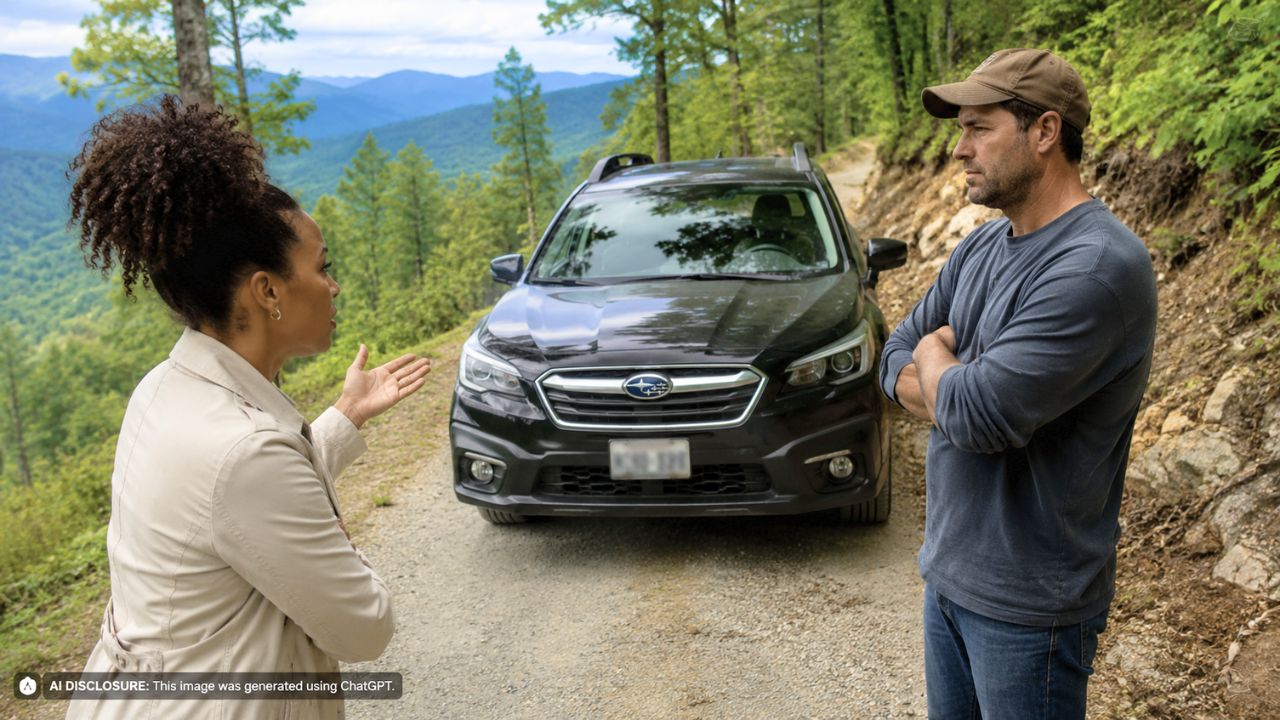
New Owner of a North Carolina Mountaintop Parcel Has Deeded Road Access — Then a Neighbor Parks His Car in the Middle of the Only Road Instead of Pulling Twenty Feet Into the Grass
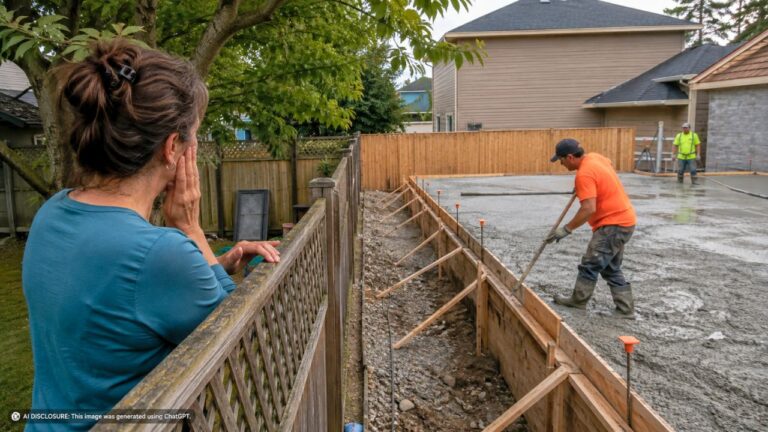
Photo credit: AI-generated image created using ChatGPT. Illustrative only.
You buy your dream patch of mountain land, finally get the paperwork signed, and start imagining the first weekend up there with tools, supplies, maybe a shed pad staked out. Then you discover the one thing you can’t haul up the mountain: yourself.
That’s the bind a new North Carolina landowner described in the original post—six acres on the literal top of a mountain, reachable by a single private road that ties into a public road. The access is deeded. It came with the parcel. But the neighbor who owns the land surrounding the road for most of the climb parks his car in the one spot where nothing can squeeze by, turning “deeded access” into a daily game of “not today.”
A mountaintop purchase with exactly one way in
The buyer had just closed on roughly six acres up on a mountaintop—“TOP of the mountain,” he emphasized—where the road runs all the way to the parcel. There isn’t another lane, an alternate cut-through, or a second entrance waiting around the bend.
In rural property deals, that one-road reality is everything. It decides whether you can bring in gravel, a skid steer, lumber, a septic crew, or even an emergency vehicle. And in this case, the new owner says the road is already in “miserable shape,” rough enough that even a side-by-side wouldn’t make it up.
So before the first repair gets scheduled, access is already limited. Now add a human roadblock.
The bottleneck parking spot that changes the whole equation
The neighbor closest to the bottom of the mountain has developed his own workaround for the bad road: he parks and walks. That part, on its own, is easy to understand—nobody wants to beat up their vehicle on a rutted, steep private road.
The problem is where he parks. According to the new owner, the neighbor leaves the car “right in the middle of the road” at a narrow pinch point, “where a bicycle couldn’t get past him.” It’s not a casual inconvenience. It’s a total stop.
And it sounds avoidable. The new owner says if the neighbor simply parked about 20 feet lower, he could pull off into the grass and leave the roadway passable. Twenty feet is nothing—unless the point is to control who goes up and when.
That’s what makes this type of dispute so tense. Blocking a road isn’t like a loud dog or a messy property line argument you can ignore for a few weeks. Blocking the only road is a way to turn someone else’s land into a place they can’t practically use.
When fixing the road turns into a standoff
The new owner didn’t just complain—he started trying to solve the underlying issue. He got quotes from road companies to repair the road. The logic is straightforward: improve the road, and the neighbor could drive to his own house instead of parking in the chokepoint and hiking.
But that solution runs into the next obstacle: cooperation. The buyer says the neighbor “acts like he’s not home” so he won’t have to move the car. That means contractors can’t get equipment up. Deliveries can’t get through. Even basic site work becomes a negotiation with someone who benefits from refusing to negotiate.
This is the kind of rural stalemate that can quietly burn a whole season. You can’t grade what you can’t reach. You can’t bring stone to a road you can’t access. And the longer it drags, the more the new owner is paying taxes and carrying the property without being able to start using it the way the deed suggests he should.
It also creates a safety problem that’s hard to unsee once you see it. If you can’t drive up, what happens if a family member gets hurt up there? What happens if a brush fire starts and responders can’t get past a parked car in a bottleneck?
The question everyone asks: can you have the car removed?
The new owner’s central question was blunt: with deeded access on a private road, does he have any legal right to have the neighbor’s car removed?
That question is where property rights stop being abstract. Lots of deeds mention access, easements, private roads, and rights-of-way, but the moment someone physically blocks the corridor, the language has to do real work.
The tricky detail here is that the neighbor owns the land around the road until near the top, where the new owner’s parcel begins. So the road runs through the neighbor’s area—yet the new owner says his access is deeded. That’s a classic recipe for two people reading the same reality differently: one person sees “my land, my road,” and the other sees “my recorded way in.”
It also raises practical questions beyond towing. If a tow truck can’t reach the vehicle because the road is bad, or if it’s unclear who can authorize removal on a private road, even “just tow it” becomes complicated fast. And if the neighbor is already avoiding contact, every attempted fix risks turning into another round of “not home.”
What other homeowners pushed: document first, don’t wing it
Even without a pile of back-and-forth included in the source material, the direction homeowners tend to push in these access disputes is predictable: prove what you have before you escalate.
People who’ve lived through easement fights often emphasize the boring stuff—copies of the deed language, a survey or plat map showing the easement, and a clean paper trail of attempts to coordinate. It’s not about being dramatic. It’s about not getting trapped in a “he said, he said” when the real issue is a car physically blocking the only route.
The other common theme in these disputes is avoiding self-help that can backfire. Dragging a car, moving it yourself, or “fixing” the problem in the heat of the moment can turn an access issue into a property damage allegation. And once that happens, the original problem—the blocked road—can get buried under a new fight.
At the same time, homeowners also tend to point out something that feels obvious but matters: a deeded right of access isn’t a courtesy. If it’s written correctly and recorded, it’s supposed to function whether the neighbor is in a good mood or not.
A mountaintop that feels closer than ever—and still out of reach
The new owner is stuck in the worst kind of early-ownership limbo: he bought land that’s supposed to come with a way in, but the first neighbor interaction is about an obstacle that could be solved with a 20-foot adjustment.
He’s already thinking like someone who wants to build and maintain—getting road quotes, trying to improve conditions, trying to make the whole mountain more usable. But right now, everything depends on a single parked car and a neighbor who doesn’t seem interested in meeting halfway.
For anyone who’s ever bought rural property with one access point, this is the nightmare you don’t see in the closing documents: you can own the view, the timber, and the acres, and still end up standing at the bottom of the road staring at a vehicle that makes your “mountaintop parcel” feel like it’s on another continent.
Like Fix It Homestead’s content? Be sure to follow us.