Homeowner Repeatedly Refuses a Power Easement Across Her Only Usable Land — Then the Neighbor’s Son Offers Two Thousand Dollars for an Easement She Says She Wouldn’t Sell for Fifty Thousand
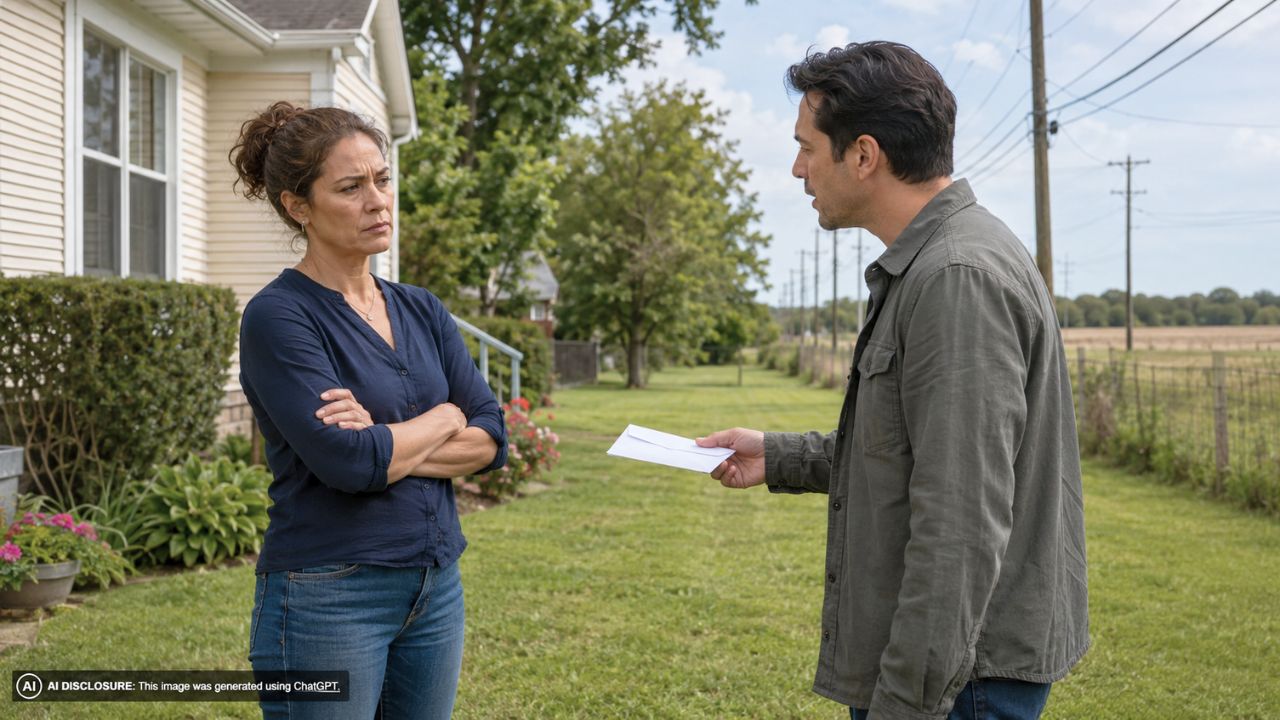
Photo credit: AI-generated image created using ChatGPT. Illustrative only.
It started with a few “just curious” messages about utilities, the kind you can answer without thinking too hard. Then the questions turned into a request that would cut straight through the middle of a family’s only usable land—right in front of their home—and suddenly the phone was ringing with a utility company asking to “come take a look anyway.”
In the original post, a homeowner on a rural 20-acre wooded property described repeatedly refusing to grant a power easement to neighbors developing the much larger tract next door. Even after multiple polite “no” responses, the pressure kept coming—until a lowball offer landed: $2,000 for an easement that would run several hundred yards.
A ridge-top property with one strip of workable ground
The homeowner and her husband live on a ridge with steep drop-offs on either side. It’s the kind of terrain that looks beautiful and private, but it also means usable space is limited. According to her description, the only flat strip of land is the one they actively use, and it’s also where any straight-shot utility route would go.
They already paid to solve their own power problem the hard way: underground power installed all the way down their driveway. It cost them $15,000, but it kept the line out of sight and avoided the above-ground clearing and long-term access headaches that can come with overhead runs.
That investment is part of why the request stung. They didn’t cheap out or cut across someone else’s property. They paid to do it right on their own land.
The neighbor’s “compound” plans crept closer—and the tone changed
A couple of years earlier, a 200+ acre parcel beside them sold. That property has road frontage, but on the other side of the ridge. The new owners cleared a road right up to the poster’s property line and, from the homeowner’s perspective, were planning multiple homes—more of a family compound than a single build.
At first, everyone was friendly enough that the homeowner says they invited them over. Then the atmosphere shifted. The patriarch—the actual owner, as she describes him—became unfriendly and started making veiled threats. The kids and spouses seemed fine, which only made the sudden hostility more confusing.
When neighbor relationships sour, every new request feels different. A question about power isn’t just a question about power anymore. It’s also about leverage, access, and how close someone is trying to get to your front door.
It started with utility questions, then turned into a direct ask
The most recent contact came through the son-in-law, who messaged the homeowner’s husband. First came practical questions: Who is your provider? Did you run underground? What did it cost? The husband shared that their underground install was about $15,000.
Then the real ask arrived. The neighbors wanted to connect to that power rather than run new service from their own road frontage. The homeowner says the route they wanted would run “straight down the middle” of her property, meaning a utility easement right in front of the house and down the driveway corridor.
The reason given was simple: it would save them “tens of thousands.” But the homeowner’s response was just as direct. She didn’t want trucks and equipment digging up her driveway and working outside her front door. She didn’t want hardwood trees cut down. She didn’t want native food plots destroyed. And she didn’t want a permanent easement across the only flat ground they have.
In rural settings, that flat strip isn’t just aesthetic. It’s where you can actually do things—garden, park equipment, expand a shed, set up drainage, keep a safe turnaround, or maintain a buffer from the road. An easement doesn’t just occupy space; it changes how you’re allowed to use your own land forever.
When the utility company calls, “no” can feel like it doesn’t count
What made the homeowner feel cornered wasn’t only the neighbor’s request—it was the follow-up from the utility company. She says the utility company called her directly, and she “politely told them absolutely not several times,” but felt they didn’t take it as a final answer.
The representative kept pushing to come look and see if it was possible anyway. The homeowner, frustrated, told them to call her husband. He told them the same thing: they don’t want any easement across their property, period, and it would be impossible to do without destroying their only usable land.
That interaction hits a nerve for a lot of homeowners, especially in rural areas where utilities are used to negotiating weird routes, long runs, and access corridors. The homeowner’s fear wasn’t abstract. Once a utility starts “looking,” the conversation can shift from “Can we?” to “Here’s how we would,” and then you’re suddenly defending your boundary over and over.
The offer that made it worse: $2,000 for a long easement
Then came the money. The neighbor’s son offered $2,000 for an easement that would run several hundred yards long, across the center of the homeowner’s property. To her, it wasn’t just low—it was insulting.
She wrote that she wouldn’t consider it even for $50,000. That number wasn’t presented as a counteroffer; it was a way of saying the request wasn’t about finding the right price. It was about refusing the permanent change to their land, their privacy, and their day-to-day use of the property.
Because an easement isn’t a one-time inconvenience. It can mean repeated access for maintenance. It can mean a widened corridor over time. It can mean more clearing than you expected. And if the neighbors truly are planning multiple homes, the homeowner is looking at future load changes, more work in the corridor, and more reasons for someone else to want access through her property.
Reactions centered on boundaries, documentation, and not giving an inch
While the homeowner’s update focuses on the calls and the refusal, this kind of dispute tends to pull out the same practical instincts from other homeowners: keep everything in writing, avoid casual verbal agreements, and don’t let anyone step onto the land to “just take a look” if you’re not open to the idea.
In conflicts like this, homeowners often worry that a small courtesy—allowing a site visit, permitting a stake in the ground, letting a crew walk a route—can be mistaken for cooperation. And when the other side is motivated by “saving tens of thousands,” they may keep pressing, hoping fatigue turns a firm no into a reluctant yes.
Here, the homeowner and her husband stayed consistent. No easement, no corridor, no middle-of-the-property run.
By the end of her update, the homeowner says it sounds like the power company has dropped it, and the neighbor will need to run power across their own property from their road frontage on the other side of the ridge. That’s the less convenient route for the neighbor—and the one that matches what the homeowner believes should have been planned for when they bought 200+ acres in the first place.
The tension may not be fully gone. A neighbor who already cleared a road to the property line and turned hostile once before doesn’t always let go of a perceived shortcut. But for now, the boundary held: their only usable strip of land stays theirs, and the easement they never wanted remains unsigned.
Like Fix It Homestead’s content? Be sure to follow us.