Maryland Buyer Learns the Flipper Who Sold Her Home Used an Unlicensed Electrician for Unpermitted Work — Then Discovers He Removed a Cease-Construction Citation From the Property Before the Final Walkthrough
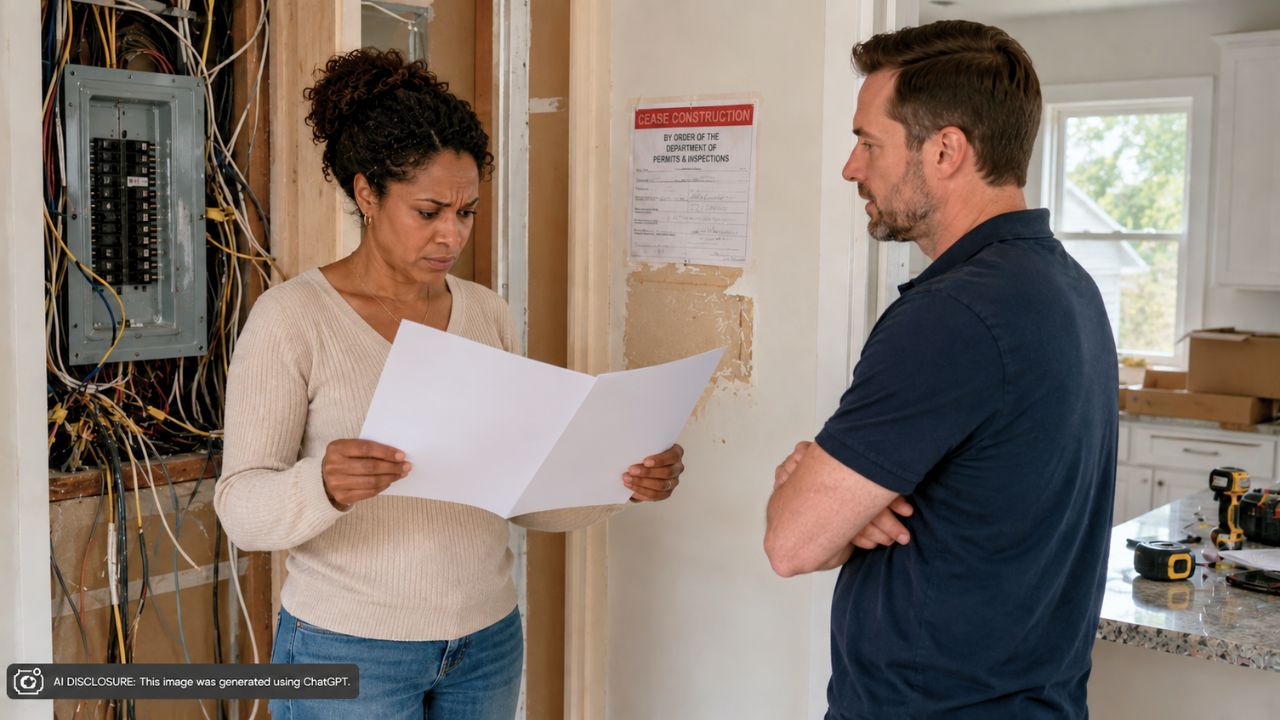
Photo credit: AI-generated image created using ChatGPT. Illustrative only.
Buying your first house is supposed to feel like exhaling after years of holding your breath. For one Maryland buyer, it turned into a countdown clock: pull permits for major systems or risk losing the home to condemnation.
In the original post, the homeowner says she purchased a flipped property in Hagerstown in December 2023. Months later, she learned the rehab work had been done without permits—and that the seller openly admitted an electrician used on the job wasn’t licensed in Maryland. The city, she says, has now given her a deadline: get electrical, plumbing, building, and mechanical permits by the end of June 2024, or the home could be condemned.
The house looked finished, but the paperwork didn’t exist
The buyer describes a fairly common flip timeline: property listed with shiny upgrades, including a new HVAC unit mentioned in online marketing, and a rehab that appeared complete by the time she was doing her final walkthrough.
But she says the city’s record told a different story. There were no permits for the work that made the home feel “new,” and that’s where the ground started to shift under her feet. In her view, it wasn’t a technicality—it was a threat to her ability to stay in her own home.
It also wasn’t something she discovered because anyone warned her. She says her realtor, the title company, and the home inspector have all been unhelpful after the fact. The title company, she notes, found no red flags because no lien had been placed on the property at the time of closing.
A cease-construction notice showed up—then vanished before closing
One detail in her account reads like something out of a bad workplace thriller: a physical notice posted on the house.
She says that in November, while she was under contract, a permit notice citation was posted at the property and mailed to the seller’s home. The citations, she writes, were issued in the seller’s name and ordered construction to stop. But according to her, the construction was already finished by then.
By the time she did her final walkthrough in December 2023, she says the notice was no longer posted. She suspects the seller removed it before she saw the home one last time, right before closing—exactly when buyers are typically looking for anything that feels “off.”
At closing, she says, the seller checked the box indicating he was “not aware of any latent defects.” To her, the missing permits and the posted citation weren’t small oversights. They were known problems with a paper trail.
Then the seller admitted the electrician wasn’t licensed
The buyer says that after she owned the home, the seller stopped by in February or March and told her directly that the electrician who did the work wasn’t licensed in Maryland.
That’s the kind of admission that changes the emotional temperature immediately. It’s no longer just “permits are annoying.” It becomes a safety question—did the wiring get done correctly?—and a financial one—who pays to open walls, correct mistakes, and get everything inspected?
And it puts the new homeowner in a brutal position: she didn’t hire the contractors, she didn’t supervise the job, but she now owns every consequence of the job.
City deadlines don’t care who did the flip
The pressure point in her story is the city’s deadline. She says the city told her that if she doesn’t obtain permits for electrical, plumbing, building, and mechanical work by the end of June 2024, the home will be condemned.
Condemnation is one of those words that makes your stomach drop because it isn’t theoretical. It means the property can be declared unfit for occupancy. Even if enforcement varies from place to place, the threat alone is enough to keep someone awake at 3 a.m. staring at the ceiling and mentally calculating what they can sell, borrow, or cancel.
She says she’s been trying since January 2024 to get the seller to pay for the work required to bring the house up to code and to pull permits. She’s gotten multiple estimates and brought them to him, but she says he “simply doesn’t want to pay it.”
What makes it worse is that “get it permitted” often isn’t one clean step. Depending on what was changed, it can mean retroactive permits, opening up finished work so an inspector can see it, hiring licensed trades to correct anything not to code, then scheduling city inspections—on the city’s timeline, not yours.
When everyone shrugs, the homeowner is left holding the risk
Her frustration isn’t just with the seller. It’s with the entire support system that buyers are told will keep them safe.
She says her realtor hasn’t helped. The title company hasn’t helped. The home inspector hasn’t helped, and she’s particularly upset that no one checked for permits when it was obvious the home had been significantly rehabbed and the HVAC system was part of the sales pitch.
That’s a hard lesson many buyers only learn after closing: an inspection is a snapshot of what’s visible and testable that day. It’s not always a deep dive into municipal records, and it’s definitely not a guarantee that a renovation was legal. Still, from a homeowner’s perspective, it feels like everyone took a fee and then disappeared when the real problem surfaced.
She also notes she wouldn’t qualify for state grant assistance due to income limits, cutting off one potential safety net. And she describes the personal side clearly: she bought on her own as a single woman, expected the moment to feel empowering, and instead feels taken advantage of.
Reactions focused on documentation and finding the right attorney
In her post, the buyer’s main ask is simple: help finding a lawyer who actually handles this kind of case.
She believes the seller breached the contract by failing to disclose the posted notice and failing to disclose that work was done without permits. She’s not looking for internet outrage; she’s looking for a path that works in the real world, with a deadline hanging over her head and a seller who won’t voluntarily pay.
Even without a full comment thread included in the source material, the most practical direction for a case like this tends to revolve around the same theme: paper. Copies of the city citations, any written disclosures from closing, any texts or emails with the seller about the unlicensed electrician, the estimates she obtained, and any city communication with the June deadline. When the stakes are “pay thousands now or risk losing occupancy,” memories and phone calls don’t carry the same weight as documents.
The maddening part is that she’s already been trying to solve it the neighborly way—direct conversations, estimates, back-and-forth—and time kept moving.
Now she’s staring at the kind of homeowner problem you can’t patch with caulk or a weekend trip to the hardware store: a flipped house where the cosmetics are done, but the legal and safety groundwork may not be.
Like Fix It Homestead’s content? Be sure to follow us.