Homeowner on a Private Road Watches a Neighbor Cut a New Gate Through the Privacy Trees Right Across From the Front Door — Then Claims City Approval to Use the Road Without Paying the Shared Maintenance Fee
Photo credit: AI-generated image created using ChatGPT. Illustrative only.
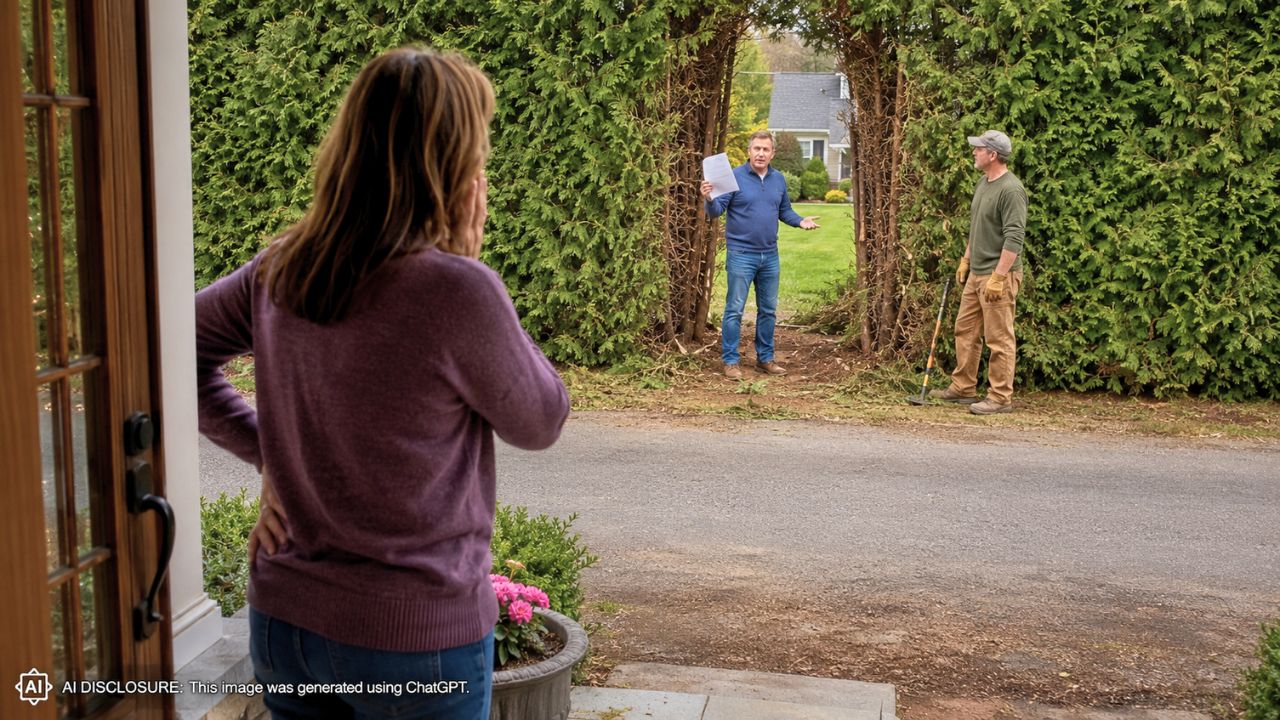
It started with the sound of trimming—branches snapping and a little too much movement in the greenery that usually just sits there and blocks the view. A homeowner on a shared private road looked up and realized a neighbor was cutting a new opening through the privacy trees directly across from their front door, carving out access for a gate that would lead right onto the road.
In the original post, the homeowner explained that about 10 households share the private road and, informally, they split the costs: roughly $1,000 a year for tree maintenance, plus periodic road work every decade or so. The neighbor doing the cutting, they believed, wasn’t paying into any of it—yet wanted the benefits of the road and the tree trimming that keeps the whole frontage looking tidy.
The view from the front door changed overnight
The homeowner described a familiar setup on the street: most properties along the private road have fencing, with a line of trees providing privacy. Those trees weren’t just decorative. They were the reason the homeowner didn’t feel like they lived with a driveway aimed straight at their living room.
Then the neighbor “trimmed branches and made a hole” in that tree line, directly across from the homeowner’s front door. A gate started going in. And with that gate came a bigger concern than just a ruined view: if one person can punch through the trees and start using the private road more, what stops everyone else from doing the same?
The neighbor’s explanation made things worse. They claimed the city “allowed it,” implying official blessing for a new access point and, maybe, a free pass to use the shared road without contributing to maintenance.
The money issue was really an access issue
Private roads have a way of turning “friendly” into “financial” fast. Even without formal agreements, the neighbors had an established pattern—paying for trimming, preserving the tree line, and handling larger maintenance on a schedule. That’s the kind of arrangement that works right up until someone decides they’re the exception.
To the homeowner, the gate wasn’t just a gate. It was a new source of traffic and wear on a road everyone else helps maintain. It was also a signal that this neighbor might be testing boundaries: cut first, explain later, and rely on others being too busy (or too conflict-avoidant) to push back.
They also worried about copycats. If the gate stood, other neighbors might decide the “rules” were optional—especially if they could cite the same vague “city approval” line without producing proof.
Then the property line details got messy
The turning point came when older neighbors returned from church and filled in a detail that changed the homeowner’s posture immediately: the trees that were cut weren’t simply “common” trees by assumption. The homeowner wrote that they apparently owned the property just beyond the fence, but it’s shared in some way—meaning the neighbor had cut trees that weren’t theirs to cut.
It didn’t stop there. The fence itself was described as shared, and if the neighbor wanted to modify it—like creating a new gate opening—they were supposed to get approval first. While the homeowner was posting updates, they said the fence was being reinstalled, suggesting someone confronted the neighbor and demanded at least a partial undo.
That’s when the backstory surfaced: the neighbor pulling this move was already known on the street as “a known jerk.” The homeowner learned another nearby neighbor had dealt with something similar and demanded everything be restored, from fence to trees. In this case, the homeowner said they could pursue the neighbor over the branches cut on their property, but didn’t want to be petty.
Still, “not petty” only goes so far when the trees are the privacy barrier across from your front door.
The story kept changing—and so did the stakes
A second update brought in a motive that made the gate feel less like a convenience and more like a plan. Another neighbor reported that the gate-builder was constructing a granny unit and wanted the future occupant to have access to the private street.
Then came a cascade of shifting explanations: water coming from the homeowner’s property, kids needing street access for biking. The homeowner said the neighbor’s reasons kept changing, and that the neighbor couldn’t provide paperwork supporting the claim that the city approved the access.
At that point, the homeowner decided it was time for a lawyer and official written notice that the neighbors didn’t approve. The tone of the updates changed too—from confusion to a clear sense that this was going to be a long game, not a one-time misunderstanding.
They also mentioned the neighbor had tried a similar move with someone else nearby and got stopped. The takeaway wasn’t subtle: this wasn’t a one-off accident. It looked like a pattern—probing, pressuring, and pushing until someone gave in.
Neighbors started comparing notes about past damage
As more neighbors talked, the history got uglier. The homeowner wrote that another neighbor—who previously forced the removal of an added gate—still ended up with the fence drive moved onto their property. Even worse, trees that were cut down were never replaced despite promises.
That kind of detail changes how people respond. Once you hear “they’ll promise and not follow through,” you stop negotiating on handshakes. You start documenting, getting things in writing, and treating even small changes (like a gate latch or fence post) as potentially permanent.
The homeowner also wrote that the gate-building neighbor asked a third neighbor for access and was told no. That neighbor didn’t even share a fence with them, which made the request feel less practical and more strategic—like they were collecting “support” to claim others were fine with the plan. The third neighbor was described as quite old, raising fears that the gate-builder was shopping for someone easier to pressure.
The easement twist turned it into a race
In the final update, the homeowner found what might be the most explosive detail of all: the current owner of the easement isn’t any of the neighbors. The homeowner said their deed grants them access to the easement, but the pushy neighbor’s deed does not.
That reframes everything. It’s not just “our private road vs. your gate.” It becomes a question of who has legal access, who can grant it, and whether someone could buy leverage by purchasing the easement outright.
The homeowner believed the neighbor was fishing—trying to see if they knew who owned the easement and what rights each deed actually contained. And with that, the homeowner described it as a race to track down the very old owner before the neighbor does, worried that if the neighbor buys it, the gate (and maybe even a driveway) becomes their dream scenario.
For now, the gate and the trees are only part of the story. The bigger issue is control: control of access, control of the shared road’s future, and control of whether a quiet private frontage stays private—or becomes a new shortcut for someone who doesn’t want to help pay for it.
Like Fix It Homestead’s content? Be sure to follow us.