Georgia Homeowner’s Survey Reveals the Neighbor’s House Sits 21.4 Feet Onto Her .42-Acre Lot — Then She Realizes She’s Paid HOA Fees and Property Taxes for Years on Land She Can Never Build On
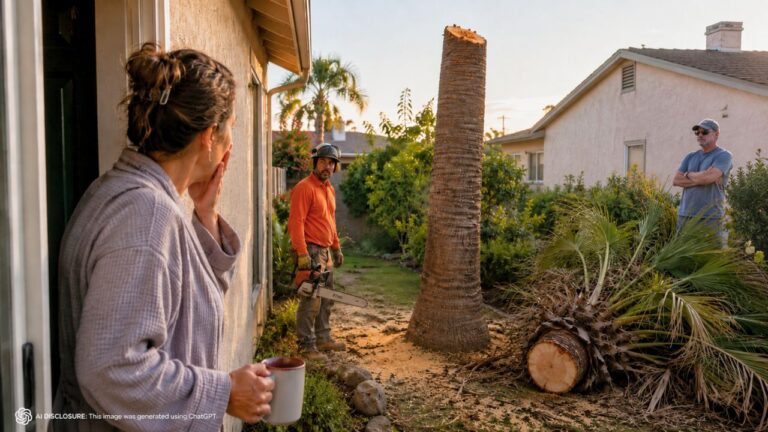
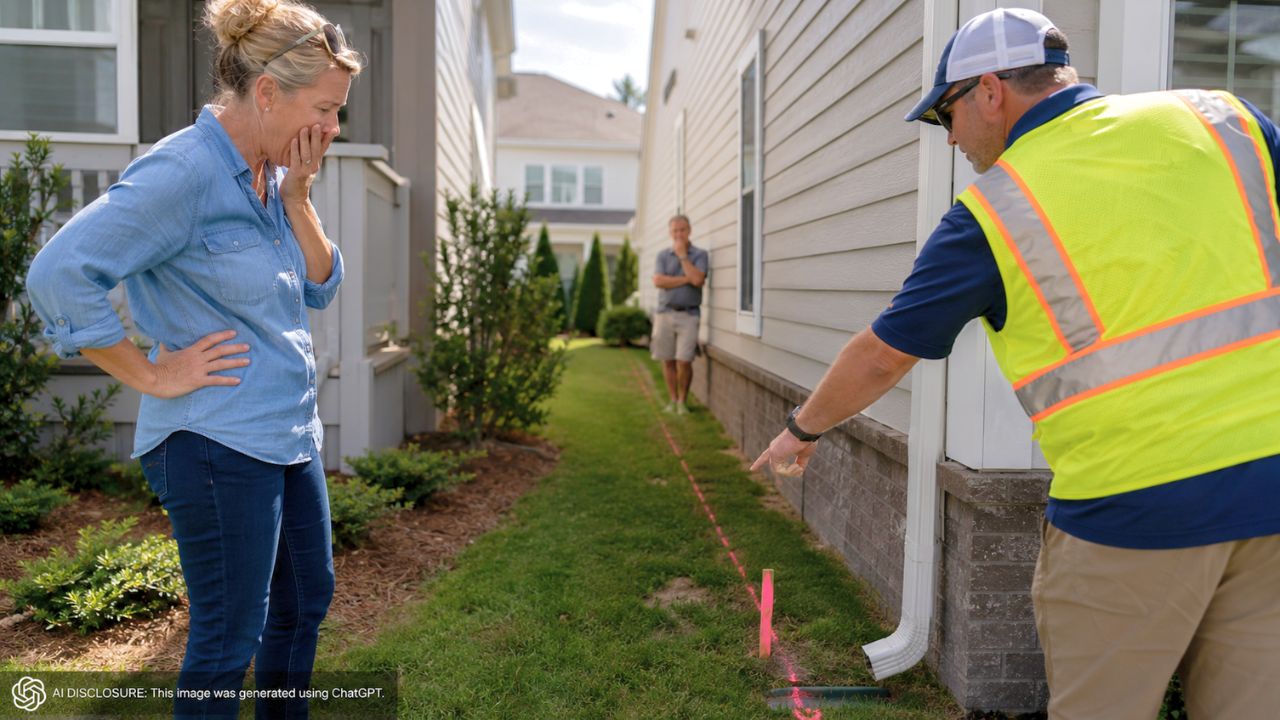
Photo credit: AI-generated image created using ChatGPT. Illustrative only.
It started as a nagging feeling: the lot just looked too narrow. In Georgia, on a .42-acre property, that kind of unease can sit in the back of your mind for years—until one day you pay for a survey and the lines on paper don’t match the life you’ve been living.
That’s what happened to one homeowner who shared the details in the original post. The survey didn’t just show a fence in the wrong place or a shed over a line. It showed something far worse: the neighbor’s house was built 21.4 feet into her lot.
A normal survey turned into a gut punch
The homeowner said they ordered a survey because their lot “seems very narrow.” Anyone who’s lived next to a tight setback or a close driveway knows that feeling—your eyes tell you something’s off, but you assume it’s just how the neighborhood was laid out.
Then the surveyor’s work came back with a number that’s hard to even picture until you pace it off: 21.4 feet. Not a few inches of landscaping. Not a fence post. A chunk of house.
When someone says “half of the neighbor’s house is built on my property,” it’s the kind of sentence that makes other homeowners stop mid-scroll, because it’s not just a boundary disagreement. It’s a structural, legal, and financial trap all at once.
The timeline made it feel even more unfair
The homeowner explained that the neighbor’s house was built in 2003. Their parents bought the lot in 2005 and transferred it to the homeowner’s name in 2007. No survey was done when the property was originally purchased.
That detail matters because it’s how problems like this survive long enough to become “normal.” If the home next door was already sitting there when the land changed hands, the encroachment can look like it’s been settled, or approved, or at least checked by someone.
But in real life, a lot sale can close with nothing more than a legal description, a map that isn’t precise to the inch, and everyone assuming the builder and the county got it right back in 2003. A decade later, a survey proves otherwise—and the current owner is left holding the stress.
Paying for land you can’t use is where it really stings
The homeowner wasn’t only shocked about the boundary line. She was furious about the years of carrying costs on ground she can never truly control.
She said she’s been paying HOA fees and property taxes on a lot that she can never build on, because the neighbor’s house is sitting on it. That’s the part that hits everyday people hardest: this isn’t an abstract property-rights argument. It’s money leaving your bank account for something you can’t fence, can’t improve, can’t sell cleanly, and can’t even walk onto without it turning into a confrontation.
Even if you try to treat it like “just land,” it still affects everything. What can you put on your lot? What happens when you need to install a fence, a garden, drainage, or a driveway? What if the HOA enforces rules based on lot size, setbacks, or buildable area? What if you ever want to refinance or sell and the buyer’s lender demands clear boundaries?
And there’s a quieter worry homeowners don’t always say out loud: if something happens—damage, a fire, a structural issue—whose insurance is supposed to respond when the structure crosses onto another deed?
The questions everyone asks first: can you make them pay?
Once the survey revealed the extent of the encroachment, the homeowner went straight to the blunt questions: What are my options? Can I force the neighbor to buy the lot? Can I make them backpay HOA fees and property taxes?
Those are the practical, kitchen-table questions. If your neighbor’s house is literally sitting on your land, it feels logical that they should “make it right” with a purchase and reimburse you for years of costs.
But the messy part is that property disputes don’t always follow the gut-level fairness people expect. A home built in 2003 and left standing for years can trigger complicated arguments about notice, boundaries, title issues, and whether someone else—like a prior owner, a builder, or a closing process—missed something that should have been caught.
And if the neighborhood has an HOA, that adds another layer of paperwork and pressure. HOAs don’t just collect dues; they keep plats, enforce rules, and sometimes have their own say in lot lines, easements, and what changes are allowed. Even when they don’t control the deed, they can still complicate the path to a clean fix.
What commenters tended to focus on: paperwork before people
In threads like this, the most common reaction isn’t “go knock on their door.” It’s “lock down your documentation first.” When you’re dealing with a boundary issue measured in feet—not inches—proof becomes the whole game.
The homeowner already did the most important first step by getting a survey. From there, reactions usually steer toward keeping everything formal: preserving the survey report, making sure the legal description matches what was surveyed, and preparing for the possibility that any resolution will require professionals and signed agreements, not handshake promises.
People also tend to warn against making it personal too fast. A neighbor may have bought their home believing the boundaries were correct. They may be as blindsided as you are, or they may get defensive immediately. Either way, once the word “house” and “property line” show up in the same sentence, you’re no longer arguing about taste or noise. You’re touching something that can affect someone’s mortgage, insurability, and ability to sell.
That’s why the practical voices often push for calm and careful steps—because the second it turns into a shouting match, everything gets harder to fix.
A survey line is just the beginning of the fight
This homeowner’s story is the kind that keeps people awake after they’ve turned off the lights. You can’t unsee that 21.4-foot number once it’s written down. Every time you look at the neighbor’s wall, you’re thinking: that’s mine—at least on paper.
And yet it’s not as simple as dragging the structure back across the line. Homes don’t move without huge costs, and no one wants a neighborhood war. The owner’s questions about forcing a purchase and getting reimbursed show how quickly a “small” oversight—no survey during the 2005 purchase—can snowball into years of dues, taxes, and lost use.
The tension here is that the homeowner is trying to reclaim something that should have been obvious from the start: where her land begins and ends. The survey gave her the answer, but it also handed her a problem that can’t be solved with a weekend project, a fence repair, or a firm conversation over the mailbox.
Now the land has a price tag, the paperwork has teeth, and a portion of someone else’s home is sitting in the middle of it all—silent, immovable, and impossible to ignore.
Like Fix It Homestead’s content? Be sure to follow us.